Giriraj Singh shares PM Modi's Digital India impact data
Synopsis
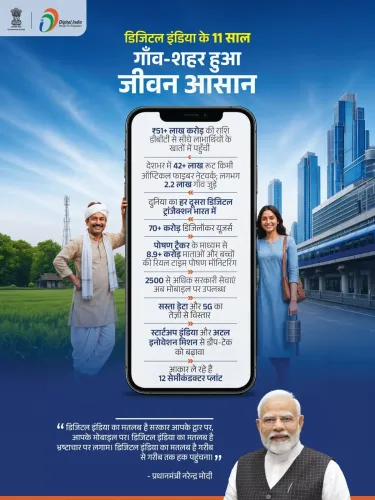
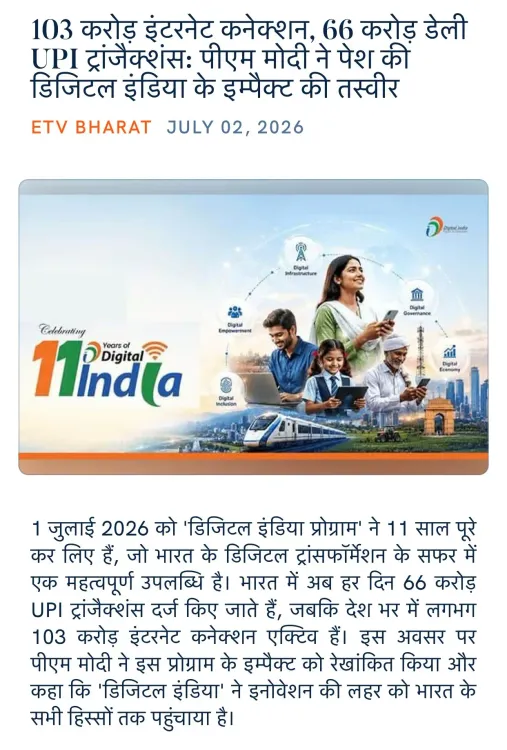
On Digital India's eleventh anniversary, Union Textiles Minister Giriraj Singh amplified PM Modi's account of the programme's reach, sharing figures of 103 crore internet connections and 66 crore daily UPI transactions as markers of a decade of digital governance.
Key Takeaways
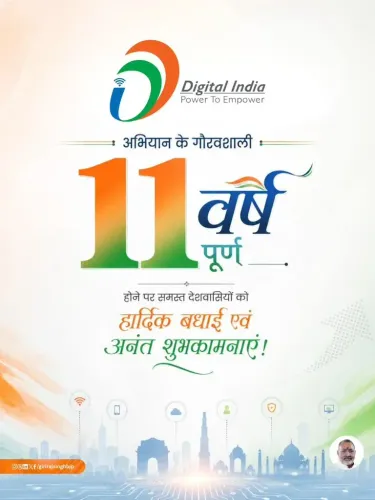
Digital India completed 11 years on 1 July 2026 , having been launched by PM Modi on 1 July 2015 at India Gate, New Delhi .
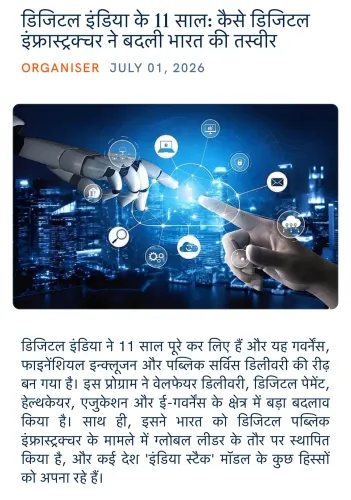
The post cited 103 crore internet connections across India as a measure of connectivity growth under the programme.
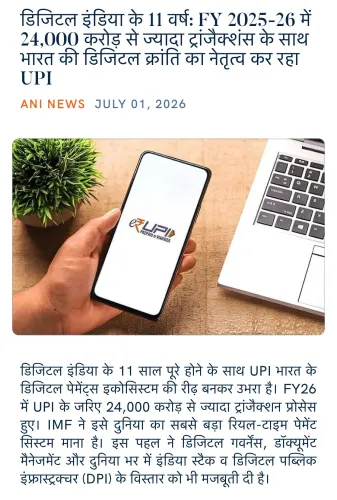
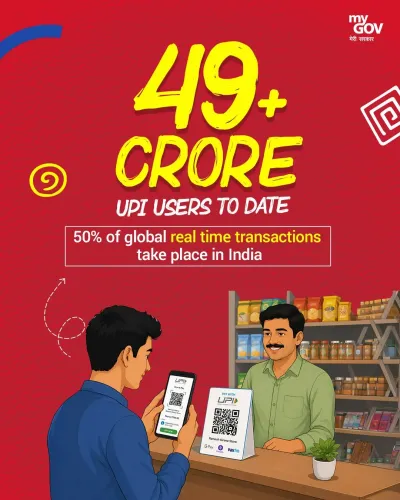
66 crore daily UPI transactions were highlighted as evidence of mass adoption of digital payments.
Union Textiles Minister Giriraj Singh shared the update via the NaMo App on 2 July 2026 .
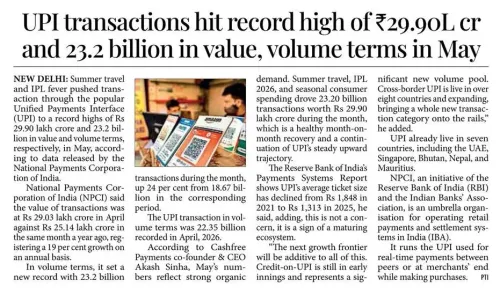
UPI was developed by NPCI and has been scaled nationally since 2016 , becoming a core pillar of India's digital public infrastructure.
The government has consistently used Digital India metrics to demonstrate progress on financial inclusion and ease of doing business since 2014 .
Union Textiles Minister Giriraj Singh on Thursday, 2 July 2026, shared a post on X highlighting Prime Minister Narendra Modi's account of Digital India's achievements, citing figures of 103 crore internet connections and 66 crore daily UPI transactions as the programme marked its eleventh anniversary.
Context
Digital India was formally launched by Prime Minister Narendra Modi on 1 July 2015 at the India Gate lawns in New Delhi, with the stated aim of creating robust digital infrastructure, delivering government services electronically, and expanding digital literacy across the country. The programme's eleventh year milestone prompted the Prime Minister to highlight what the government describes as transformational shifts in connectivity and payments. Giriraj Singh, a senior BJP leader and Lok Sabha MP from Begusarai, Bihar, shared the update via the NaMo App, amplifying the messaging across his social media following.
Policy Backdrop
The Unified Payments Interface (UPI), developed by the National Payments Corporation of India (NPCI) and scaled nationally since 2016, has become a central pillar of India's digital public infrastructure story. Successive Union budgets since 2014 have treated broadband expansion, Aadhaar-linked services, and real-time payments as instruments of financial inclusion and ease of doing business. The government has consistently cited growth in these metrics as evidence of a structural shift from physical to digital governance — spanning direct benefit transfers, MSME e-commerce, and digital health records.
The figure of 103 crore internet connections — if confirmed by official sources such as the Telecom Regulatory Authority of India (TRAI) — would represent near-universal coverage relative to India's population, underscoring the scale of infrastructure buildout over the decade. The 66 crore daily UPI transactions figure, similarly, would reflect the programme's penetration into everyday commerce and peer-to-peer transfers.
Stakeholders and Impact
The primary beneficiaries of Digital India's expansion include hundreds of millions of internet subscribers who have gained access to government services, banking, and e-commerce through mobile broadband. UPI users — ranging from street vendors and farmers to urban professionals — have seen transaction costs drop significantly as the platform displaced cash for routine payments. For MSMEs and rural entrepreneurs, digital payments infrastructure has opened access to formal credit and supply chains that were previously out of reach.
The political dimension is equally significant: the BJP government has made Digital India a flagship narrative ahead of electoral cycles, presenting the programme's metrics as a direct return on governance investment since 2014. Ministers across portfolios, including Giriraj Singh from the Textiles Ministry, routinely share such data points to reinforce the broader development communication strategy.
What's Next
Updated and verified figures on broadband subscribers and UPI volumes are expected in the next TRAI annual report and the forthcoming Economic Survey. The Prime Minister's Independence Day address on 15 August 2026 is likely to feature Digital India milestones prominently, as has been the pattern in previous years. Analysts will also watch for announcements related to a possible Digital India Phase-II rollout, which could target deeper rural penetration, AI-enabled public services, and expanded digital skilling programmes. The government's ability to sustain this growth trajectory — particularly in rural last-mile connectivity — will determine whether the programme's next decade matches the ambition of its first.
Point of View
Making them more persuasive than abstract GDP or investment numbers. Coming on the programme's eleventh anniversary, the timing allows the government to frame Digital India as a long-arc success story rather than a short-cycle scheme. The broader pattern suggests the run-up to the next electoral cycle will see intensified use of digital infrastructure data as a core governance credential.
NationPress
1 Oct 2026
Frequently Asked Questions
What is Digital India and when was it launched?
Digital India is a flagship government programme launched by Prime Minister Narendra Modi on 1 July 2015 at India Gate, New Delhi, aimed at building digital infrastructure, delivering services electronically, and expanding digital literacy across the country.
How many internet connections does India have in 2026 according to PM Modi?
Prime Minister Modi cited 103 crore internet connections in India as part of Digital India's eleventh anniversary highlights, though official verification from TRAI is awaited.
How many UPI transactions happen daily in India?
The post shared by Union Textiles Minister Giriraj Singh cited 66 crore daily UPI transactions, reflecting the scale of India's digital payments adoption over the past decade.
Why did Giriraj Singh post about Digital India when he is the Textiles Minister?
Senior BJP ministers across portfolios routinely share Prime Minister Modi's messaging on flagship government programmes as part of a broader government communication strategy, regardless of their specific ministry.
What is UPI and who developed it?
UPI, or Unified Payments Interface, is an instant inter-bank mobile payment system developed by the National Payments Corporation of India (NPCI) and scaled nationally since 2016 as a core part of India's digital public infrastructure.