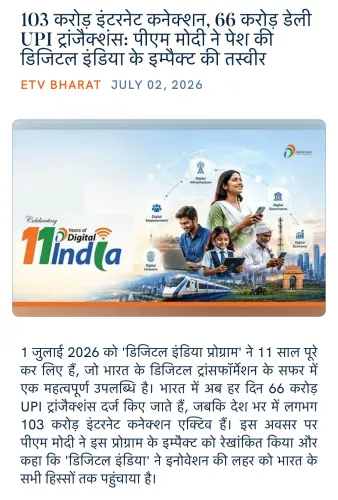
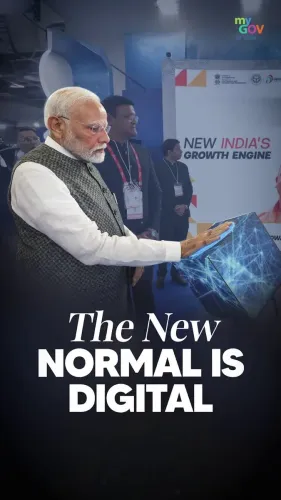
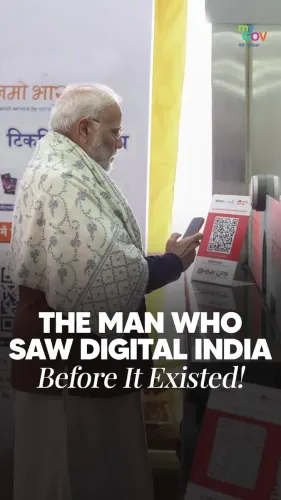
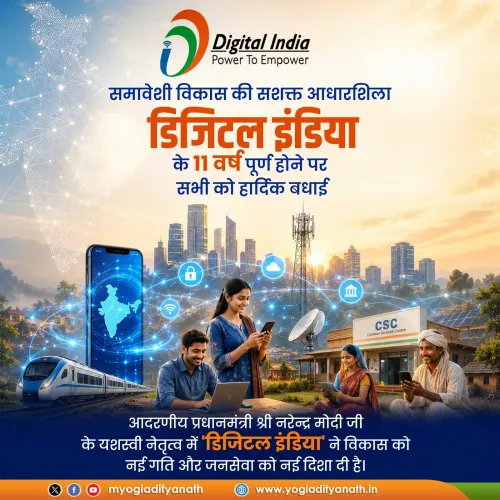
PM Modi marks 11 Years of Digital India, hails tech's transformative reach
Synopsis
Prime Minister Narendra Modi marked the eleventh anniversary of the Digital India programme on 1 July 2026, highlighting the transformative impact of technology adoption at scale. Launched in 2015, the initiative has driven digital payments, biometric identity, and e-governance across the country.
Key Takeaways
PM Modi posted on 1 July 2026 to mark 11 years of the Digital India programme , which was launched on 1 July 2015 .
The post described technology's reach across over a billion people as 'transformative', accompanied by a video under #11YearsOfDigitalIndia .
Digital India is overseen by the Ministry of Electronics and Information Technology and underpins major schemes including Aadhaar and UPI .
UPI , introduced in 2016 , has created an interoperable real-time payments ecosystem widely used by citizens and MSMEs .
Aadhaar , backed by the Aadhaar Act of 2016 , provides biometric digital identity to over a billion residents, enabling direct benefit transfers.
Upcoming policy milestones include data protection legislation and new phases of BharatNet and 5G rollout.
Prime Minister Narendra Modi on Wednesday, 1 July 2026, marked the eleventh anniversary of the Digital India programme, calling technology's spread across the country transformative and underscoring the initiative's scale with a reference to over a billion people embracing digital tools.
Context
The Digital India programme was formally launched by Prime Minister Modi on 1 July 2015, making 1 July 2026 its eleventh year in operation. The initiative was designed to deliver government services electronically, expand digital infrastructure, and improve connectivity across urban and rural India. Modi's post — captioned 'When over a billion people embrace technology, the impact is transformative!' — accompanied a video marking the occasion under the hashtag #11YearsOfDigitalIndia.
Policy Backdrop
The programme built on earlier e-governance efforts, including the National e-Governance Plan approved in 2006, and was given further momentum through two flagship instruments: Aadhaar, the biometric identity system that received statutory backing through the Aadhaar Act of 2016, and the Unified Payments Interface (UPI), introduced in 2016 by the National Payments Corporation of India to create an interoperable, real-time digital payments ecosystem. Together with Jan Dhan accounts and mobile telephony, these three pillars formed the so-called JAM trinity — a framework that has driven financial inclusion for millions of previously unbanked citizens.
The Ministry of Electronics and Information Technology has served as the nodal body overseeing Digital India's implementation, coordinating across departments on broadband expansion, digital literacy drives, and data governance frameworks. Successive Union Budgets have consistently allocated resources toward these goals, reflecting a sustained policy commitment over more than a decade.
Stakeholders and Impact
The programme's stated beneficiaries span a wide cross-section: ordinary citizens accessing government services online, rural populations brought into formal financial systems for the first time, micro, small and medium enterprises (MSMEs) using digital payments, and a growing technology startup ecosystem that has leveraged public digital infrastructure. UPI in particular has become a widely adopted payments rail, with its interoperable model drawing interest from other countries seeking to replicate India's digital public infrastructure approach.
Digital India has also been positioned as a vehicle for improving governance efficiency — reducing paperwork, curbing leakages in welfare delivery, and enabling direct benefit transfers to beneficiaries' bank accounts. The scale of Aadhaar, which provides unique biometric identities to over a billion residents, has been central to making these systems function at population scale.
What's Next
Upcoming milestones in India's digital policy calendar include parliamentary consideration of proposed data protection rules and potential new phases of the BharatNet rural broadband programme, alongside 5G rollout targets expected to feature in future Union Budget announcements. As Digital India enters its second decade, policymakers and industry observers will watch whether the programme's next phase deepens its focus on artificial intelligence, cybersecurity, and digital skilling to sustain the momentum built over the first eleven years.
Point of View
' Modi frames Digital India not merely as a policy programme but as a civilisational-scale shift, a framing that has electoral as well as administrative utility. The post arrives at a moment when India's digital public infrastructure model — the JAM trinity, UPI, and Aadhaar — is increasingly cited internationally as a replicable template, adding a soft-power dimension to a domestic anniversary. Analysts will note that the second decade of Digital India will be judged less on access and more on outcomes: data privacy, algorithmic governance, and whether digital inclusion has translated into measurable economic mobility for the rural poor.
NationPress
30 Sept 2026
Frequently Asked Questions
When was Digital India launched?
Digital India was formally launched by Prime Minister Narendra Modi on 1 July 2015 , making 1 July 2026 its eleventh anniversary.
What is the Digital India programme?
Digital India is a flagship Government of India initiative designed to deliver public services electronically, expand digital infrastructure, and promote financial inclusion through tools like Aadhaar and UPI.
What did PM Modi say on Digital India's 11th anniversary?
PM Modi posted on X on 1 July 2026 stating, 'When over a billion people embrace technology, the impact is transformative,' marking the occasion with a video under the hashtag #11YearsOfDigitalIndia.
What is UPI and how does it relate to Digital India?
UPI, or Unified Payments Interface, is a real-time digital payments platform introduced in 2016 by the National Payments Corporation of India. It is one of the key pillars of the Digital India ecosystem, enabling cashless transactions for citizens and businesses.
What comes next for Digital India after 11 years?
Upcoming milestones include parliamentary consideration of data protection legislation and new phases of the BharatNet rural broadband programme and 5G rollout targets expected in future Union Budgets.