PM Modi thanks Bhutan PM Tobgay on Independence Day

Synopsis
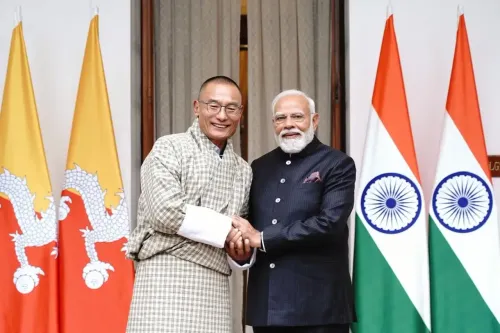
Prime Minister Narendra Modi on 15 August 2026 thanked Bhutanese PM Tshering Tobgay for Independence Day wishes, reaffirming India's 'special and enduring' partnership with Bhutan — a relationship rooted in a revised friendship treaty, hydropower ties, and shared Himalayan security interests.
Key Takeaways
PM Modi responded to Bhutan PM Tshering Tobgay's Independence Day wishes on 15 August 2026 .
Modi described the India-Bhutan relationship as a 'special and enduring partnership' that continues to grow stronger.
The bilateral relationship is anchored in the India-Bhutan Friendship Treaty , originally signed in 1949 and revised in 2007 .
India and Bhutan share a 699-kilometre border with close security, hydropower, and development cooperation.
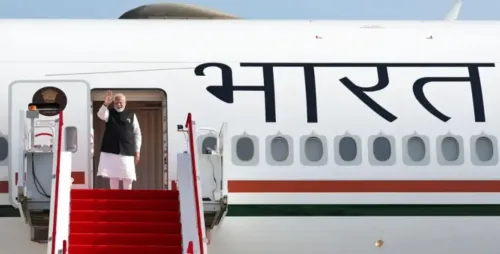
Modi made Bhutan his first foreign visit after taking office in 2014 , underscoring its priority in India's neighbourhood-first policy.
Tobgay returned to office as Bhutan's Prime Minister following elections in 2024 .
On India's Independence Day, 15 August 2026, Prime Minister Narendra Modi responded warmly to congratulatory wishes from Bhutanese Prime Minister Tshering Tobgay, reaffirming the depth of one of South Asia's most stable bilateral partnerships.
Modi's reply — 'We deeply cherish our special and enduring partnership with Bhutan, which continues to go from strength to strength' — is brief, but the diplomatic weight behind it is not. India and Bhutan share a 699-kilometre border and a relationship anchored in the India-Bhutan Friendship Treaty, originally signed in 1949 and revised in 2007 to modernise its provisions while preserving close security and economic coordination.
Why Bhutan sits at the top of India's neighbourhood calculus
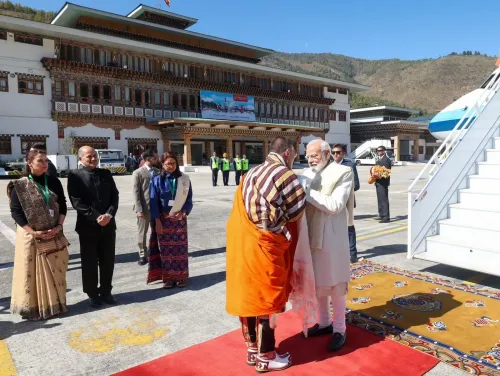
When Modi took office in 2014, he made Bhutan his first foreign destination — a deliberate signal that the Himalayan kingdom occupies a singular place in India's neighbourhood-first foreign policy. That choice has defined the template ever since: Bhutan is not just a neighbour, it is a strategic anchor in a region where China's influence is a constant variable.
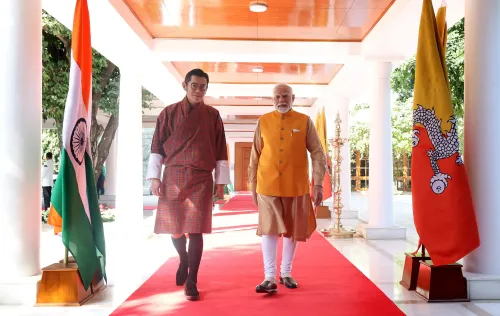
The bilateral relationship runs on three rails: security coordination along a sensitive Himalayan frontier, hydropower exports that power Indian grids and fund Bhutan's development, and Indian development assistance that underwrites Bhutan's five-year plans. Prime Minister Tshering Tobgay, who returned to office after winning elections in 2024, has continued the tradition of close engagement with New Delhi.
National Day exchanges as diplomatic maintenance
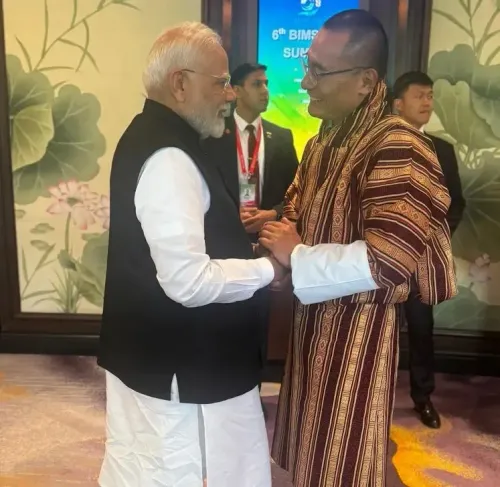
Independence Day greetings between heads of government are, in one sense, routine protocol. In another, they are the connective tissue of diplomacy — the consistent, low-key affirmations that keep relationships warm between summits and agreements. For India and Bhutan, a partnership this deep requires no dramatic gestures. The handshake on a national holiday says: nothing has changed, and that itself is the message.
Point of View
High-visibility engagement with Bhutan on national days reinforces a relationship that serves as a buffer in a contested Himalayan neighbourhood. Modi's neighbourhood-first doctrine has made Bhutan a template for what Indian diplomacy aspires to with other neighbours: deep trust, minimal friction, durable cooperation. Tobgay's return to power in 2024 has kept that continuity intact, and public affirmations like this one signal to regional observers — particularly Beijing — that the India-Bhutan axis remains firm.
NationPress
15 Aug 2026
Frequently Asked Questions
Why is India's relationship with Bhutan considered special?
India and Bhutan share a 699-kilometre Himalayan border and are bound by the India-Bhutan Friendship Treaty (originally 1949, revised 2007), with deep ties in security coordination, hydropower exports, and Indian development assistance to Bhutan.
Who is Tshering Tobgay?
Tshering Tobgay is the Prime Minister of Bhutan. He previously served from 2013 to 2018 and was re-elected in 2024 , maintaining Bhutan's traditionally close ties with India.
Why did PM Modi choose Bhutan as his first foreign visit in 2014?
Modi's choice of Bhutan as his first foreign destination after taking office in 2014 was a deliberate signal of Bhutan's priority within India's neighbourhood-first foreign policy framework.
What is the India-Bhutan Friendship Treaty?
The India-Bhutan Friendship Treaty was originally signed in 1949 and revised in 2007 to update provisions on sovereignty and cooperation while preserving close bilateral coordination on security and development.
What are the main pillars of India-Bhutan cooperation?
The relationship rests on three main pillars: Himalayan security coordination, hydropower exports from Bhutan to India, and Indian development assistance that supports Bhutan's national five-year plans.