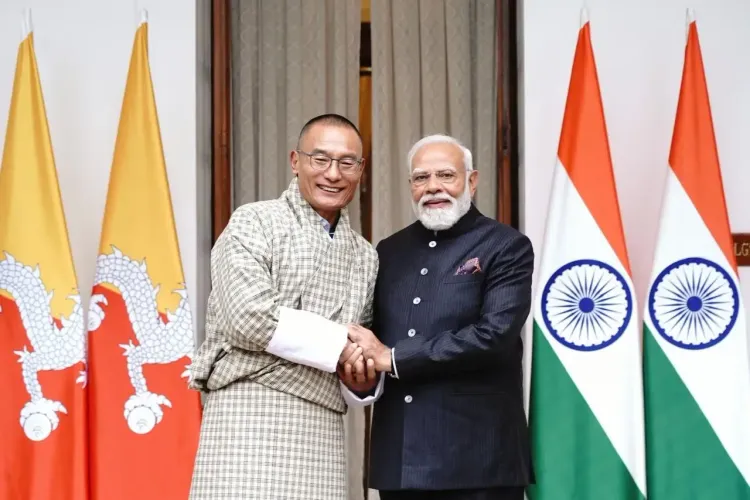
How are PM Modi and Bhutan's Leader Strengthening Ties?
Synopsis
In a significant meeting on the sidelines of the India-AI Impact Summit, PM Modi and Bhutan's Prime Minister Tshering Tobgay discussed enhancing bilateral cooperation in key sectors such as energy and technology. Their ongoing partnership reflects deep-rooted ties and shared aspirations for progress.
Key Takeaways
Strengthening bilateral cooperation is a priority for both leaders.
Focus on AI and digital technology for inclusive growth.
Significant increase in trade volume between India and Bhutan.
Deep-rooted ties in energy and cultural exchanges .
Commitment to trust and goodwill as a foundation for future collaboration.
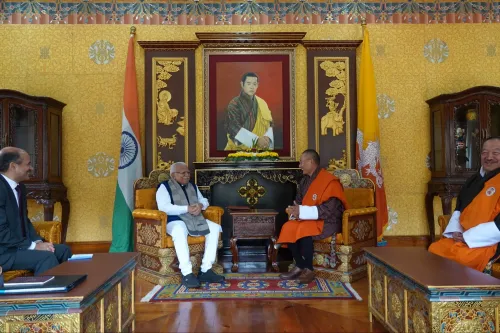
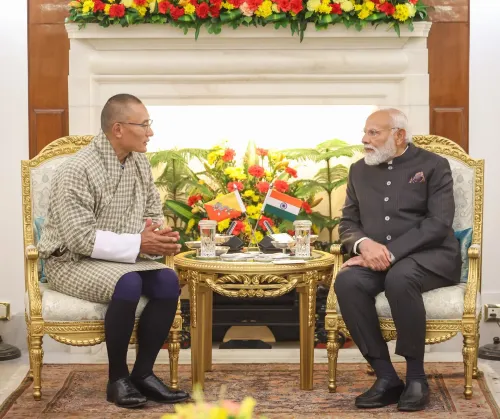
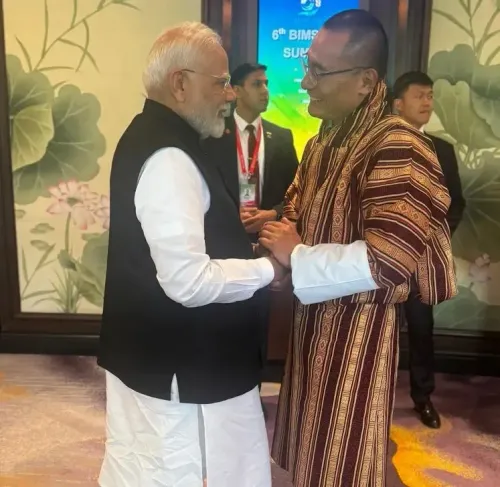
New Delhi, Feb 18 (NationPress) The Prime Minister of Bhutan, Tshering Tobgay, and India's Prime Minister Narendra Modi convened on Wednesday to evaluate advancements in their bilateral collaboration across various essential sectors, including energy, connectivity, development partnership, and people-to-people connections, during the India-AI Impact Summit held in New Delhi.
As per the statements from the Ministry of External Affairs (MEA), both leaders voiced their commitment to leveraging Artificial Intelligence (AI) for inclusive and human-centered growth, agreeing to bolster their cooperation in the AI and digital technology domains.
They also reiterated their dedication to reinforcing the India-Bhutan partnership, founded on trust, goodwill, and mutual respect.
India and Bhutan have a longstanding tradition of regular high-level dialogues and are continually investigating new opportunities for collaboration while strengthening their profound connections in energy, infrastructure, and cultural exchanges.
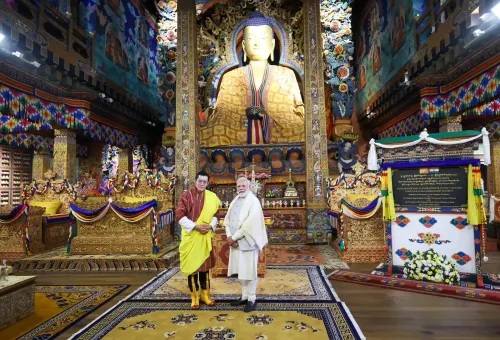
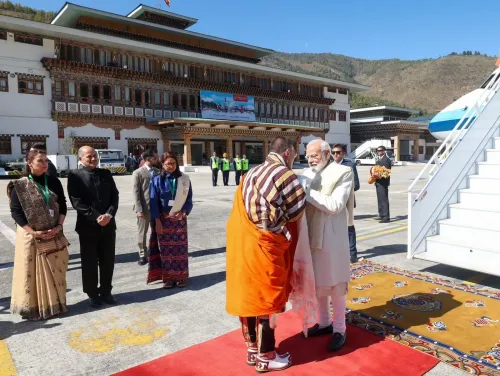
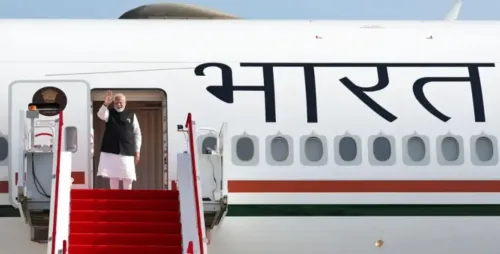
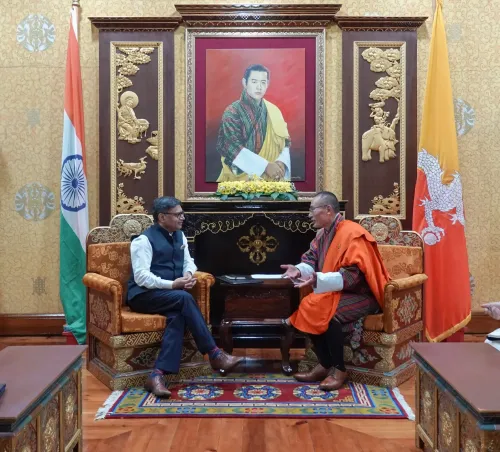
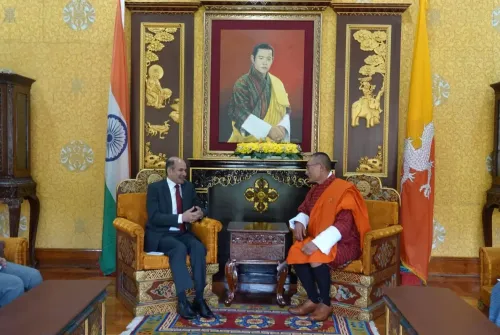
In November of last year, PM Modi made a two-day visit to Thimphu aimed at enhancing the India-Bhutan partnership and reaffirming India's commitment to its Neighbourhood First Policy.
This visit coincided with the display of the Sacred Piprahwa Relics of Lord Buddha from India, where he offered prayers at the Tashichhodzong in Thimphu and participated in the Global Peace Prayer Festival hosted by the Royal Government of Bhutan.
Moreover, this trip marked a significant milestone in the India-Bhutan energy partnership with the inauguration of the Punatsangchhu-II hydropower project.
The foundational framework of India-Bhutan relations is established in the Treaty of Friendship and Cooperation signed in 1949, which was renewed in February 2007, as highlighted by the MEA.
The India-Bhutan Agreement on Trade, Commerce and Transit, initially signed in 1972 and revised most recently in 2016, sets up a free trade system between the two nations. This agreement also allows duty-free transit of Bhutanese exports to third nations. Trade between the countries is conducted in Indian Rupees, which holds the same value as the Bhutanese Ngultrum.
India stands as Bhutan's foremost trading partner, both in terms of imports and exports. Since 2014, the trade volume between India and Bhutan has more than tripled, escalating from $484 million in 2014-15 to $1,777.44 million in 2024-25, accounting for over 80 percent of Bhutan's total trade. Throughout this duration, the trade balance has consistently favored India.
Major exports from India to Bhutan include petrol, diesel, rice, wood charcoal, coke, ferrous products derived from iron ore, maize (excluding seeds), soya-bean oil, smartphones, and iron or steel structures and parts, among others.
Conversely, primary imports from Bhutan to India consist of electricity, ferro-silicon, dolomite chips, ferro-silico-manganese, Portland pozzolana cement, pebbles, gravel, dolomite slabs, semi-finished iron or non-alloy steel products, malt beer, and ordinary Portland cement.
Point of View
The ongoing dialogue between India and Bhutan reflects a commitment to mutual growth and stability. This partnership not only reinforces India's regional influence but also supports Bhutan's developmental aspirations. The collaboration in AI and energy sectors signifies a forward-looking approach that can benefit both nations significantly.
NationPress
29 Sept 2026
Frequently Asked Questions
What key sectors are India and Bhutan focusing on in their partnership?
India and Bhutan are focusing on key sectors including energy, connectivity, development partnership, and people-to-people connections.
What recent developments have occurred in India-Bhutan relations?
Recent developments include the inauguration of the Punatsangchhu-II hydropower project and discussions on enhancing cooperation in AI and digital technology.
How has trade between India and Bhutan evolved?
Trade between India and Bhutan has more than tripled since 2014, with India being Bhutan's largest trading partner, accounting for over 80% of Bhutan's total trade.
What is the significance of the Treaty of Friendship and Cooperation?
The Treaty of Friendship and Cooperation, signed in 1949 and renewed in 2007, forms the foundational framework of India-Bhutan relations.
What are the major exports from India to Bhutan?
Major exports include petrol, diesel, rice, and various industrial products, contributing significantly to Bhutan's imports.