Why Did Bhutan's Tobgay Thank PM Modi for Support?
Synopsis
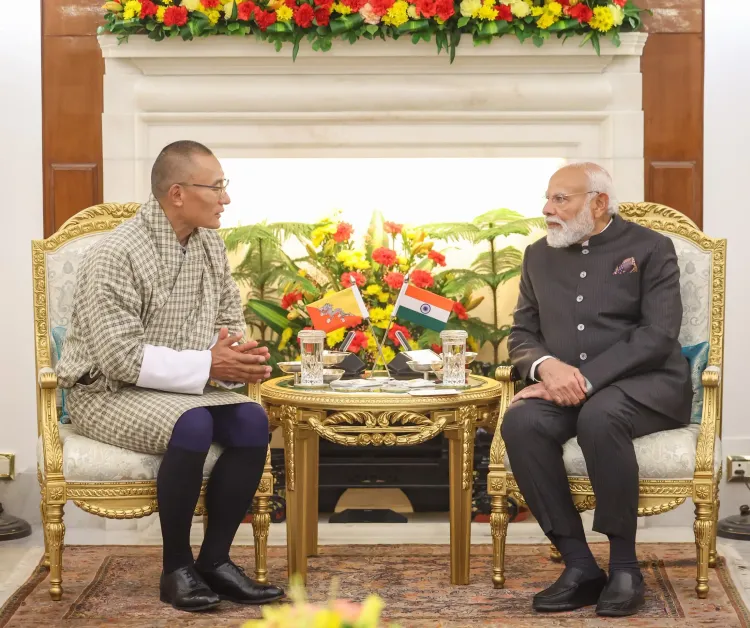
In a recent meeting in New Delhi, Bhutan's PM Tshering Tobgay expressed gratitude to India's PM Narendra Modi for support on the 13th Five-Year Plan and the Gelephu Mindfulness City Project. The leaders discussed advancements in bilateral cooperation, AI, and mutual growth. Discover how this partnership continues to grow and shape the future of both nations.
Key Takeaways
Prime Minister Tshering Tobgay expresses gratitude to PM Modi for support on key projects.
Both leaders discuss advancements in AI and bilateral cooperation.
The partnership focuses on sustainable growth and mutual respect.
India is Bhutan's main trade partner, with significant trade volumes.
Regular high-level exchanges strengthen ties between the nations.
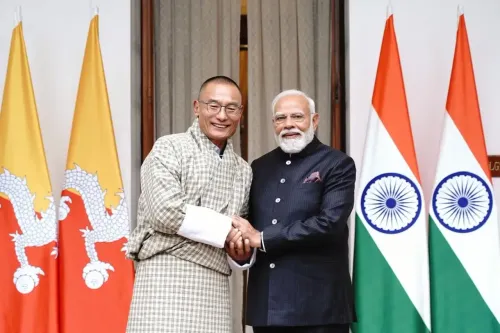
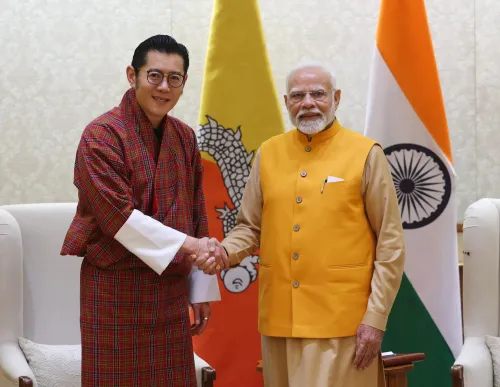
New Delhi, Feb 18 (NationPress) The Prime Minister of Bhutan, Tshering Tobgay, expressed his gratitude to PM Narendra Modi for the valuable support India has extended towards the 13th Five-Year Plan of Bhutan and the Gelephu Mindfulness City Project.
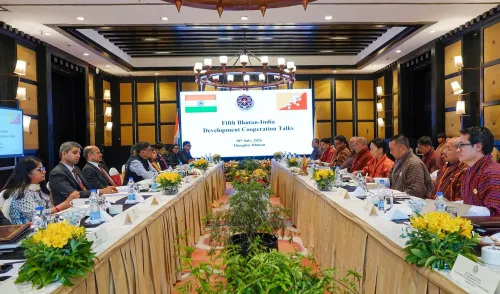
During their meeting at the India-AI Impact Summit in New Delhi, both leaders assessed the advancement of bilateral cooperation across significant sectors including energy, connectivity, development partnerships, and people-to-people connections.
They reinforced their dedication to advancing collaboration in priority areas such as energy, connectivity, and development partnerships, while also reviewing the progress achieved since Prime Minister Modi's highly successful visit to Bhutan in November 2025.
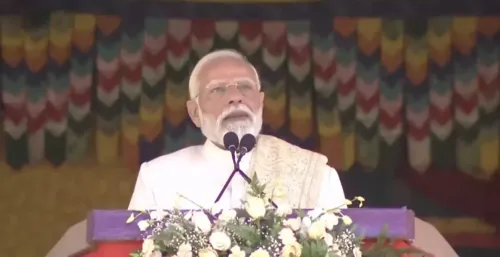
PM Modi, after the meeting, posted on X, stating, "My discussion with PM Tshering Tobgay was exceptional. We explored how to leverage the potential of AI for the greater good, ensuring it aligns with sustainability principles. The lasting friendship between India and Bhutan, founded on mutual trust, goodwill, and the strong bonds between our peoples, will continue to lead our collaboration into innovative and transformative realms."
The Ministry of External Affairs (MEA) noted that both nations have emphasized the importance of utilizing new technologies for mutual growth and prosperity, agreeing to enhance cooperation in the fields of AI and digital technology through shared experiences and joint AI solution developments.
They reiterated their commitment to closely collaborate in fortifying the India-Bhutan partnership, which is built on trust, goodwill, and mutual respect.
India and Bhutan maintain a tradition of frequent high-level exchanges, continually seeking new collaborative pathways while reinforcing their deep-seated connections in energy, infrastructure, and cultural exchanges.
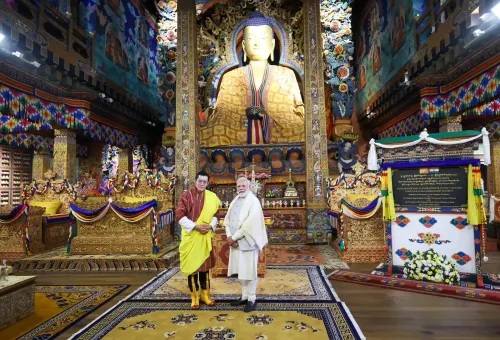
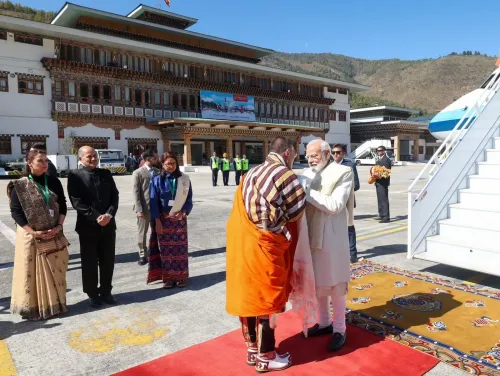
Last November, PM Modi's two-day visit to Thimphu aimed at further strengthening the India-Bhutan partnership and reaffirming India's dedication to its Neighbourhood First Policy.
During this visit, he participated in the exposition of the Sacred Piprahwa Relics of Lord Buddha and offered prayers at Tashichhodzong in Thimphu, also taking part in the Global Peace Prayer Festival organized by the Royal Government of Bhutan.
This visit also marked a significant milestone in the India-Bhutan energy partnership with the inauguration of the Punatsangchhu-II hydropower project.
The MEA previously stated, "The fundamental framework of India-Bhutan relations is the Treaty of Friendship and Cooperation, signed in 1949 and renewed in February 2007."
The India-Bhutan Agreement on Trade, Commerce, and Transit, originally signed in 1972 and revised most recently in 2016, establishes a free trade regime between the two nations and facilitates duty-free transit of Bhutanese exports to third countries. Bilateral trade is conducted in Indian Rupees, which is pegged to the Bhutanese Ngultrum.
As India's primary trade partner, both for imports and exports, trade between India and Bhutan has surged more than threefold since 2014, from $484 million in 2014-15 to $1,777.44 million in 2024-25, representing over 80% of Bhutan's overall trade. Throughout this time, the balance of trade has consistently favored India.
Major exports from India to Bhutan include petrol and diesel, rice, wood charcoal, coke, ferrous products, maize, soya-bean oil, smartphones, and iron or steel structures.
Conversely, India's primary imports from Bhutan consist of electricity, ferro-silicon, dolomite chips, ferro-silico-manganese, Portland pozzolana cement, pebbles, gravel, dolomite slabs, and ordinary Portland cement.
Point of View
It's essential to recognize the significance of the India-Bhutan partnership. The ongoing collaboration reflects a shared vision for sustainable development, technological advancement, and cultural exchange. This relationship is vital not only for both nations but also serves as a model for regional cooperation in South Asia.
NationPress
19 Oct 2026
Frequently Asked Questions
What is the significance of the India-Bhutan partnership?
The India-Bhutan partnership is significant as it encompasses cooperation in various sectors such as energy, trade, and technology, enhancing mutual growth and stability in the region.
How does the Gelephu Mindfulness City Project benefit Bhutan?
The Gelephu Mindfulness City Project aims to promote sustainable urban development, enhancing the quality of life for residents and showcasing Bhutan's commitment to mindfulness and holistic living.
What are the key exports from India to Bhutan?
India's major exports to Bhutan include petrol, rice, wood charcoal, and various industrial goods, contributing significantly to Bhutan's economy.
What role does AI play in the India-Bhutan partnership?
AI plays a crucial role in the India-Bhutan partnership as both nations aim to leverage technology for growth, focusing on mutual sharing of expertise and innovation.
Why did PM Tshering Tobgay thank PM Modi?
PM Tshering Tobgay thanked PM Modi for India's support on Bhutan's 13th Five-Year Plan and the Gelephu Mindfulness City Project, highlighting the importance of bilateral cooperation.