Railways electrification: 70% in 10 years vs 30% in 90, says PM Modi
Synopsis
India took 90 years to electrify 30% of its railways — then completed the remaining 70% in just one decade. Modi's Independence Day address added a second headline: India's first hydrogen-powered train, reportedly the longest and most powerful of its kind, putting the country in rare company on clean rail technology.
Key Takeaways
India achieved 70 per cent railway electrification in the last 10 years , against only 30 per cent in the preceding 90 years since work began in 1925 .
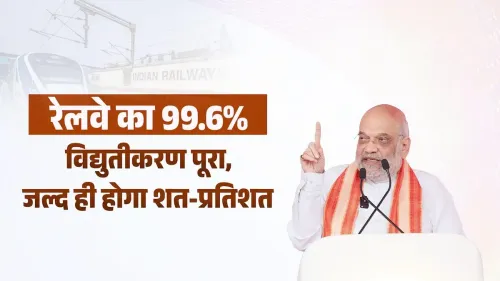
India's broad gauge network is now 99.6 per cent electrified — the largest electrified railway network in the world, second only to Switzerland at 100 per cent .
India's electrification rate surpasses China ( 82% ), Spain ( 67% ), Japan ( 64% ), France ( 60% ), and the UK ( 39% ).
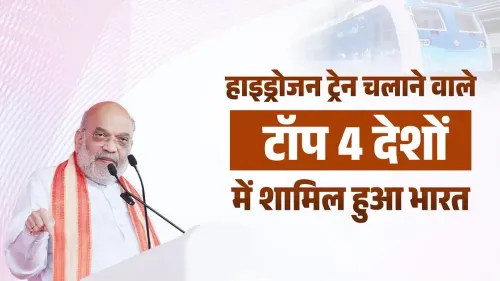
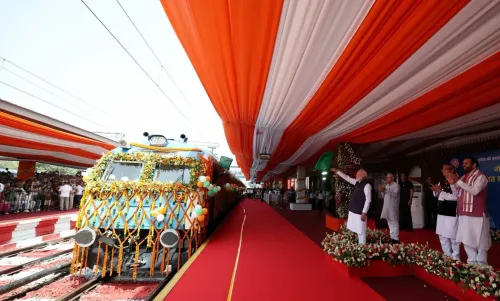
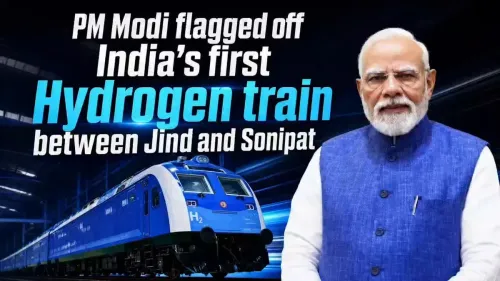
India has launched its first hydrogen-powered train , described as the longest and most powerful of its kind, with a capacity of 2,600 passengers .
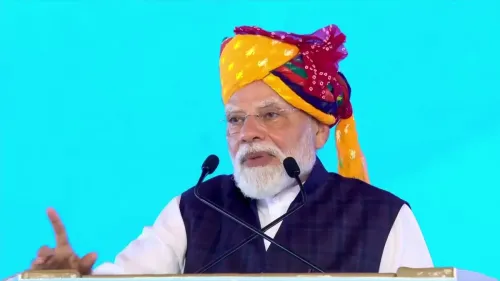
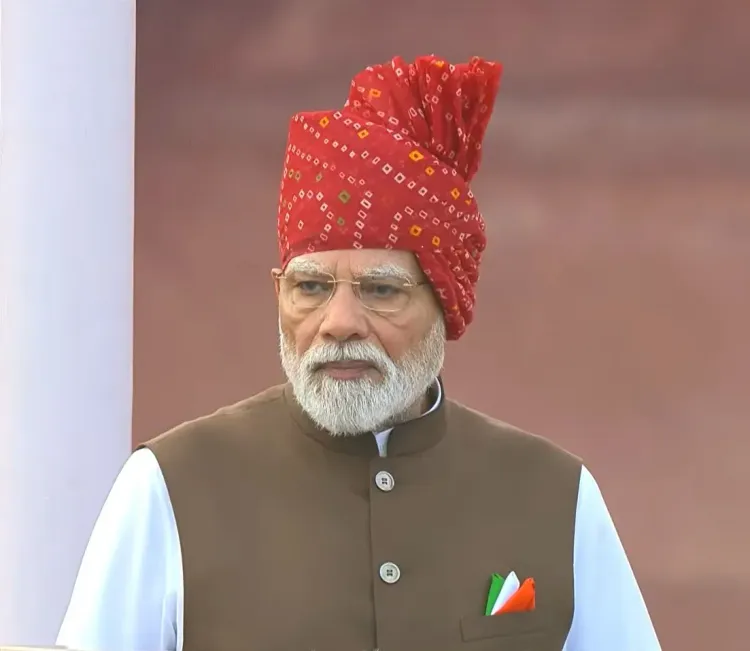
PM Modi made the announcements during his Independence Day address from the Red Fort on 15 August .
Prime Minister Narendra Modi on 15 August highlighted a striking milestone in India's rail infrastructure: while the country managed only 30 per cent railway electrification over 90 years since work began in 1925, the remaining 70 per cent was completed within the last 10 years. Addressing the nation from the Red Fort on Independence Day, Modi also announced that India has launched its first hydrogen-powered train, marking its entry into a new frontier of clean rail transport.
A Century of Electrification in Perspective
Railway electrification in India began in 1925, but progress was slow for decades. 'The work of electrification started in 1925, but over the next 90 years, only 30 per cent of the railway network had been electrified,' Modi said in his address. He contrasted this with the speed of the last decade, during which the government claims to have completed the remaining 70 per cent — effectively achieving 100 per cent electrification of the broad gauge network.
India now stands at 99.6 per cent electrification of its broad gauge track network, second only to Switzerland, which has achieved 100 per cent electrification — though Switzerland's network is significantly smaller. India's electrification rate is ahead of China (82 per cent), Spain (67 per cent), Japan (64 per cent), France (60 per cent), and the United Kingdom (39 per cent).
Environmental and Economic Gains
Modi underscored the downstream benefits of electrification, noting that the shift has reduced India's dependence on imported diesel. 'Our trains began running on electricity, benefiting the environment as well,' he said. The reduction in diesel imports carries both economic and strategic significance, given India's historically large energy import bill.
This comes amid India's broader push to decarbonise its transport sector, where Railways — one of the world's largest rail networks by route length — represents a critical lever for cutting emissions at scale.
India's First Hydrogen-Powered Train
Beyond electrification, Modi revealed that India has launched its first hydrogen-powered train, describing it as the longest and most powerful of its kind globally. 'Bharat has entered this new field of fuel as well. The country has started its first hydrogen-powered train, and I am pleased that it is the longest and most powerful train of its kind,' he said. The train has a carrying capacity of 2,600 passengers and is positioned as a proof-of-concept for hydrogen as a clean alternative to diesel-powered rail.
The development places India among a small group of nations — including Germany and China — that have operationalised hydrogen rail technology, though India's claim of the longest and most powerful such train has not yet been independently verified.
What the Numbers Signal
The pace comparison — 30 per cent in 90 years versus 70 per cent in 10 years — is a central plank of the government's infrastructure narrative heading into the next electoral cycle. Critics have previously noted that the acceleration was enabled in part by policy continuity from earlier governments and by rising capital expenditure in Railways that began ramping up from the mid-2000s. The government, however, attributes the surge primarily to the prioritisation and execution focus of the post-2014 period.
With electrification now effectively complete, the next frontier for Indian Railways — as Modi's hydrogen train announcement signals — is clean traction technology beyond the grid, particularly for routes where overhead electrification remains uneconomical.
Point of View
But context matters: the final stretch of any infrastructure rollout is typically faster once the foundational grid is in place, and capital expenditure on Railways had been rising well before 2014. What is undeniable is that India has now crossed a threshold few large rail networks have reached, and the hydrogen train — if it scales — could redefine the economics of last-mile rail decarbonisation. The harder question is whether hydrogen traction can be commercially viable across India's vast, low-density route network, or whether it remains a flagship showcase without systemic follow-through.
NationPress
29 Sept 2026
Frequently Asked Questions
When did railway electrification begin in India?
Railway electrification in India began in 1925 . However, only 30 per cent of the network was electrified over the following 90 years , with the remaining 70 per cent completed in the last decade.
What is India's current railway electrification percentage?
India's broad gauge railway network is 99.6 per cent electrified, making it the largest electrified railway network in the world. It ranks second only to Switzerland, which has achieved 100 per cent electrification on a much smaller network.
How does India's railway electrification compare to other countries?
India at 99.6 per cent leads major economies including China ( 82% ), Spain ( 67% ), Japan ( 64% ), France ( 60% ), and the United Kingdom ( 39% ).
What is India's hydrogen-powered train?
India has launched its first hydrogen-powered train, described by PM Modi as the longest and most powerful of its kind globally. The train has a passenger capacity of 2,600 and is intended to demonstrate hydrogen as a clean alternative to diesel-powered rail transport.
Why does railway electrification matter for India?
Electrification has reduced India's dependence on imported diesel, cutting costs and lowering emissions across one of the world's largest rail networks. The shift also supports India's broader goal of decarbonising its transport sector.