PoK unrest exposes cracks in Pakistan's Kashmir narrative, says report
Synopsis
Muslim Kashmiris in PoK chanting 'Pak Forces Out' and facing paramilitary fire have done something Pakistan's critics never could: dismantled its 'protector of Kashmiris' narrative from within. A Gatestone Institute report argues the unrest — rooted in electricity costs and flour shortages — has grown into a direct rejection of Pakistan's founding ideology.
Key Takeaways
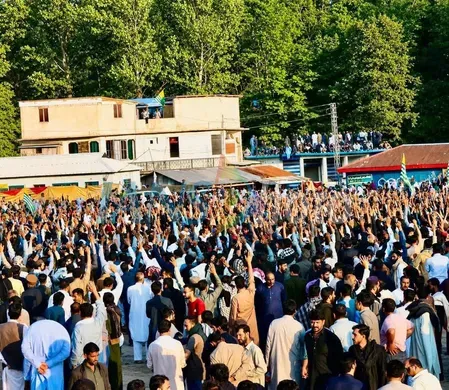
Protesters in Pakistan-occupied Kashmir (PoK) chanted 'Pak Forces Out' , directing anger at Pakistan rather than India.
Unrest began in May 2023 over electricity tariffs and flour shortages, led by the Joint Awami Action Committee (JAAC) with a 38-point charter of demands .
Pakistani paramilitary forces opened fire on protesters in Muzaffarabad and Rawalakot in June , with the unrest reportedly leaving dozens dead.
The Awami Action Committee was banned on 5 June under anti-terror provisions; leaders face sedition charges and internet was suspended.
A Gatestone Institute report argues the protests reflect a popular rejection of Pakistan's 'two-nation theory' and its claim to be the guardian of Kashmiri Muslims.
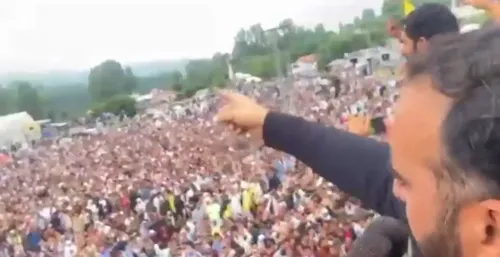
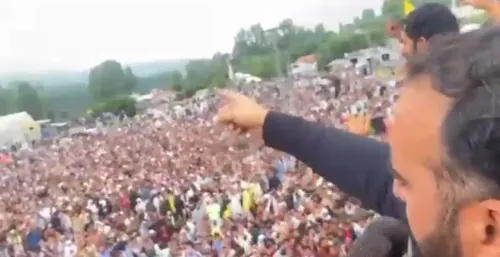
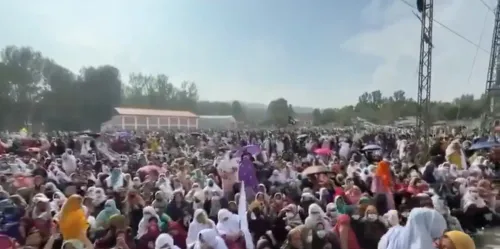
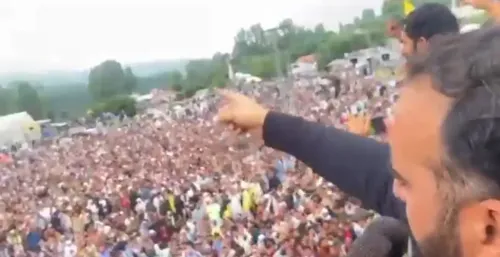
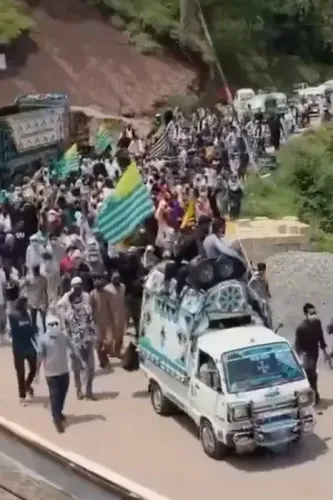
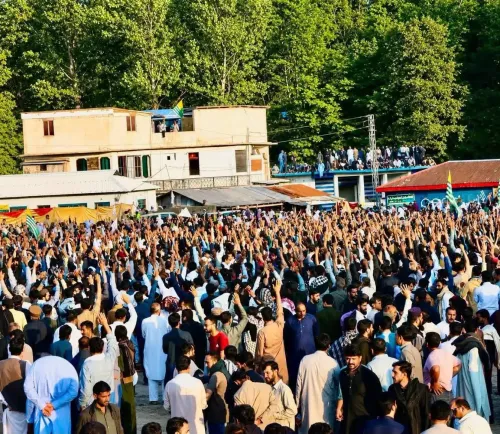
The ongoing civil unrest in Pakistan-occupied Kashmir (PoK) is sharply undermining Pakistan's long-standing claim to be the rightful protector of Kashmiri Muslims, according to a report by the New York-based Gatestone Institute. Protesters chanting 'Pak Forces Out' in the principal PoK towns of Muzaffarabad and Rawalakot have directed their anger not at India, but at the Pakistani state itself — a development the report describes as politically significant.
How the Protests Began
The unrest traces its roots to May 2023, when residents took to the streets over soaring electricity tariffs and flour shortages. The movement was led by the Joint Awami Action Committee (JAAC) — a coalition of traders, lawyers, transporters, students, and civil society groups. The committee subsequently unveiled a 38-point charter of demands, covering subsidised essential commodities and reforms to the local electoral system.
According to the report, the grievances reflect years of accumulated economic frustration. 'Years of economic frustration boiled over when residents complained that although their territory generates substantial hydroelectric power, they were being charged electricity rates they considered unfair while also struggling with rising food prices and shortages,' it noted.
Who Was on the Streets
The Gatestone Institute report was explicit that those confronting Pakistani paramilitary forces were not armed insurgents. 'The protesters were not armed rebels. They were ordinary Muslim residents — traders, students, lawyers, transport workers, and women — demanding cheaper electricity, affordable wheat flour, and fairer treatment from the authorities that rule them,' it stated. Pakistani paramilitary forces opened fire on protesters in Muzaffarabad and Rawalakot in June this year, and the escalating unrest reportedly left dozens dead.
Pakistan's Response and Crackdown
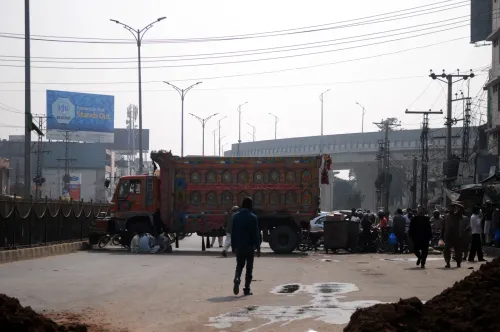
Islamabad's reaction to the demonstrations was swift and, critics argue, disproportionate. The Awami Action Committee was banned on 5 June under anti-terror provisions. Its leaders face sedition charges. Internet and mobile communications were suspended, and federal paramilitary forces were deployed across the region. The report described Pakistan's response as 'harsh,' noting that what began as an economic protest has since evolved into a broader challenge to Pakistani authority in the territory.
The Wider Narrative Challenge
The demonstrations carry implications that extend well beyond bread-and-butter grievances. According to the report, the protests by Muslim Kashmiris in PoK reflect a strong popular rejection of the 'two-nation theory' — the founding ideology of Pakistan. 'By bravely confronting the very state that claims to embody Muslim purity and protection, the Kashmiri Muslim protesters have dismantled the moral foundation of Pakistan's narrative from within,' the report stressed.
The report further noted that growing voices in PoK are openly asserting that Pakistan is not their protector and that they would be better off without it — a direct repudiation of Islamabad's decades-long international positioning on Kashmir. The contrast is made sharper, the report argued, by the fact that Muslims in the Indian Union Territory of Jammu and Kashmir reportedly enjoy greater political rights, economic opportunities, and development than those in PoK.
What This Means Going Forward
The Gatestone Institute report suggests that the PoK unrest is not a passing episode but a structural challenge to Pakistan's Kashmir policy. With sedition charges filed against protest leaders, communications blackouts imposed, and paramilitary forces deployed, the situation in PoK is likely to remain a pressure point — both domestically for Pakistan and internationally, where it has long sought to project itself as the voice of Kashmiri Muslims.
Point of View
And its framing should be read with that context in mind; but the underlying facts of the protests, the crackdown, and the 38-point charter are independently verifiable. What is harder to dismiss is the optics: a state that bans its own citizens' committees under anti-terror law and cuts their internet while claiming to champion Muslim rights elsewhere has a credibility problem that no diplomatic statement can fully paper over. The contrast with the Indian Union Territory of Jammu and Kashmir — however contested that comparison may be — is now part of the international conversation in ways that Islamabad will find difficult to manage.
NationPress
10 Oct 2026
Frequently Asked Questions
What triggered the protests in Pakistan-occupied Kashmir?
The protests began in May 2023 over soaring electricity tariffs and flour shortages in PoK. Residents complained that despite their territory generating substantial hydroelectric power, they were charged rates they considered unfair, while also facing rising food prices and shortages.
Who is the Joint Awami Action Committee (JAAC)?
The JAAC is a coalition of traders, lawyers, transporters, students, and civil society groups that led the PoK protests. It unveiled a 38-point charter of demands covering subsidised essential commodities and reforms to the local electoral system.
How did Pakistan respond to the PoK unrest?
Pakistan's response included banning the Awami Action Committee on 5 June under anti-terror provisions, filing sedition charges against its leaders, suspending internet and mobile communications, and deploying federal paramilitary forces. Pakistani paramilitary forces also opened fire on protesters in Muzaffarabad and Rawalakot.
Why is the PoK unrest significant for Pakistan's Kashmir narrative?
Pakistan has long claimed internationally to be the protector of Kashmiri Muslims and the rightful guardian of Kashmir. The PoK protests, where Muslim Kashmiris are directing anger at Pakistan itself and chanting 'Pak Forces Out', directly contradict that narrative, according to the Gatestone Institute report.
What does the Gatestone Institute report conclude about the protests?
The New York-based Gatestone Institute report argues that the demonstrations reflect a popular rejection of Pakistan's 'two-nation theory' and its founding ideology. It states that PoK protesters have 'dismantled the moral foundation of Pakistan's narrative from within' by confronting the state that claims to protect them.