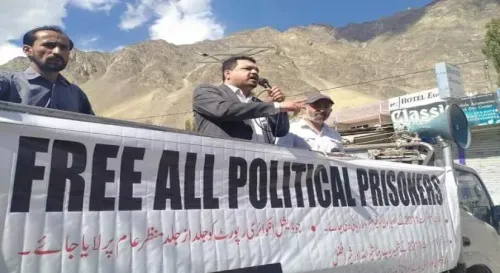
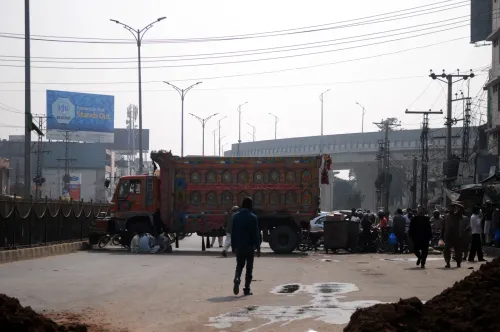
PoK protests: Islamabad eyes direct control via Article 56, JAAC rejects talks

Synopsis
The unrest in PoK is no longer just about subsidies or development — Indian officials say Islamabad is using the crisis as cover to invoke Article 56 of the AJK Interim Constitution, a move that would let it dissolve the elected PoK government and rule the region directly. With protests spreading beyond Muzaffarabad and a global diaspora amplifying the cause, Pakistan's containment strategy is under unprecedented pressure.
Key Takeaways
Protests in Pakistan-occupied Kashmir (PoK) continue, with the Joint Awami Action Committee (JAAC) rejecting government-offered talks as futile.
Indian intelligence officials say Islamabad is pushing to implement Article 56 of the Azad Jammu and Kashmir Interim Constitution Act of 1974 , which would allow it to dismiss the PoK government and dissolve the Legislative Assembly .
Under current arrangements, Pakistan controls only foreign affairs, defence, security, currency, and foreign trade in PoK ; day-to-day governance belongs to the regional administration.
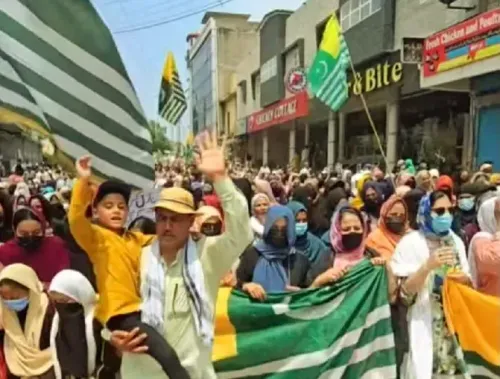
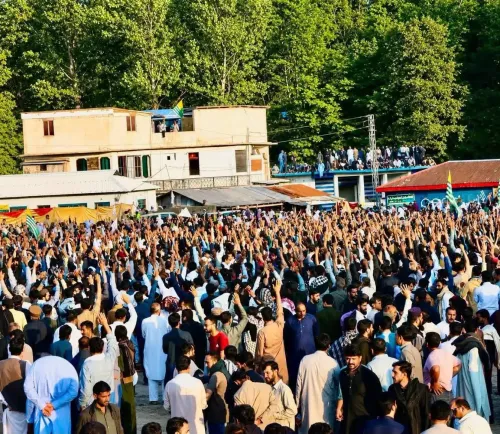
Protests have spread beyond Muzaffarabad to multiple districts, and a global PoK diaspora has raised human rights concerns internationally.
Officials say Islamabad's goal is to suppress dissent, not formally integrate PoK as a Pakistani province.
Pakistan is reportedly considering both legal action and forcible dispersal against the protesters.
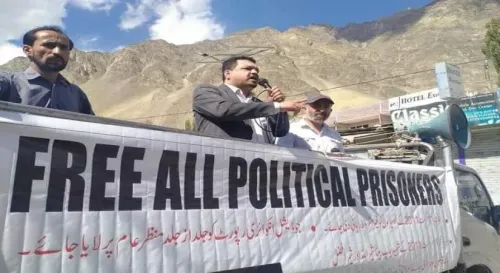
Protests in Pakistan-occupied Kashmir (PoK) show no sign of abating, with the Joint Awami Action Committee (JAAC) refusing to engage in government-initiated dialogue, asserting that Islamabad has a consistent record of reneging on its commitments. The standoff, which has drawn attention from a global diaspora, is being watched closely by Indian intelligence officials who say the unrest masks a deeper power grab by the Pakistani establishment.
The Article 56 Threat
At the heart of the crisis, according to Indian officials tracking the situation, is Islamabad's push to implement Article 56 of the Azad Jammu and Kashmir Interim Constitution Act of 1974. If enforced, the article would empower the federal government in Islamabad to dismiss the elected government in PoK and dissolve its Legislative Assembly outright. Critically, it would render the position of any majority government in the region irrelevant, with all consequential decisions flowing directly from Islamabad.
Under the existing constitutional framework, PoK is designated a self-governing autonomous state. Pakistan exercises authority only over foreign affairs, defence, security, currency, and foreign trade — day-to-day governance formally rests with the PoK administration. Implementation of Article 56 would effectively bypass this arrangement without formally integrating PoK as a province of Pakistan.
What Indian Officials Are Saying
An Indian intelligence official, speaking on condition of anonymity, described the offer of talks as 'an eyewash,' arguing that Islamabad seeks to resolve the situation entirely on its own terms. A second official said the refusal to honour commitments is directly linked to the push for Article 56 implementation, which would hand the federal government complete administrative control over the region.
Officials further noted that Islamabad's objective is not formal integration but rather the suppression of dissent. 'The only intention is to scuttle dissent by brute force and ensure that protesters seeking development for the region are beaten down,' one official said.
Why the Protests Have Spread
Unlike previous rounds of unrest, the current wave of protests has extended well beyond Muzaffarabad, spanning multiple districts across PoK — a development that has, according to officials, strained the capacity of Pakistani security agencies to contain the movement. Simultaneously, members of the PoK diaspora have staged demonstrations abroad, raising concerns about human rights violations and drawing international attention to the region's governance deficit.
The underlying grievances are longstanding. PoK is reportedly rich in water resources, precious gemstones, and industrial and metallic minerals, yet residents allege that revenue generated from these assets is not reinvested locally, leaving the region chronically underdeveloped. The JAAC, which has been at the forefront of the agitation, has demanded that development funds be directed back into the region.
What Comes Next
Pakistani authorities are reportedly weighing a dual-track response — combining legal action with forcible dispersal of protesters. With Article 56 potentially in play, residents of PoK face the prospect of having even fewer institutional levers to push back against decisions made in Islamabad. The international dimension of the protests, however, may complicate any heavy-handed crackdown, given the visibility it has attracted beyond the region's borders.
Point of View
Dismissed as an eyewash by Indian officials, follows a pattern of procedural delay designed to buy time for structural consolidation. The diaspora dimension is the variable that changes the calculus this time — international visibility constrains the brute-force option that Pakistan has historically relied upon. If Article 56 is implemented, the region's residents will have lost their last formal institutional recourse, making future unrest harder to channel through legitimate means and more likely to turn volatile.
NationPress
19 Sept 2026
Frequently Asked Questions
What is Article 56 of the Azad Jammu and Kashmir Interim Constitution Act?
Article 56 of the Azad Jammu and Kashmir Interim Constitution Act of 1974 empowers the federal government in Islamabad to dismiss the elected government in PoK and dissolve its Legislative Assembly. If implemented, it would give Islamabad complete administrative control over the region, overriding the elected majority government.
Why has the JAAC rejected Pakistan's offer of talks?
The Joint Awami Action Committee (JAAC) has rejected the talks offer on the grounds that the Pakistani establishment has historically failed to honour its assurances. The JAAC considers the dialogue offer a futile exercise given this track record.
What is PoK's current constitutional status under Pakistan?
PoK is designated a self-governing autonomous state under the Azad Jammu and Kashmir Interim Constitution Act of 1974. Pakistan currently controls only foreign affairs, defence, security, currency, and foreign trade, while day-to-day governance rests with the PoK administration.
Why are the current PoK protests considered different from past unrest?
Unlike previous episodes, the current protests have spread beyond Muzaffarabad to multiple districts across PoK, stretching security agencies thin. Additionally, a global PoK diaspora has staged demonstrations abroad and raised human rights concerns, giving the movement an international dimension it previously lacked.
What are the root causes of the protests in PoK?
Residents allege that revenue from PoK's substantial natural resources — including water, precious gemstones, and industrial minerals — is not reinvested locally, leaving the region chronically underdeveloped. The JAAC has led demands for development funds to be directed back into PoK.