Africa CDC, WHO chiefs to visit DRC Ebola epicentre on 18 July
Synopsis
With the Bundibugyo Ebola outbreak now spanning four DRC provinces and crossing into Uganda, the heads of Africa CDC and WHO are flying together to the epicentre on 18 July — a rare joint leadership visit that signals just how serious the situation has become. Seven fatal cases in Haut-Uele, confirmed just days ago, mark a dangerous new front in the outbreak.
Key Takeaways
Africa CDC chief Jean Kaseya and WHO chief Tedros Adhanom Ghebreyesus will jointly visit Bunia, Ituri Province on 18 and 19 July .
The visit follows high-level talks in Geneva focused on the Bundibugyo Ebola outbreak in the DRC and Uganda .
Haut-Uele has become the fourth DRC province officially affected after seven fatal cases were confirmed in the Wamba health zone.
Governor Jean Bakomito Gambu declared the epidemic in Haut-Uele following INRB confirmation on Thursday .
Kaseya has called for faster diagnosis, rigorous contact tracing, expanded isolation capacity, and greater international solidarity.
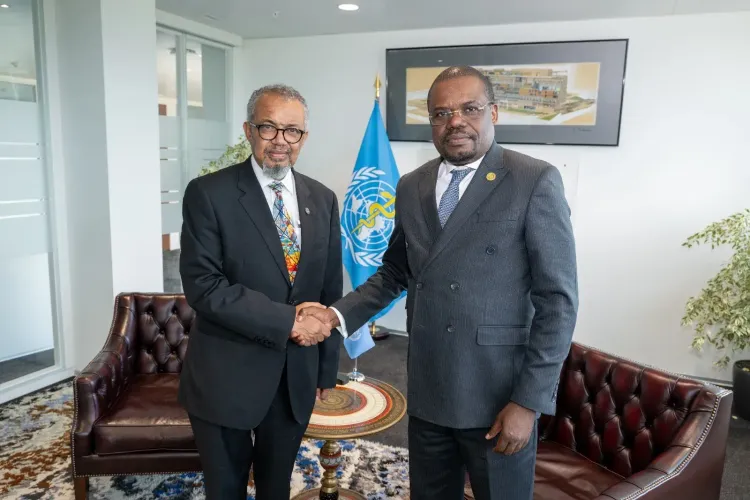
Africa Centres for Disease Control and Prevention (Africa CDC) Director-General Jean Kaseya and World Health Organisation (WHO) Director-General Tedros Adhanom Ghebreyesus are scheduled to visit Bunia, the capital of eastern Democratic Republic of the Congo (DRC)'s Ituri Province and the epicentre of the ongoing Bundibugyo Ebola outbreak, on 18 and 19 July. The joint mission follows a high-level meeting between the two leaders in Geneva, Switzerland, where urgent ground-level action was identified as a priority.
Why the Joint Mission Was Called
The decision to travel together emerged from direct talks in Geneva focused on the worsening Bundibugyo Ebola outbreak spreading across the DRC and Uganda. Kaseya announced the visit on Saturday in a statement posted on X, saying the mission would involve meetings with national authorities, frontline health workers, affected communities, and response partners.
'This joint mission will help strengthen coordination, accelerate the response, and mobilise the support needed to stop transmission and protect lives,' Kaseya said.
What Needs to Happen Faster
In a recent interview, Kaseya called for enhanced international solidarity, stressing the need for faster diagnosis, more rigorous contact tracing, expanded treatment and isolation capacity, and increased supplies. 'Our priority is clear: find cases earlier, test faster, isolate safely, care for patients, protect health workers, and work closely with communities. In an Ebola outbreak, speed saves lives,' he said.
Outbreak Spreads to a Fourth Province
Haut-Uele province in northeastern DRC has become the fourth province officially affected by the current outbreak, after provincial authorities formally declared the epidemic on Friday. The declaration followed confirmation by the National Institute for Biomedical Research (INRB) of seven fatal cases of Bundibugyo Ebola in the Wamba health zone. Provincial Governor Jean Bakomito Gambu made the official declaration after the INRB confirmed the fatalities on Thursday.
What Comes Next
The 18–19 July visit by the Africa CDC and WHO chiefs is expected to produce a coordinated action plan aimed at containing further provincial spread. With four DRC provinces now affected and the outbreak crossing into Uganda, international health authorities are under mounting pressure to prevent a wider regional emergency. The speed of the response in the coming weeks will be closely watched by global health observers.
Point of View
Haut-Uele, within days of the Haut-Uele declaration points to active transmission chains that contact tracing has not yet broken. The real question is whether this high-profile mission translates into faster diagnostics and isolation on the ground, or whether it remains a coordination exercise while cases multiply. Cross-border spread into Uganda raises the stakes further: this is no longer a single-country containment problem.
NationPress
11 Jul 2026
Frequently Asked Questions
Why are the Africa CDC and WHO chiefs visiting the DRC?
Africa CDC Director-General Jean Kaseya and WHO Director-General Tedros Adhanom Ghebreyesus are visiting Bunia, the epicentre of the Bundibugyo Ebola outbreak, on 18 and 19 July to meet national authorities, frontline health workers, and response partners. The joint mission aims to strengthen coordination and accelerate containment efforts.
What is the Bundibugyo Ebola outbreak?
The Bundibugyo Ebola virus is a strain of Ebola causing an ongoing outbreak in eastern DRC and Uganda. The outbreak has now spread to four DRC provinces, with seven fatal cases recently confirmed in the Wamba health zone of Haut-Uele province.
Which provinces in DRC are affected by the Ebola outbreak?
Haut-Uele has become the fourth DRC province officially declared affected by the current Bundibugyo Ebola outbreak, joining three others including Ituri Province, where the epicentre city of Bunia is located.
What measures are being called for to contain the outbreak?
Africa CDC chief Jean Kaseya has called for faster diagnosis, more rigorous contact tracing, expanded treatment and isolation capacity, and increased medical supplies. He has also appealed for enhanced international solidarity to support the response.
Has the Ebola outbreak spread beyond the DRC?
Yes, according to reports, the Bundibugyo Ebola outbreak has also affected Uganda, making it a cross-border health emergency requiring coordinated regional response beyond DRC's national health system alone.