DRC Ebola outbreak may take 6 months to contain, 101 confirmed cases: Health Minister
Synopsis
The DRC's 17th Ebola outbreak since 1976 is being driven by the rare Bundibugyo strain — one with no licensed vaccine and symptoms that mimic malaria, making early detection dangerously difficult. With 101 confirmed cases, ~220 probable deaths, rebel-held epicentres, and community attacks on health facilities, Health Minister Roger Kamba says six months may not be enough.
Key Takeaways
The DRC declared its 17th Ebola outbreak on 15 May 2025 ; Health Minister Roger Kamba says containment may take four to six months .
101 laboratory-confirmed cases , approximately 1,000 symptomatic individuals , and around 220 probable deaths have been recorded; 3,600 contacts are under monitoring.
The outbreak is caused by the Bundibugyo strain — a rarer Ebola variant with no licensed vaccine and early symptoms that resemble malaria.
The WHO has rated national risk as 'very high' and regional risk as 'high' , citing geographic spread, insecurity, and healthcare worker infections.
Affected provinces are Ituri , North Kivu , and South Kivu ; Mongbwalu in Ituri is the epicentre.
Community resistance, attacks on Ebola facilities, and M23 rebel control of key cities are major obstacles to the response.
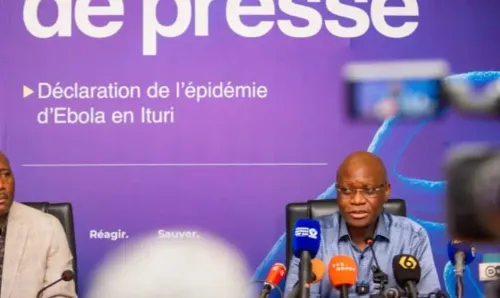
The Democratic Republic of the Congo (DRC) is still in the early stages of its latest Ebola outbreak, with Health Minister Roger Kamba warning on 27 May that the country may need up to six months to bring it under control. With 101 laboratory-confirmed cases, around 1,000 symptomatic individuals, and approximately 220 probable deaths, the scale of the crisis is still being mapped as surveillance expands.
Scale and Spread of the Outbreak
The outbreak, declared on 15 May, is the 17th Ebola epidemic in the DRC since 1976. It has so far affected three eastern provinces — Ituri, North Kivu, and South Kivu — with the mining town of Mongbwalu in Ituri identified as the epicentre. Around 3,600 contacts are currently being monitored. Health authorities have confirmed no cases outside these three provinces, despite alerts from other parts of the country, including the capital Kinshasa.
Kamba noted that all figures remain provisional, and that the government had deliberately chosen to communicate the broadest possible count of suspected cases while laboratory confirmation continues. 17 deaths have been confirmed by testing so far.
Why the Bundibugyo Strain Complicates the Response
This outbreak is caused by the Bundibugyo strain of the Ebola virus — a rarer form of the disease that has complicated early detection. Unlike the more widely known Zaire strain, which has driven most of the DRC's previous outbreaks, Bundibugyo presents less dramatically in its early phase. Early symptoms — including fever, vomiting, and diarrhoea — closely resemble malaria, and haemorrhagic signs may appear late or not at all.
Critically, there is no licensed vaccine or approved specific treatment for Bundibugyo virus disease. Supportive care — including rehydration, management of respiratory distress, and treatment of anaemia — remains the primary clinical response. This stands in sharp contrast to the Zaire strain, for which effective vaccines exist.
The World Health Organization (WHO) has assessed the outbreak as posing a 'very high' risk at the national level and a 'high' risk at the regional level, while the global risk remains 'low'. The WHO cited rapid geographic expansion, high population mobility, insecurity, healthcare worker infections, community deaths, and the absence of a licensed Bundibugyo vaccine as key risk factors.
Community Resistance and Security Challenges
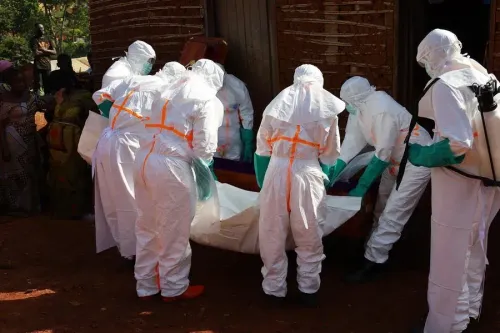
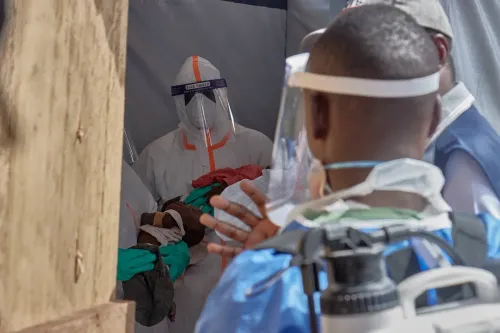
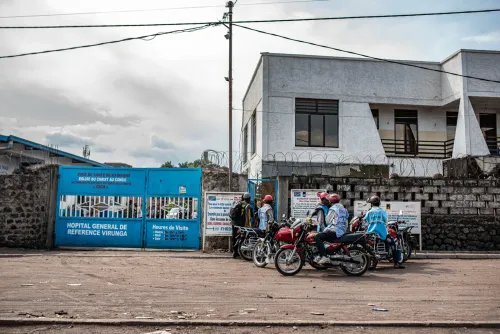
Beyond the medical response, authorities face serious obstacles on the ground. Kamba cited attacks on Ebola facilities in Rwampara and Mongbwalu, where some residents resisted health teams and sought to retrieve bodies for traditional burials — a practice that can accelerate viral transmission. Misinformation, including claims that the disease was 'mystical' or fabricated, has further hindered containment efforts.
Kamba stressed that risk communication must shift toward local leaders, religious figures, community health workers, and trusted local voices rather than officials deployed from Kinshasa. The government plans to recruit 60,000 community health workers nationwide from July to strengthen disease surveillance and health education.
Access to rebel-held areas presents an additional political and logistical challenge. Goma and Bukavu — two major cities with confirmed cases — are under the control of the March 23 Movement (M23) rebel group, complicating the deployment of response teams.
Travel and Aviation Measures
On Saturday, the DRC government suspended civilian passenger flights to and from Bunia, the capital of Ituri Province, while keeping humanitarian flights operational. Kamba clarified that the suspension was temporary and linked to ongoing airport renovations, not a border closure, and would be lifted 'very quickly.'
The International Civil Aviation Organization (ICAO) said on Monday that international air services remain safe, but urged governments, airlines, airports, and health authorities to strictly follow WHO guidance. ICAO confirmed that Ebola does not spread through casual contact or airborne transmission, but through direct contact with the blood or bodily fluids of an infected person. The WHO has advised countries against closing borders or imposing broad travel and trade restrictions.
What Comes Next
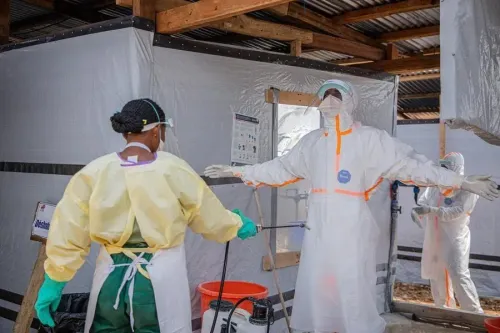
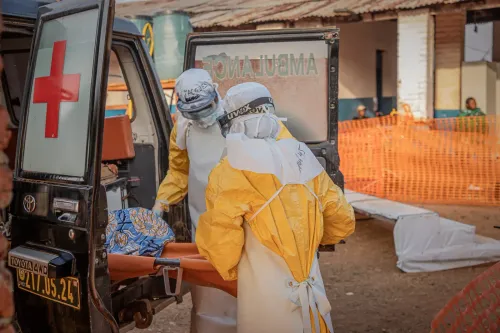
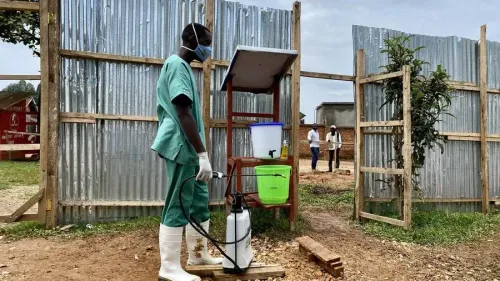
The DRC's response plan is being prepared for a period of four to six months. Authorities are deploying mobile laboratories and additional testing capacity closer to affected areas; around 2,000 test kits have been dispatched to the field, with a further 4,000 expected to follow. The 'patient zero' has not yet been identified.
Kamba acknowledged that case counts will likely rise as surveillance improves. 'The more we investigate, the more we will find,' he said, framing the rising numbers not solely as evidence of spread, but as proof that response teams are uncovering transmission chains that had previously gone undetected. The coming weeks will test whether the DRC can build community trust fast enough to outpace the virus.
Point of View
Yet the absence of a Bundibugyo vaccine exposes a persistent gap in global health preparedness investment, which has historically concentrated on the Zaire strain. The M23 dimension is underreported: rebel-held cities with confirmed cases mean the response is as much a diplomatic and security problem as a public health one. Six months is an optimistic timeline if community trust cannot be rebuilt in areas where health workers have been attacked and misinformation frames the disease as mystical.
NationPress
22 Sept 2026
Frequently Asked Questions
How serious is the DRC Ebola outbreak in 2025?
The outbreak is at an early but serious stage, with 101 laboratory-confirmed cases, approximately 1,000 symptomatic individuals, and around 220 probable deaths as of 27 May 2025. The WHO has rated the national risk as 'very high' and the regional risk as 'high.'
Why is the Bundibugyo Ebola strain more difficult to contain?
The Bundibugyo strain presents with early symptoms — fever, vomiting, diarrhoea — that closely resemble malaria, making early detection difficult. There is no licensed vaccine or approved specific treatment for it, unlike the Zaire strain, which has effective vaccines.
Which areas of the DRC are affected by the Ebola outbreak?
The outbreak has affected three eastern provinces: Ituri, North Kivu, and South Kivu. The mining town of Mongbwalu in Ituri is the epicentre. Health authorities say there are no confirmed cases outside these provinces, despite alerts from other regions including Kinshasa.
Is international travel safe during the DRC Ebola outbreak?
The WHO has advised against border closures or broad travel restrictions, and the International Civil Aviation Organization has confirmed international air services remain safe. Ebola spreads through direct contact with blood or bodily fluids, not through casual contact or the air.
What is the DRC government doing to contain the Ebola outbreak?
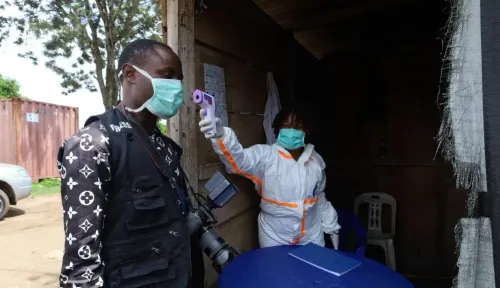
Authorities are deploying mobile laboratories, dispatching around 2,000 test kits to the field with 4,000 more to follow, and monitoring 3,600 contacts. The government also plans to recruit 60,000 community health workers from July to strengthen surveillance, and has temporarily suspended civilian flights to Bunia to manage health screening.