DR Congo Ebola outbreak: 131 suspected deaths, 513 cases as WHO declares emergency
Synopsis
The DRC's 17th Ebola outbreak since 1976 has killed an estimated 131 people and infected over 500, and it has already crossed into Uganda. With the WHO declaring a global health emergency and Rwanda shutting its border, the Bundibugyo strain is testing Central Africa's containment infrastructure in real time.
Key Takeaways
DRC Health Minister Roger Kamba confirmed approximately 131 suspected deaths and 513 suspected cases as of 19 May 2025 .
The outbreak was declared on 15 May in Ituri province — the DRC's 17th Ebola outbreak since 1976 .
The WHO declared a public health emergency of international concern on Sunday ; the Africa CDC followed with a continental security emergency on Monday .
Two confirmed cases were reported in Kampala, Uganda on 15 and 16 May , both linked to travel from the DRC; both patients are in intensive care .
Rwanda closed its border with the DRC at Rubavu District on Sunday; Burundi and Tanzania have heightened surveillance.
The outbreak involves the Bundibugyo strain , considered less deadly than the Zaire strain; WHO puts Ebola fatality rates at 50%–89% by subtype.
The Democratic Republic of the Congo (DRC) has recorded approximately 131 suspected deaths and 513 suspected cases in its latest Ebola outbreak, DRC Health Minister Roger Kamba said on Tuesday, 19 May at a special briefing in Kinshasa. The outbreak, declared on 15 May in the eastern province of Ituri, is the country's 17th Ebola outbreak since 1976 — and has already crossed an international border.
Scale of the Outbreak
Speaking after returning from the affected zone, Minister Kamba cautioned that the death toll remains under investigation. 'These are suspected deaths, and investigations are underway to determine which are actually linked to the disease,' he said. Cases have also been confirmed in the neighbouring North Kivu province, indicating the outbreak is spreading within the DRC itself.
The current outbreak is caused by the Bundibugyo strain of the Ebola virus, which is considered less lethal than the more notorious Zaire strain. According to the World Health Organisation (WHO), Ebola fatality rates range from 50% to 89% depending on the viral subtype.
International Spread and WHO Emergency Declaration
On Sunday, the WHO declared the Ebola outbreak in the DRC and Uganda a public health emergency of international concern (PHEIC) — its highest alert level. The declaration followed the confirmation of two cases in Kampala, Uganda, reported on 15 and 16 May, both linked to travel from the DRC. Both patients were admitted to intensive care units in Kampala.
On Monday, the Africa Centres for Disease Control and Prevention separately declared the outbreak a public health emergency of continental security, adding a second layer of regional alarm.
Border Closures and Regional Preparedness
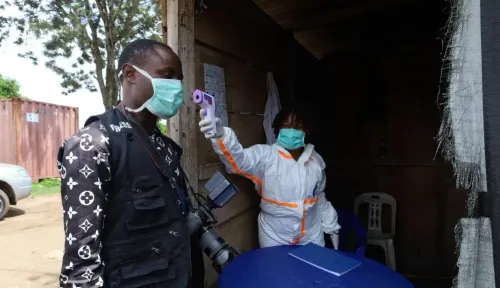
The border between Rwanda and the DRC in Rwanda's Rubavu District was closed on Sunday following the outbreak declaration. Neighbouring countries — including Rwanda, Burundi, and Tanzania — have stepped up surveillance, border screening, and emergency preparedness measures.
Minister Kamba noted that the DRC has extensive experience responding to Ebola, having managed 16 previous outbreaks. However, the simultaneous spread into Uganda and the WHO's PHEIC designation signal that containment faces significant cross-border challenges.
About the Ebola Virus
Ebola is a highly contagious haemorrhagic fever. Symptoms include fever, vomiting, diarrhoea, generalised pain or malaise, and — in severe cases — internal and external bleeding. The Bundibugyo strain, first identified in Uganda in 2007, has historically carried a lower case fatality rate than the Zaire strain responsible for the devastating 2014–2016 West Africa epidemic.
With a PHEIC in force and cases already documented in Uganda, the coming days will be critical for containment efforts across Central and East Africa.
Point of View
But it arrives as containment is already under strain. The DRC's institutional memory from 16 prior outbreaks is an asset, yet the simultaneous spread to Uganda — within days of the initial declaration — exposes how porous the eastern DRC border remains. The Bundibugyo strain's lower fatality rate should not breed complacency: a less lethal virus that travels further can ultimately claim more lives than a deadlier one that is contained. The real stress test will be whether Uganda's health system, Rwanda's border closure, and WHO coordination can prevent a third country from reporting cases in the next two weeks.
NationPress
21 Oct 2026
Frequently Asked Questions
How many deaths and cases has the DR Congo Ebola outbreak recorded?
As of 19 May 2025, approximately 131 suspected deaths and 513 suspected cases have been reported, according to DRC Health Minister Roger Kamba. He cautioned that investigations are ongoing to confirm how many deaths are directly caused by Ebola.
Which strain of Ebola is responsible for the current DRC outbreak?
The current outbreak is caused by the Bundibugyo strain of the Ebola virus. It is considered less deadly than the Zaire strain, though the WHO notes Ebola fatality rates range from 50% to 89% depending on the subtype.
Why did the WHO declare a public health emergency over the DRC Ebola outbreak?
The WHO declared a public health emergency of international concern (PHEIC) on Sunday after the outbreak spread beyond the DRC, with two confirmed cases reported in Kampala, Uganda, on 15 and 16 May. A PHEIC is the WHO's highest alert level, triggering coordinated international response.
Has Ebola spread to any other country besides the DRC?
Yes. Two confirmed cases were reported in Kampala, Uganda, on 15 and 16 May 2025, both linked to travel from the DRC. Both patients were admitted to intensive care units. Neighbouring countries Rwanda, Burundi, and Tanzania have heightened surveillance and border screening.
What measures are neighbouring countries taking in response to the outbreak?
Rwanda closed its border with the DRC at Rubavu District on Sunday. Burundi and Tanzania have stepped up surveillance, border screening, and emergency preparedness. The Africa Centres for Disease Control and Prevention also declared the outbreak a public health emergency of continental security on Monday.