Congo Ebola outbreak 2025: Bundibugyo strain with 50% fatality rate spreads in Ituri

Synopsis
Congo's 17th Ebola outbreak since 1976 is being driven by the Bundibugyo strain — one with no vaccine, no specific treatment, and a fatality rate of up to 50%. With 246 suspected cases, 80 deaths, a cross-border death already confirmed in Uganda, and a high-mobility mining zone at the epicentre, this is not a contained local crisis. Africa CDC has activated emergency measures, but the window to prevent regional spread is narrowing fast.
Key Takeaways
Congo declared its 17th Ebola outbreak since 1976 on 16 May 2025 , centred in the Ituri province.
The outbreak involves the Bundibugyo strain , which has no approved vaccine or specific treatment and a fatality rate of up to 50 per cent .
As of 15 May 2025 , 246 suspected cases and 80 deaths have been recorded, including four deaths among confirmed cases.
Uganda confirmed an imported case — a Congolese national who died in Kampala — marking cross-border transmission.
The affected Mongwalu health zone is a high-mobility commercial area, raising spread risk for North Kivu , Tshopo , Uganda , and South Sudan .
The Africa CDC has activated immediate response measures and is coordinating with affected and at-risk countries.
Congo's Health Minister Roger Kamba on Saturday, 17 May 2025 warned that a newly declared Ebola outbreak in the eastern province of Ituri involves the Bundibugyo strain — a variant with no approved vaccine or specific treatment and a fatality rate that can reach 50 per cent. The outbreak, Congo's 17th since 1976, has already recorded 246 suspected cases and 80 deaths as of 15 May 2025, including four deaths among laboratory-confirmed cases.
What Makes This Outbreak Particularly Dangerous
Unlike the better-known Zaire strain — against which vaccines exist — the Bundibugyo strain has no approved vaccine and no targeted antiviral therapy. Minister Kamba told a press briefing in Kinshasa that the strain 'has a very high lethality rate which can reach 50 per cent.' The National Institute for Biomedical Research has confirmed the Bundibugyo strain in tested samples, removing earlier uncertainty about the pathogen involved.
The strain also presents differently from the Zaire variant. It typically begins with fever, with haemorrhagic signs — such as bleeding — appearing later in the disease course, which can complicate early identification and isolation. Authorities have urged residents to report any suspected case involving fever, vomiting, fatigue, or bleeding without delay.
Spread Risk: Cross-Border Concerns
The outbreak's geography amplifies the threat. The affected health zone of Mongwalu in Ituri is described by Minister Kamba as 'a commercial area marked by intense mobility,' placing provinces including North Kivu and Tshopo, as well as neighbouring countries Uganda and South Sudan, at elevated risk.
Uganda confirmed on Friday an 'imported case' — a Congolese national who died in Kampala — marking the first recorded cross-border transmission in this outbreak. Health teams have been deployed to trace contacts of confirmed cases in Ituri, adjacent provinces, and border zones.
Africa CDC Response
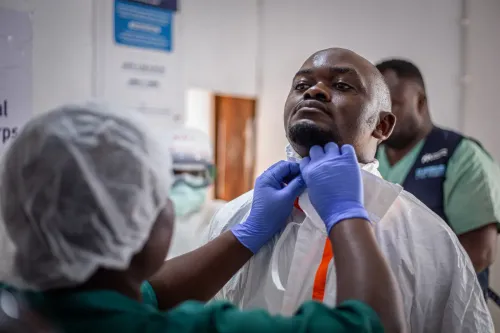
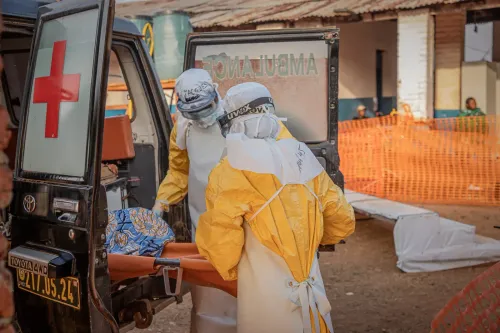
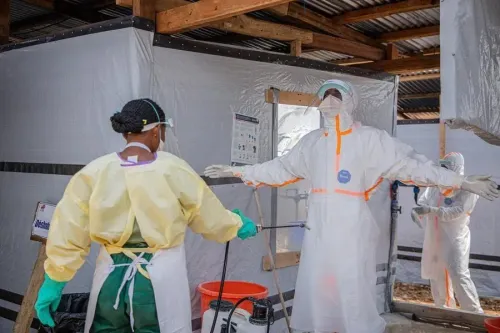
The Africa Centres for Disease Control and Prevention (Africa CDC) has activated immediate response measures following the outbreak declaration. The agency flagged several compounding risk factors: intense population movement, mining-related mobility, ongoing insecurity in affected zones, gaps in contact tracing, infection prevention and control challenges, and the close proximity of affected areas to international borders.
The Africa CDC chief confirmed that the agency is coordinating with Congo, Uganda, South Sudan, and international partners to strengthen surveillance, preparedness, and containment efforts.
Congo's Preparedness and Next Steps
Despite the severity of the strain, Minister Kamba expressed confidence in the country's response capacity. 'The DRC is ready and has the capacities, expertise, and means to face the outbreak,' he said. Congo has managed 16 previous Ebola outbreaks and has accumulated significant institutional experience in rapid response, even if the Bundibugyo strain presents distinct clinical and logistical challenges.
With cross-border transmission already confirmed and a high-mobility commercial zone at the epicentre, the coming weeks will be critical in determining whether this outbreak can be contained within Ituri or escalates into a wider regional health emergency.
Point of View
A mining-driven high-mobility zone at the epicentre, and acknowledged gaps in contact tracing, the Africa CDC's 'immediate response measures' framing may be understating the urgency. The 16 prior outbreaks give Congo real institutional muscle, but the Bundibugyo strain demands a different playbook — and the international community should be watching whether that playbook actually exists.
NationPress
3 Oct 2026
Frequently Asked Questions
What is the Bundibugyo Ebola strain and why is it concerning?
The Bundibugyo strain is a species of Ebola virus first identified in Uganda in 2007. It has no approved vaccine or specific treatment and carries a fatality rate of up to 50 per cent, making it among the deadliest variants. Unlike the Zaire strain, for which vaccines exist, Bundibugyo requires containment through isolation, contact tracing, and supportive care alone.
How many cases and deaths have been reported in Congo's 2025 Ebola outbreak?
As of 15 May 2025, Congo's health ministry reported 246 suspected cases and 80 deaths, including four deaths among laboratory-confirmed positive cases. The National Institute for Biomedical Research has confirmed the Bundibugyo strain in tested samples.
Has the Congo Ebola outbreak spread to other countries?
Yes. Uganda confirmed on Friday an imported case involving a Congolese national who died in Kampala, marking the first recorded cross-border transmission in this outbreak. Africa CDC has also flagged elevated risk for South Sudan given population movement from the affected Ituri zone.
Why is the Mongwalu health zone considered a high-risk area for spread?
Mongwalu is a commercial hub with intense population and mining-related mobility, connecting Ituri to North Kivu, Tshopo, Uganda, and South Sudan. This high movement makes contact tracing more difficult and increases the risk of the virus crossing provincial and national borders.
What is Africa CDC doing to contain the outbreak?
The Africa Centres for Disease Control and Prevention has activated immediate response measures and is working with Congo, Uganda, South Sudan, and international partners to strengthen surveillance, preparedness, and containment. The agency has flagged specific risk factors including insecurity in affected zones and gaps in contact listing as key challenges.