DR Congo Ebola outbreak spreads to 5 provinces, toll nears 1,900
Synopsis
The DRC's Ebola crisis has crossed into two new provinces for the first time, with 1,873 confirmed cases, 672 deaths, and treatment facilities at 95% capacity. The infection of a US humanitarian worker has sharpened global focus on responder safety — and on whether international support can match the pace of the outbreak's spread.
Key Takeaways
The DRC Ebola outbreak has reached five provinces — Ituri , North Kivu , South Kivu , Haut-Uele , and Tshopo — as of 11 July 2025 .
Confirmed cases stand at 1,873 , with 672 deaths ; an additional 299 suspected cases including 91 deaths have been recorded.
Ebola treatment facility bed occupancy has hit 95.1 per cent , with 763 patients currently in isolation or receiving care.
A US humanitarian worker supporting the outbreak response has tested positive, prompting an epidemiological investigation by the Africa CDC .
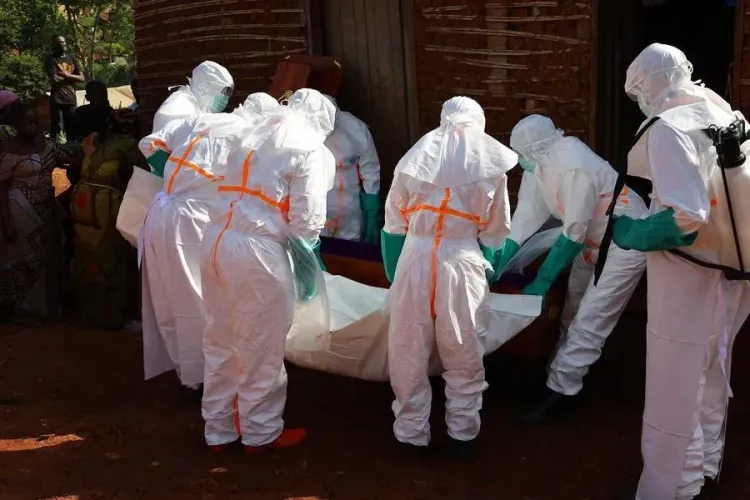
At least 112 healthcare workers have been infected and 35 have died, according to Africa CDC data.
The outbreak, caused by the Bundibugyo ebolavirus , was declared on 15 May 2025 — making it the 15th such outbreak recorded in the DRC.
The Democratic Republic of the Congo (DRC) is battling a rapidly expanding Ebola outbreak that has now reached five provinces, with the national confirmed caseload climbing to 1,873 and deaths standing at 672, according to data released by the country's health authorities covering figures through Friday, 11 July. The outbreak, caused by the Bundibugyo ebolavirus, was formally declared on 15 May 2025.
Outbreak Spreads to New Provinces
The latest national situation report lists Ituri, North Kivu, South Kivu, Haut-Uele, and Tshopo as affected provinces. Notably, Haut-Uele and Tshopo appeared in the national situation report for the first time, signalling a geographic expansion of the crisis beyond its original epicentre.
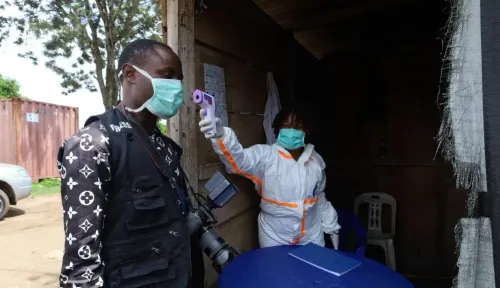
Health investigators have determined that cases detected in both new provinces are epidemiologically linked to the outbreak's epicentre in Ituri province, traced through direct contacts and population movements — a pattern consistent with how Ebola spreads along transit corridors in conflict-affected regions.
Treatment Facilities Under Severe Strain
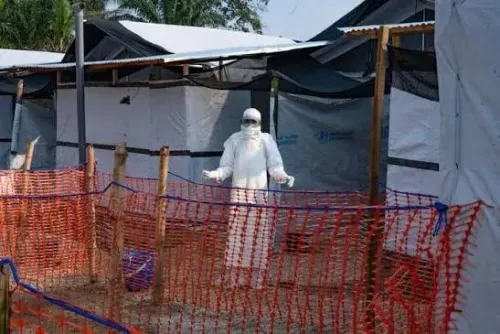
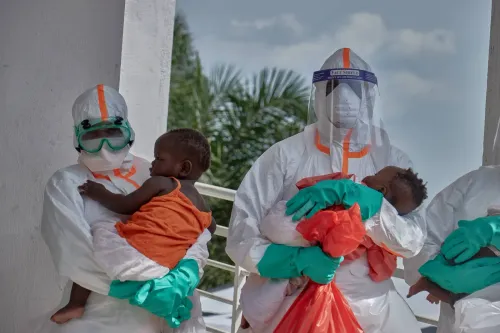
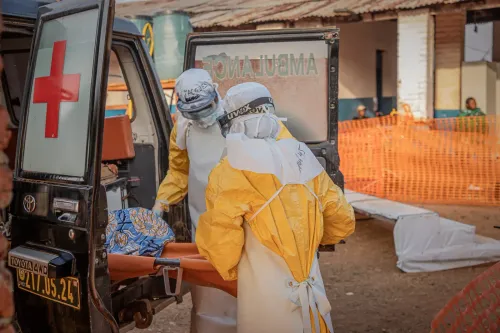
Of the confirmed cases, 763 patients are currently in isolation or receiving hospital treatment. The overall bed occupancy rate at Ebola treatment facilities has reached a critical 95.1 per cent, raising alarm among health responders about system capacity. A total of 306 patients have recovered, while 299 suspected cases — including 91 deaths — have also been recorded.
This is the 15th Ebola outbreak recorded in the DRC, a country that has historically borne the heaviest global burden of the disease. The Bundibugyo strain, first identified in Uganda in 2007, is considered less lethal than the Zaire strain but remains dangerous and poorly understood in large-scale outbreak settings.
US Humanitarian Worker Infected, Raising Responder Safety Alarm
The Africa Centers for Disease Control and Prevention (Africa CDC) confirmed on Saturday, 12 July that a US humanitarian worker supporting the Bundibugyo Ebola outbreak response in the DRC has tested positive for the virus — adding, in the agency's words, 'critical urgency' to the protection of health responders on the ground.
In a press statement, the Africa CDC said health workers, humanitarian personnel, volunteers, and operational staff are 'sustaining the response under intense pressure,' continuing to identify cases, care for patients, and protect affected communities. Relevant authorities and the response team have launched an epidemiological investigation, contact tracing, and exposure risk assessments concerning the infected worker. The exact circumstances of the exposure remain under investigation.
Healthcare Workers Bear Heavy Cost
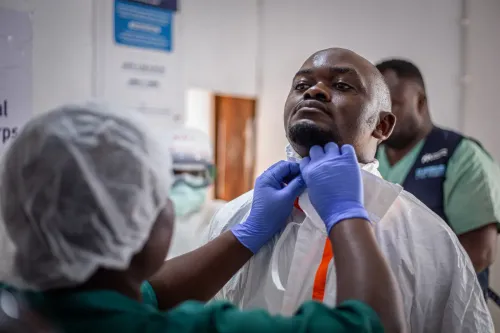
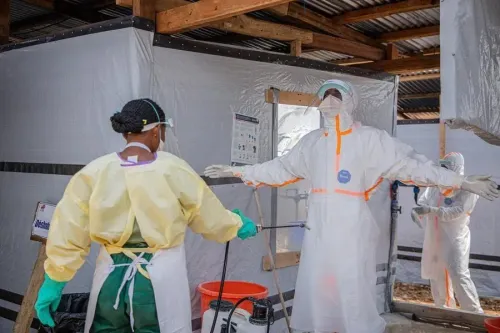
At least 112 healthcare workers have been infected with the Bundibugyo Ebola virus in the DRC, according to the latest data from the Africa CDC — the African Union's specialised public health agency. Of those, 35 healthcare workers have died, a toll that underscores the acute danger facing frontline responders in under-resourced settings.
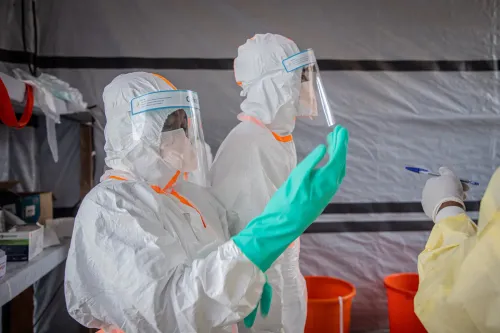
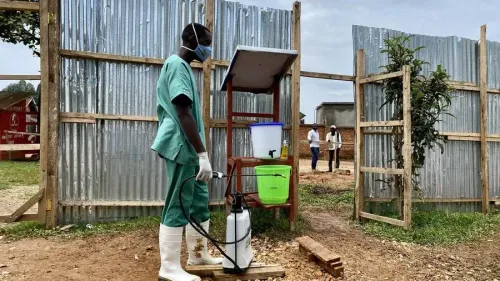
The infection of a foreign humanitarian worker is likely to intensify international scrutiny of personal protective equipment (PPE) availability and infection prevention protocols at treatment sites. With bed occupancy nearing full capacity and the virus now present in five provinces, the coming weeks will test whether the DRC's response infrastructure — and international support — can scale fast enough to contain further spread.
Point of View
But because it confirms the virus is moving along population corridors that are notoriously difficult to surveil. A 95.1% bed occupancy rate at treatment facilities is a structural red flag: once capacity is breached, community transmission accelerates and case fatality rates climb. The infection of a US humanitarian worker will draw international headlines, but the quieter crisis is the 35 healthcare workers already dead — a figure that, if it rises further, will deter local volunteers and erode the response from within. The DRC has contained 14 previous outbreaks, but the Bundibugyo strain in a five-province spread, with strained capacity, is a genuinely different challenge.
NationPress
12 Oct 2026
Frequently Asked Questions
How many Ebola cases have been confirmed in the DRC as of July 2025?
As of data through 11 July 2025, the DRC has recorded 1,873 confirmed Ebola cases and 672 deaths. An additional 299 suspected cases, including 91 deaths, have also been reported by health authorities.
Which provinces in the DRC are affected by the Ebola outbreak?
Five provinces are currently affected: Ituri, North Kivu, South Kivu, Haut-Uele, and Tshopo. Haut-Uele and Tshopo were included in the national situation report for the first time, with cases linked epidemiologically to the outbreak epicentre in Ituri.
What is the Bundibugyo ebolavirus?
The Bundibugyo ebolavirus is one of six known species of Ebola virus, first identified during a 2007 outbreak in Uganda. It is generally considered less lethal than the more common Zaire strain but remains a serious pathogen capable of causing large outbreaks.
Why was the infection of a US humanitarian worker significant?
The Africa CDC described the confirmed infection of a US humanitarian worker as adding 'critical urgency' to the protection of health responders. It has prompted an epidemiological investigation and contact tracing, and highlights the acute risk faced by all personnel supporting the outbreak response.
How many healthcare workers have been affected by the DRC Ebola outbreak?
At least 112 healthcare workers have been infected with the Bundibugyo Ebola virus in the DRC, and 35 have died, according to the latest data from the Africa CDC. The high toll among responders raises serious concerns about infection prevention capacity at treatment sites.