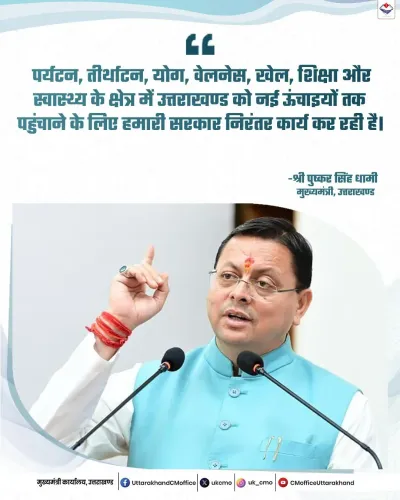
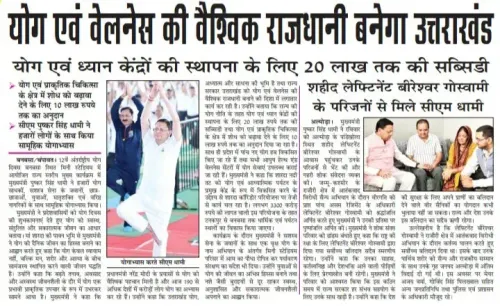
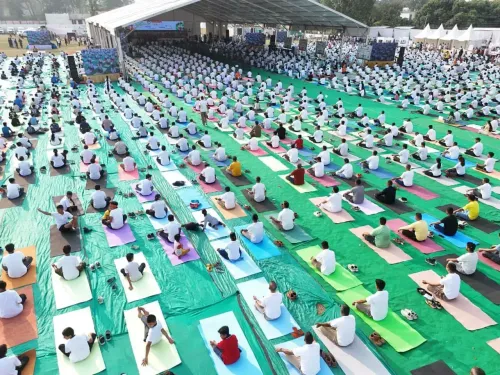
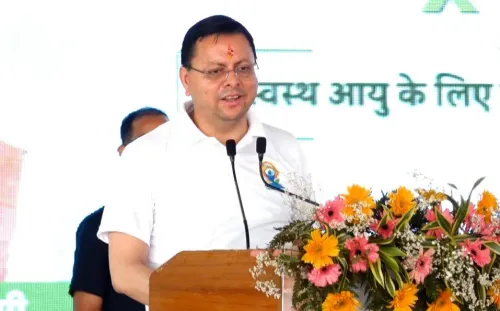
Uttarakhand CMO announces expansion of yoga and wellness sector
Synopsis
The Chief Minister's Office of Uttarakhand has announced a new expansion of the state's yoga and wellness sector, reinforcing Rishikesh's status as the global yoga capital and signalling a fresh policy push aligned with national AYUSH and tourism missions.
Key Takeaways
The Chief Minister's Office of Uttarakhand announced on 13 July 2026 that the state's yoga and wellness sector will receive new expansion.
Rishikesh , widely recognised as the yoga capital of the world, anchors Uttarakhand's identity in this sector.
The Ministry of AYUSH , established in November 2014 , provides the national institutional framework within which this state-level push sits.
The International Day of Yoga has been observed globally on 21 June every year since 2015 , following a UN resolution in 2014 .
Key stakeholders include wellness tourism operators, yoga training institutes, and local Himalayan communities in towns such as Rishikesh and Haridwar .
Concrete details — including budget allocations and specific schemes — are expected to emerge in upcoming legislative and policy announcements.
The Chief Minister's Office of Uttarakhand announced on Monday, 13 July 2026 that the state's yoga and wellness sector is set for a new phase of expansion, signalling a fresh policy push to deepen the Himalayan state's identity as India's premier destination for spiritual and holistic health tourism.
Context
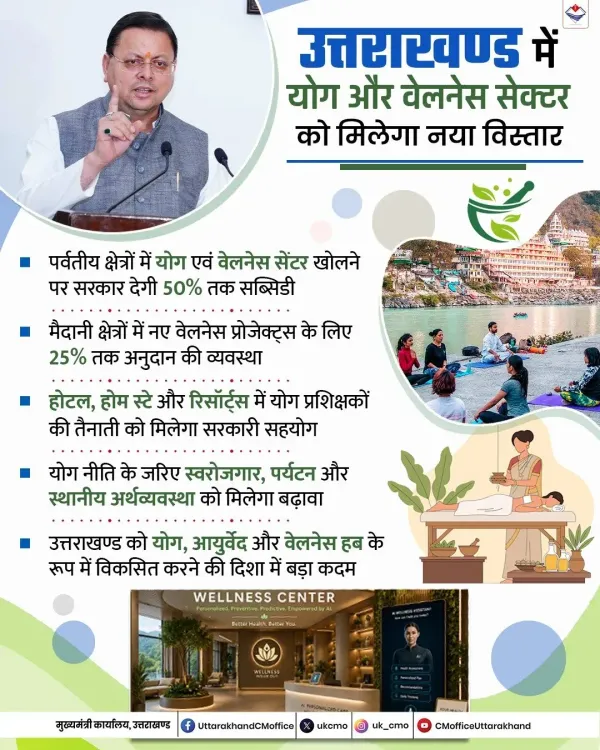
The post, shared by the official Chief Minister's Office of Uttarakhand account, states: 'Uttarakhand mein yoga aur wellness sector ko milega naya vistar' ('The yoga and wellness sector in Uttarakhand will receive new expansion'). While the announcement does not specify individual schemes or financial allocations, it signals an intent at the highest level of state government to accelerate development in this sector.
Uttarakhand is home to Rishikesh, internationally recognised as the yoga capital of the world. The city draws tens of thousands of practitioners, researchers, and wellness tourists from across India and abroad every year, making it the natural anchor for any state-level wellness policy.
Policy Backdrop
The announcement fits within a decade-long national strategy that gained formal institutional shape when the Ministry of AYUSH was established in November 2014 to mainstream yoga, Ayurveda, and other traditional Indian health systems. That same year, India's proposal at the United Nations led to the adoption of 21 June as the International Day of Yoga, observed globally since 2015.
Himalayan states have since been at the forefront of translating this national momentum into dedicated wellness infrastructure, training pipelines, and international outreach. Successive central and state policies have sought to formalise the sector by developing wellness clusters that leverage the region's natural landscapes and deep-rooted spiritual heritage.
Uttarakhand, with its network of ashrams, meditation centres, and Himalayan trails, has consistently positioned itself as the geographic and cultural heartland of this movement. Any new expansion of the yoga and wellness sector here carries implications that extend well beyond the state's borders.
Stakeholders and Impact
The primary beneficiaries of an expanded yoga and wellness sector in Uttarakhand include wellness tourism operators, certified yoga instructors and training institutes, Himalayan local communities dependent on hospitality and allied services, and the broader network of practitioners who travel to the state for immersive programmes.
A formal policy push could also strengthen the state's integration with national missions under the Ministry of AYUSH and the Ministry of Tourism, potentially unlocking central funding for infrastructure, international certification, and promotional campaigns targeting health-conscious travellers from Europe, North America, and Southeast Asia.
Local communities in towns such as Rishikesh, Haridwar, and smaller Himalayan villages stand to gain from increased footfall, provided expansion is accompanied by sustainable development safeguards.
What's Next
Observers will watch the next session of the Uttarakhand Legislative Assembly for concrete budget allocations, scheme notifications, or announcements of new wellness clusters that give substance to today's signal from the Chief Minister's Office.
Integration with national AYUSH and tourism missions, as well as potential tie-ups with international yoga bodies and wellness certification agencies, will determine the scale and reach of this expansion. If formalised into a dedicated policy framework, Uttarakhand's move could set a template for other states seeking to monetise India's growing global reputation in yoga and holistic health.
Point of View
Uttarakhand is staking a claim to leadership in a space where several states now compete for AYUSH mission funds and international wellness tourism dollars. The timing, coming in the middle of the calendar year well after the International Day of Yoga, suggests a deliberate policy cycle rather than a reactive announcement. Whether this translates into measurable infrastructure or remains a directional signal will define the arc of the state's wellness economy over the next legislative cycle.
NationPress
12 Oct 2026
Frequently Asked Questions
What did the Uttarakhand Chief Minister's Office announce about yoga?
The Chief Minister's Office of Uttarakhand announced on 13 July 2026 that the state's yoga and wellness sector will receive a new phase of expansion, though specific schemes and budget figures are yet to be detailed.
Why is Uttarakhand important for yoga and wellness tourism in India?
Uttarakhand is home to Rishikesh, internationally recognised as the yoga capital of the world, and hosts a dense network of ashrams, meditation centres and wellness retreats that attract practitioners from across India and abroad.
What is the Ministry of AYUSH and how does it relate to yoga in India?
The Ministry of AYUSH was established by the central government in November 2014 to promote and regulate traditional Indian health systems including yoga, and it provides the national policy and funding framework within which state-level wellness initiatives operate.
When is the International Day of Yoga and who created it?
The International Day of Yoga is observed every year on 21 June. It was established by the United Nations General Assembly in December 2014 following India's proposal, and has been celebrated globally since 2015.
Who benefits from the expansion of yoga and wellness in Uttarakhand?
The main beneficiaries include wellness tourism operators, yoga instructors and training institutes, local Himalayan communities in towns like Rishikesh and Haridwar, and international health tourists, with potential integration with central AYUSH and tourism missions unlocking additional funding.