CM Dhami Launches India's First Yoga Policy in Uttarakhand
Synopsis
On International Day of Yoga, Uttarakhand CM Pushkar Singh Dhami announced the state's yoga policy — described as India's first — offering up to ₹20 lakh in subsidies for wellness centres, up to ₹10 lakh in research grants, and five new yoga hubs across the state.
Key Takeaways
Uttarakhand has implemented what the state government calls India's first dedicated state-level yoga policy .
The policy offers subsidies of up to ₹20 lakh for the development of yoga and meditation centres.
Grants of up to ₹10 lakh are available to support yoga research and academic study.
Five new yoga hubs are being established across Uttarakhand under the policy framework.
Yoga services are being integrated into all AYUSH Health and Wellness Centres in the state.
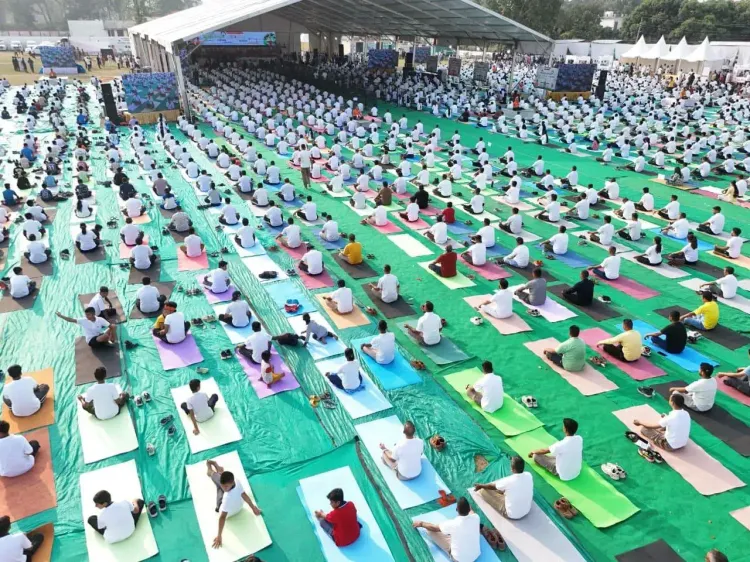
The announcement was made on 21 June 2026 , coinciding with International Day of Yoga .
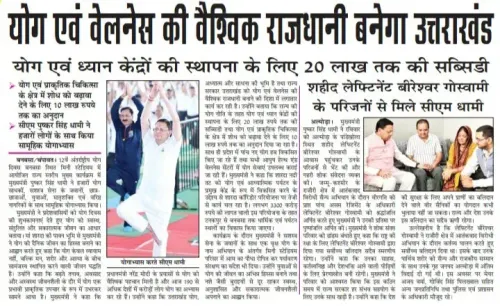
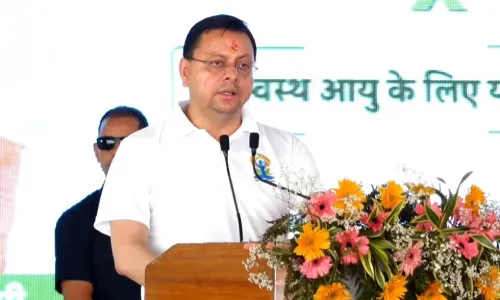
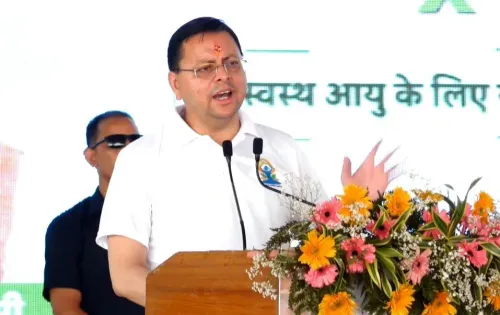
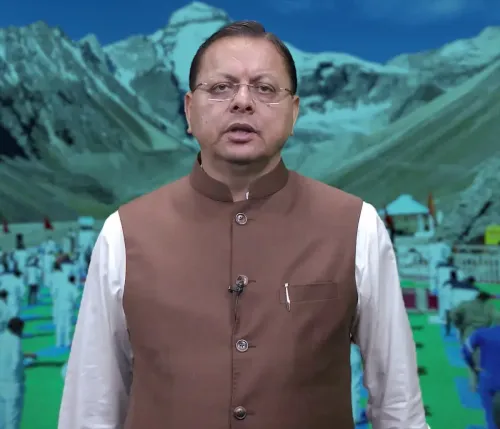
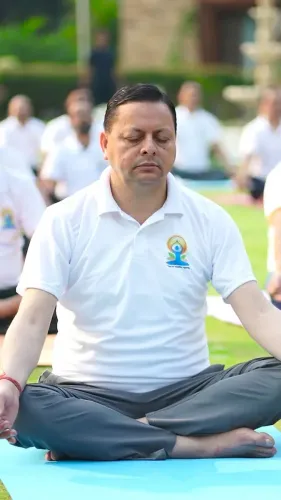
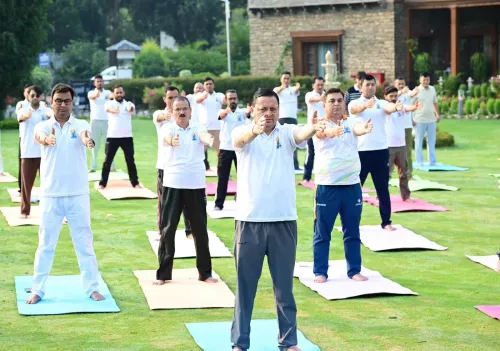
Uttarakhand Chief Minister Pushkar Singh Dhami announced on Sunday, 21 June 2026 — International Day of Yoga — that his government has implemented what it describes as the country's first dedicated state-level yoga policy, positioning Uttarakhand as a global capital of yoga and wellness.
Posting on X, CM Dhami stated: 'हमारी सरकार राज्य को योग एवं वेलनेस की वैश्विक राजधानी के रूप में स्थापित करने के संकल्प के साथ कार्य कर रही है' — 'Our government is working with the resolve to establish the state as the global capital of yoga and wellness.' He added that the policy provides subsidies of up to ₹20 lakh for the development of yoga and meditation centres, and grants of up to ₹10 lakh to encourage research and study in the field.
Context
Uttarakhand has long held a central place in India's yoga geography. Rishikesh, situated along the banks of the Ganga, is internationally recognised as a hub for yoga retreats, teacher training, and spiritual tourism. The state's announcement on 21 June — a date observed globally as International Day of Yoga since 2015, following a UN General Assembly resolution secured by India in 2014 — amplifies the symbolic weight of the policy launch.
The Ministry of AYUSH, established in November 2014 to promote Ayurveda, Yoga, Naturopathy, Unani, Siddha, and Homoeopathy, has provided a central institutional framework within which state-level yoga initiatives now operate. Uttarakhand's new policy takes that framework a step further by creating dedicated financial instruments at the state level.
Policy Backdrop
Under the yoga policy, the state government says it is establishing five new yoga hubs across Uttarakhand. Simultaneously, yoga services are being integrated into all AYUSH Health and Wellness Centres operating in the state, broadening access beyond specialist retreat destinations to community-level health infrastructure.
The subsidy mechanism — up to ₹20 lakh for infrastructure and up to ₹10 lakh for research — is designed to attract both private wellness operators and academic institutions. While several Indian states include wellness components in their tourism or health policies, a standalone yoga-specific subsidy and hub framework of this kind is uncommon at the state level.
Stakeholders and Impact
The policy is expected to benefit yoga practitioners, wellness tourism operators, AYUSH health workers, and researchers engaged in traditional health systems. For Uttarakhand's tourism economy, which draws significant revenue from spiritual and wellness visitors — particularly to Rishikesh and Haridwar — institutionalised support for yoga infrastructure could attract further domestic and international investment.
Community-level integration through AYUSH Health and Wellness Centres also signals an intent to move yoga from a premium wellness offering to a publicly accessible health service, aligning with broader national health objectives under the AYUSH mainstreaming drive.
What's Next
Attention will now turn to the rollout timelines for the five new yoga hubs and the pace at which yoga services are embedded across existing AYUSH centres statewide. State budget allocations tied to the policy and any tourism data reflecting uptake by wellness operators will serve as early indicators of implementation progress.
If the policy delivers measurable outcomes in wellness tourism and public health access, it could serve as a template for other states seeking to monetise and institutionalise India's yoga heritage — reinforcing the country's global soft-power projection around traditional health systems.
Point of View
CM Dhami is making a deliberate bid to convert Uttarakhand's inherited cultural identity — rooted in Rishikesh and the Himalayan spiritual corridor — into a structured economic and public health asset. The subsidy-and-hub architecture mirrors the Centre's AYUSH mainstreaming strategy but gives it a state-specific financial spine, which is a meaningful institutional step beyond symbolic endorsement. Politically, the timing and framing reinforce the BJP's broader narrative linking governance with India's civilisational heritage, particularly ahead of any state electoral cycle. Whether the policy translates into measurable wellness tourism growth or improved community health access will determine if it becomes a replicable model or remains an aspirational statement.
NationPress
19 Sept 2026
Frequently Asked Questions
What is Uttarakhand's new yoga policy?
Uttarakhand's yoga policy, described by the state government as India's first dedicated state-level yoga policy, provides subsidies of up to ₹20 lakh for yoga and meditation centre development, grants of up to ₹10 lakh for research, establishes five new yoga hubs, and integrates yoga services into all AYUSH Health and Wellness Centres in the state.
How much subsidy is available under Uttarakhand's yoga policy?
Under the policy, eligible yoga and meditation centres can receive subsidies of up to ₹20 lakh for infrastructure development, while researchers and academic institutions can apply for grants of up to ₹10 lakh to support yoga-related study.
Is this really India's first state yoga policy?
The Uttarakhand government has described it as India's first dedicated state-level yoga policy. While several states include wellness components in broader health or tourism frameworks, a standalone yoga-specific subsidy and hub mechanism of this scope is uncommon, though the claim has not been independently verified.
Where will the five new yoga hubs in Uttarakhand be located?
Chief Minister Dhami's announcement confirmed that five new yoga hubs are being established across Uttarakhand, but specific locations for each hub have not yet been publicly disclosed.
Why was the yoga policy announced on 21 June?
21 June is observed globally as International Day of Yoga, a date established by the United Nations in 2014 following India's proposal. Announcing the policy on this date amplifies its symbolic significance and aligns Uttarakhand's initiative with international recognition of yoga's cultural and health value.