CM Yogi pays tribute to Dr Ram Manohar Lohia on death anniversary
Synopsis
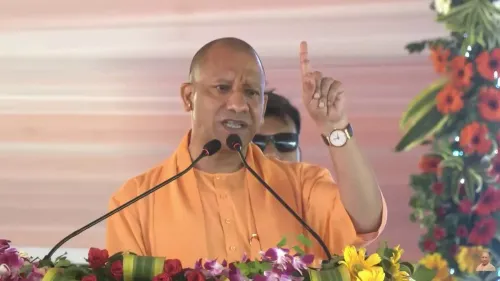
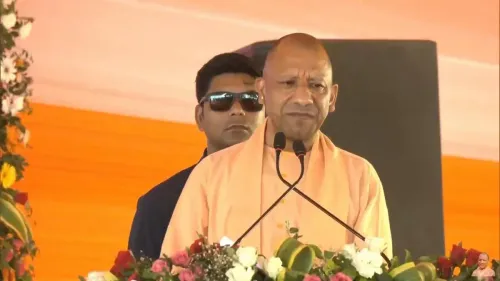
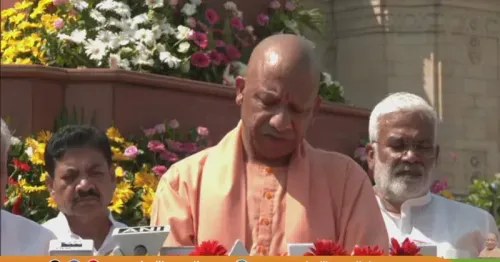
Uttar Pradesh Chief Minister Yogi Adityanath marked the 59th death anniversary of Dr Ram Manohar Lohia on 12 October 2026, honouring the socialist thinker's Sapta Kranti vision and his lifelong fight for social equality, transparency, and public welfare in Indian politics.
Key Takeaways
12 October 2026 marks the 59th death anniversary of Dr Ram Manohar Lohia, who died on this day in 1967 .
CM Yogi called Lohia a 'great freedom fighter, pioneer of the Sapta Kranti, and fervent nationalist thinker.' Lohia's Sapta Kranti (Seven Revolutions) framework addressed gender, caste, colour, colonialism, economic exploitation, and political inequality simultaneously.
Born on 23 March 1910 in Akbarpur, Uttar Pradesh , Lohia earned his doctorate from the University of Berlin .
A BJP Chief Minister paying tribute to Lohia — the ideological forebear of rival socialist parties — reflects how his moral legacy transcends partisan boundaries.
On the death anniversary of one of independent India's most restless and radical minds, Uttar Pradesh Chief Minister Yogi Adityanath paused to honour a man whose ideas cut across party lines — Dr Ram Manohar Lohia, freedom fighter, philosopher of the 'Sapta Kranti' (Seven Revolutions), and a conscience-keeper of Indian democracy.
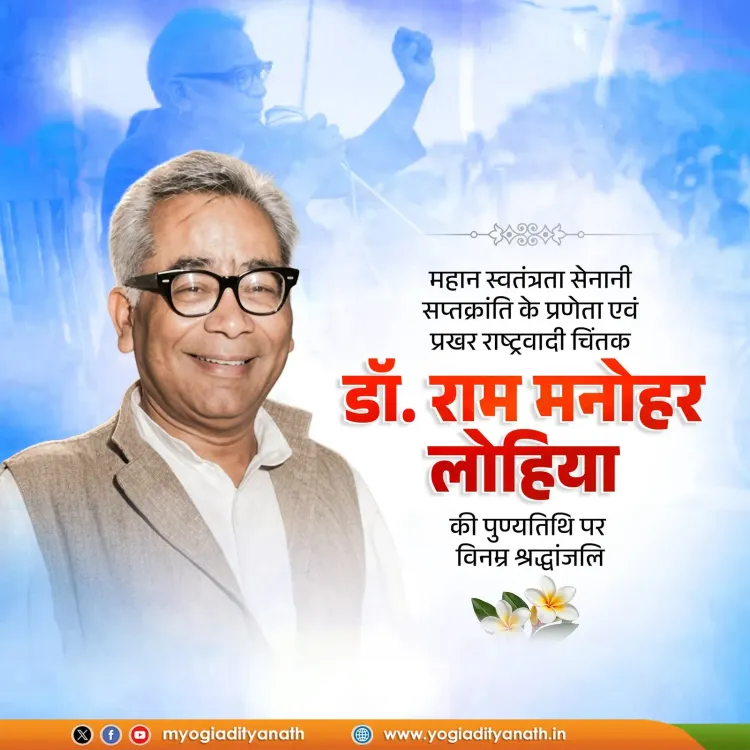
Posting on Monday, 12 October 2026, CM Yogi offered his tribute in Hindi, calling Lohia a 'prakhara rashtravaadi chintaka' — a fierce nationalist thinker — and saluting his lifelong struggle for purity, transparency, and social equality in Indian politics. The post reads: 'A humble tribute on the death anniversary of great freedom fighter, pioneer of the Sapta Kranti and fervent nationalist thinker Dr Ram Manohar Lohia. His struggle and thought for public welfare, integrity, transparency, and social equality in Indian politics will always provide the nation with new direction and inspiration.'
Who was Dr Ram Manohar Lohia?
Dr Ram Manohar Lohia was born on 23 March 1910 in Akbarpur, in what is today Uttar Pradesh, and passed away on 12 October 1967 — making this his 59th death anniversary. A PhD from the University of Berlin, he returned to India as one of the sharpest organising minds of the independence movement, working closely with the Indian National Congress before charting a distinctly socialist path.
Lohia's signature intellectual contribution was the concept of 'Sapta Kranti' — Seven Revolutions — a framework demanding simultaneous struggle against inequality on the axes of gender, caste, colour, colonialism, political power, economic exploitation, and the private invasion of public life. It was a grid that made him simultaneously ahead of his time and perpetually inconvenient to every ruling establishment.
A legacy that defies neat party ownership
What makes CM Yogi's tribute politically notable is that Lohia is most closely identified with the socialist and Opposition tradition in Indian politics — his followers built parties and movements that often sat in direct confrontation with the ruling establishment. The Samajwadi Party, rooted in Uttar Pradesh, counts Lohia among its founding ideological ancestors. That a BJP Chief Minister of UP pays homage underscores how Lohia's moral authority on caste, poverty, and public integrity has become a shared national inheritance rather than a partisan trophy.
Lohia was also a fierce critic of corruption and dynastic politics — positions that lend themselves readily to invocation across the ideological spectrum. His insistence on 'do aur char' — limiting personal consumption to signal solidarity with the poor — remains a benchmark against which politicians of every hue are quietly measured.
A thinker who made discomfort his instrument, Dr Ram Manohar Lohia left behind not a party but a standard — and the fact that leaders of opposing traditions still reach for it, decade after decade, is perhaps the most unambiguous measure of his enduring force.Point of View
Invoking Lohia is never purely ceremonial. Whether the tribute translates into policy action on the social equality Lohia championed is the question his ideological heirs will be watching.
NationPress
12 Oct 2026
Frequently Asked Questions
When did Dr Ram Manohar Lohia die?
Dr Ram Manohar Lohia died on 12 October 1967 . The year 2026 marks his 59th death anniversary.
What is the Sapta Kranti associated with Ram Manohar Lohia?
Sapta Kranti, or Seven Revolutions, was Lohia's framework calling for simultaneous struggle against inequalities of gender, caste, colour, colonialism, political power, economic exploitation, and the encroachment of private interests on public life.
Why did CM Yogi pay tribute to Lohia, who is associated with socialist parties?
Lohia's ideals of social equality, anti-corruption, and public welfare are considered a shared national legacy. BJP leaders in UP periodically honour him as part of a broader effort to claim his moral authority on caste and social justice issues.
Where was Ram Manohar Lohia born?
Dr Ram Manohar Lohia was born on 23 March 1910 in Akbarpur , in present-day Uttar Pradesh.
What political legacy did Lohia leave behind in Indian politics?
Lohia's socialist philosophy shaped multiple political parties, most notably the Samajwadi tradition in Uttar Pradesh. His insistence on integrity in public life, caste equality, and proximity to the poor remains a benchmark for politicians across party lines.