CM Yogi Greets UP on Navratri Day 2: Maa Brahmacharini
Synopsis
Uttar Pradesh Chief Minister Yogi Adityanath offered devotional greetings to Maa Brahmacharini on the second day of Shardiya Navratri 2026, sharing a Sanskrit verse and praying for patience and righteous conduct for all citizens.
Key Takeaways
CM Yogi posted his Navratri Day 2 greetings on 12 October 2026 , dedicating them to Maa Brahmacharini , the second form of Goddess Durga.
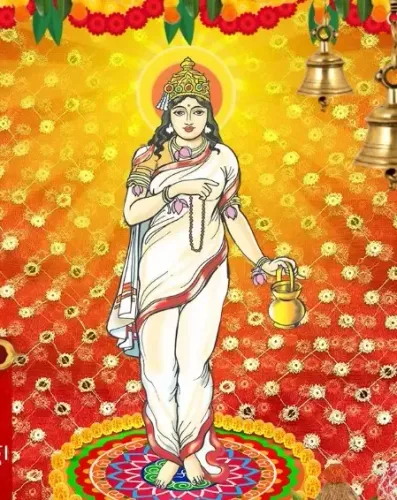
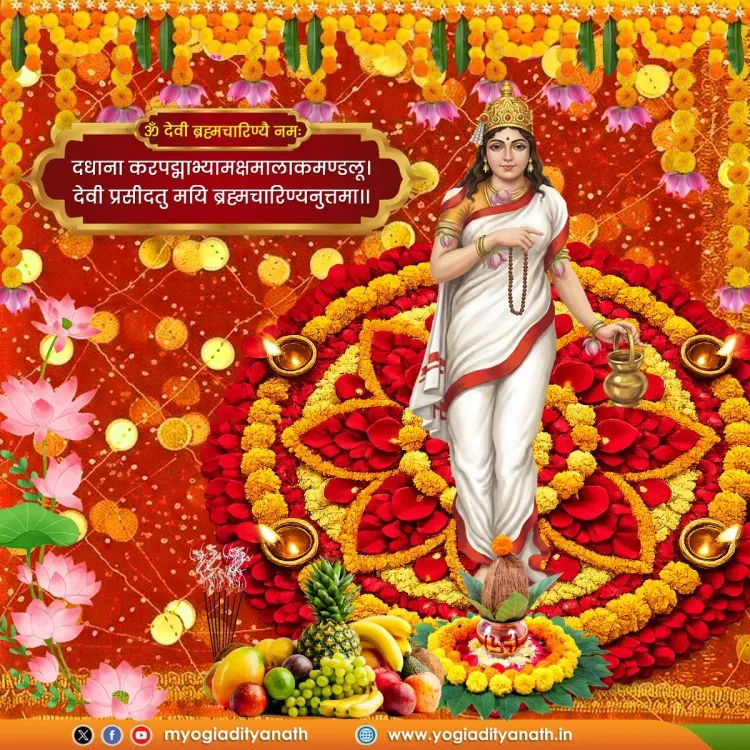
He shared a classical Sanskrit shloka describing the Goddess holding a rosary and water pot in her lotus hands.
His prayer centred on three core virtues: penance (tap), renunciation (tyag), and restraint (sanyam) .
CM Yogi is also the head of the Gorakhnath Math , giving his religious observances institutional and spiritual significance beyond politics.
Shardiya Navratri is one of the most widely observed festivals across Uttar Pradesh , celebrated with pandals, Ramlila, and temple rituals statewide.
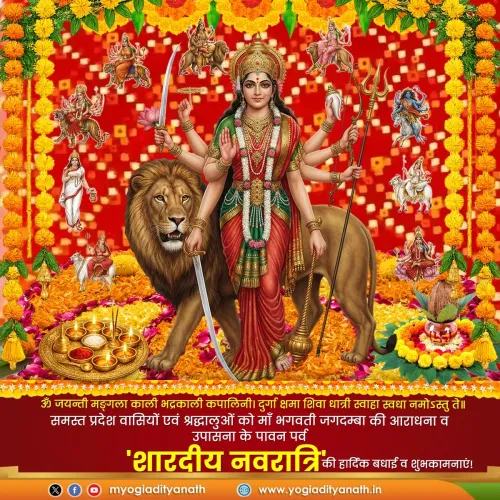
On the second day of Shardiya Navratri 2026, Uttar Pradesh Chief Minister Yogi Adityanath offered his reverence to Maa Brahmacharini — the second divine form of Goddess Bhagwati — invoking her blessings of patience, restraint, and righteous conduct for all.
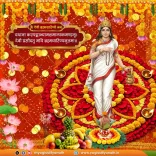
Posting in the early hours of Monday, 12 October, CM Yogi shared a classical Sanskrit verse — 'Dadhana karapadmabhyam akshamalakamandalu, Devi praseedatu mayi brahmacharinyianuttama' — meaning, 'The supreme Goddess Brahmacharini, holding a rosary and a water pot in her lotus hands, may she be gracious unto me.' He followed it with a devotional message praying that the Goddess's grace bring patience and virtuous conduct into every life.
Who is Maa Brahmacharini?
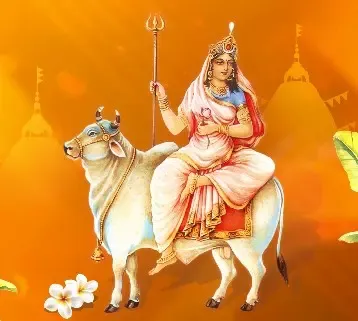
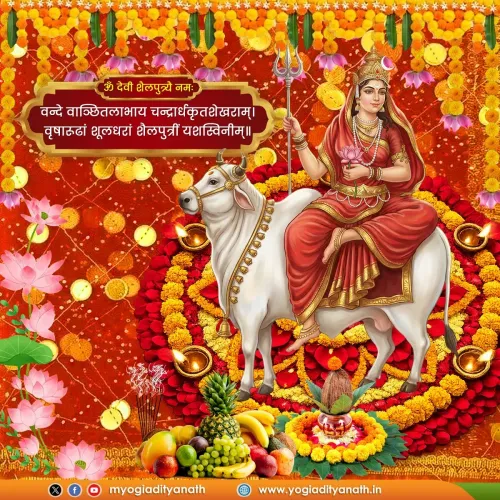
In the Navratri tradition, each of the nine days is dedicated to a distinct form of Goddess Durga. Maa Brahmacharini — worshipped on the second day — embodies penance, renunciation, and self-discipline. Iconographically, she is depicted walking barefoot, holding a japamala (rosary) in her right hand and a kamandalu (water pot) in the left, symbolising her years of austere meditation.
CM Yogi's message specifically highlighted these three virtues: tap (penance), tyag (renunciation), and sanyam (restraint) — the three qualities traditionally associated with this form of the Goddess.
Navratri and Yogi Adityanath's Gorakhpur Tradition
As the head of the Gorakhnath Math in Gorakhpur — one of the most influential Shaivite and Nath-tradition monasteries in northern India — Yogi Adityanath occupies a unique position where his religious observances carry both spiritual and public weight. Shardiya Navratri, celebrated in the Hindu lunar month of Ashwin, is among the most widely observed festivals across Uttar Pradesh, with large-scale Durga puja pandals, Ramlila performances, and temple gatherings across the state.
His morning post, timed before sunrise, follows the rhythm of temple tradition — a deliberate signal to the devout that the Chief Minister is observing the festival with the rigour of a religious head, not merely as a political gesture.
Point of View
Navratri observances are not simply ceremonial social media posts — they are an extension of his dual identity as a sitting Chief Minister and the head of the Gorakhnath Math, one of northern India's most historically significant monastic institutions. Each day-specific greeting reinforces a carefully maintained public persona that blends statecraft with religious authority. In the political landscape of Uttar Pradesh, where religious festival cycles carry enormous mobilisation energy, these early-morning devotional posts function as both personal expression and public reassurance to a deeply devout electorate. The invocation of Maa Brahmacharini's virtues — penance, renunciation, restraint — also carries an implicit normative message about the kind of conduct the Chief Minister publicly champions.
NationPress
12 Oct 2026
Frequently Asked Questions
Who is Maa Brahmacharini and why is she worshipped on Navratri Day 2?
Maa Brahmacharini is the second of the nine forms of Goddess Durga worshipped during Navratri. She symbolises penance, renunciation, and self-discipline, depicted walking barefoot with a rosary and water pot, representing years of austere devotion.
What did CM Yogi Adityanath post for Navratri Day 2 in 2026?
CM Yogi shared a Sanskrit shloka invoking Maa Brahmacharini and prayed that her blessings bring patience and righteous conduct to all people, posting early on the morning of 12 October 2026.
What is the significance of Shardiya Navratri in Uttar Pradesh?
Shardiya Navratri, observed in the Hindu month of Ashwin (September–October), is one of UP's most widely celebrated festivals, marked by Durga puja pandals, Ramlila performances, and large temple gatherings across the state.
What is CM Yogi Adityanath's connection to the Gorakhnath Math?
Yogi Adityanath is the head of the Gorakhnath Math in Gorakhpur, one of the most influential Nath-tradition monasteries in northern India, which gives his religious observances an institutional weight beyond his role as Chief Minister.
What Sanskrit verse did CM Yogi quote for Maa Brahmacharini?
He quoted: 'Dadhana karapadmabhyam akshamalakamandalu, Devi praseedatu mayi brahmacharinyianuttama' — meaning the supreme Goddess Brahmacharini, holding a rosary and water pot, may be gracious unto the devotee.