Lalan Singh Hits Back at Rahul Over PM VGSY Panchayat Scheme
Synopsis
Union Minister Rajiv Ranjan Singh rebutted Rahul Gandhi on 6 November 2026, defending PM VGSY — a panchayat training scheme using EPIC numbers and Aadhaar biometrics to authenticate trainees and eliminate intermediaries from benefit delivery.
Key Takeaways
Lalan Singh publicly accused Rahul Gandhi of distorting facts about the government's panchayat training scheme on 6 November 2026 .
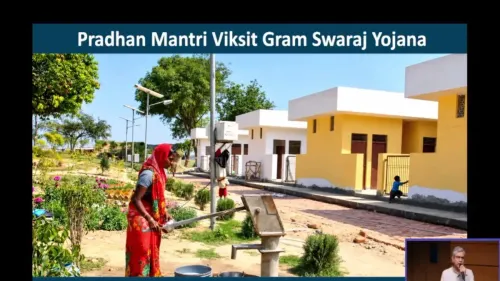
The Pradhan Mantri Viksit Gram Swaraj Yojana (PM VGSY) aims to deliver training and guidance to every eligible panchayat representative.
Trainee identity under the scheme will be verified through EPIC numbers and biometric Aadhaar authentication to prevent ghost beneficiaries.
The approach extends the Direct Benefit Transfer anti-middleman logic — first applied to subsidies in 2013 — to the domain of training programmes.
PM VGSY builds on the Rashtriya Gram Swaraj Abhiyan , approved in 2018 , for Panchayati Raj Institution capacity building.
Singh pinned the post, signalling the government intends to sustain this counter-narrative ahead of the approaching winter session of Parliament .
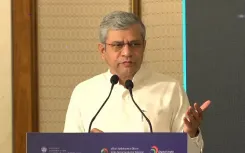
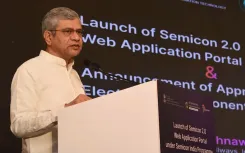
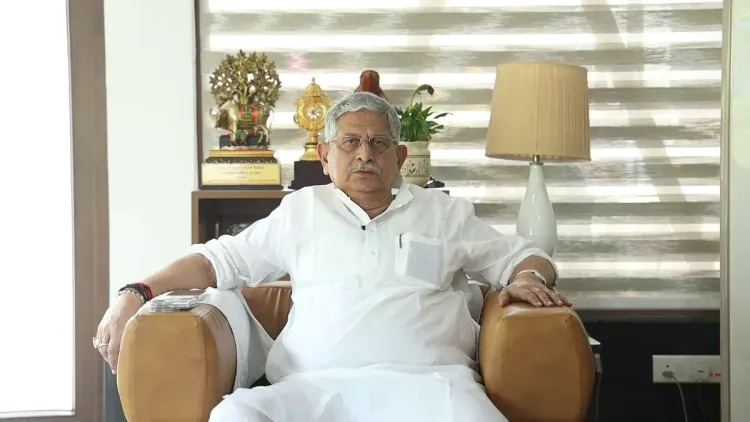
A sharp political volley landed on Friday, 6 November 2026, when Union Panchayati Raj and Fisheries Minister Rajiv Ranjan Singh — popularly known as Lalan Singh — publicly rebuked Rahul Gandhi over what he called a pattern of distorting facts about a flagship panchayat training scheme.
Posting on X, the minister accused the Congress leader of 'mastery in twisting and misrepresenting facts' — tathyon ko tod-marodkar pesh karne mein maharat — before laying out the government's stated intent behind the Pradhan Mantri Viksit Gram Swaraj Yojana (PM VGSY). The scheme, he said, is designed to deliver essential training and guidance to every eligible panchayat representative and panchayat-linked individual — with one explicit safeguard built in: no middleman takes the benefit meant for the actual recipient.
EPIC Numbers and Biometrics: The Anti-Ghost Beneficiary Lock
The minister's post zeroed in on the scheme's verification architecture. Under PM VGSY, trainee identity will be established through two layers: an EPIC number — the Electors' Photo Identity Card number — and biometric-based Aadhaar authentication. The logic is blunt: a ghost beneficiary cannot produce a fingerprint.
This two-factor model sits squarely within a policy direction the central government has pushed since 2013, when the Direct Benefit Transfer (DBT) framework began routing subsidies straight to Aadhaar-linked accounts, cutting out the layers of intermediaries that had long been accused of skimming welfare funds. What is notable here is the extension of that logic — from cash transfers to training and capacity-building, a domain where verifying actual attendance has historically been difficult to enforce.
PM VGSY's Place in Panchayat Capacity-Building History
The scheme appears to build on the Rashtriya Gram Swaraj Abhiyan (RGSA), approved in 2018, which set out to strengthen Panchayati Raj Institutions through training, e-governance support, and financial empowerment. That programme itself grew from years of central effort to bring India's roughly 2.5 lakh gram panchayats and their elected representatives into a coherent governance framework — a task complicated by the sheer scale of local bodies and the uneven capacity across states.
The Ministry of Panchayati Raj under Singh has consistently framed technology integration not merely as an efficiency measure but as a corruption-prevention tool — a message that now doubles as a political counter-punch against Congress's critique of welfare delivery.
The Political Subtext of a Training Scheme
That Singh chose to pin this post — marking it as a priority message — signals this exchange is not a one-day skirmish. Rahul Gandhi has repeatedly questioned the implementation integrity of central schemes, arguing that benefits leak before reaching rural households. Singh's rebuttal is designed to flip that narrative: the government, he argues, is not leaking funds — it is actively architecting systems to prevent leakage, and misrepresenting that effort does a disservice to genuine beneficiaries.
With the winter session of Parliament approaching, panchayat training programme rollouts and the operational details of PM VGSY are likely to surface as a fresh contest between the treasury benches and the opposition — a fight about data, delivery, and who gets credit for India's last-mile governance.
Point of View
Where the government can point to Aadhaar and EPIC locks as structural safeguards. The extension of biometric authentication from cash transfers to training programmes marks a meaningful expansion of DBT-era thinking into a domain that has long evaded rigorous accountability. For JD(U), whose support base is deeply rural and panchayat-linked, defending the credibility of these schemes is both governance and electoral arithmetic. The exchange also previews a likely Parliamentary flashpoint: the Opposition will demand rollout data, and the government will need numbers, not just design intent, to hold the argument.
NationPress
6 Nov 2026
Frequently Asked Questions
What is PM Viksit Gram Swaraj Yojana (PM VGSY)?
PM VGSY is a central government scheme under the Ministry of Panchayati Raj aimed at delivering essential training and guidance to every eligible panchayat representative and panchayat-linked individual, with EPIC number and biometric Aadhaar authentication used to verify trainees and prevent middlemen from claiming benefits.
Why did Lalan Singh criticise Rahul Gandhi on 6 November 2026?
Union Minister Rajiv Ranjan Singh (Lalan Singh) accused Rahul Gandhi of twisting facts about PM VGSY, arguing the scheme's design — with EPIC and Aadhaar verification — is specifically built to ensure benefits reach actual beneficiaries without intermediaries.
How does Aadhaar authentication work in panchayat training schemes?
Under PM VGSY, trainees are identified through biometric Aadhaar verification alongside their EPIC (Voter ID) number, creating a two-factor check that prevents ghost or duplicate enrollments in government training programmes.
What is the Rashtriya Gram Swaraj Abhiyan and how does it relate to PM VGSY?
The Rashtriya Gram Swaraj Abhiyan (RGSA) was approved in 2018 to strengthen Panchayati Raj Institutions through training and e-governance support; PM VGSY appears to build on that framework with enhanced technology-based identity verification.
What is Direct Benefit Transfer (DBT) and why is it relevant here?
Introduced in 2013, DBT routes government subsidies directly to Aadhaar-linked beneficiary accounts to eliminate middlemen; PM VGSY extends this same anti-intermediary principle from financial transfers to training and capacity-building programmes.