Rahul Gandhi vs Lalan Singh: Voter ID for welfare benefits sparks political row
Synopsis
A routine welfare-delivery announcement by Union Minister Lalan Singh — switching Panchayati Raj beneficiary identification from Aadhaar to voter IDs — has ignited a sharp national political row. Rahul Gandhi's allegation that it is an 'arrangement for stealing elections' has escalated what could have been a bureaucratic tweak into a full-blown constitutional flashpoint over access to rights and electoral rolls.
Key Takeaways
Union Panchayati Raj Minister Rajiv Ranjan Singh (Lalan Singh) announced on 6 November 2026 that EPIC (voter ID) , not Aadhaar alone, will identify beneficiaries for Panchayati Raj welfare schemes.
The minister cited Aadhaar's decentralised issuance — 'a card in five minutes' — as a fraud risk.
Leader of Opposition Rahul Gandhi called the move a 'conspiracy' and alleged it was 'an arrangement for stealing elections' via a post on X .
Gandhi linked the policy to the ongoing Special Intensive Revision (SIR) of electoral rolls, which the opposition has separately contested.
Lalan Singh clarified that biometric verification and EPIC numbers will supplement — not fully replace — Aadhaar.
No formal ministry circular has yet been issued; operational details of the EPIC-based verification remain unclear.
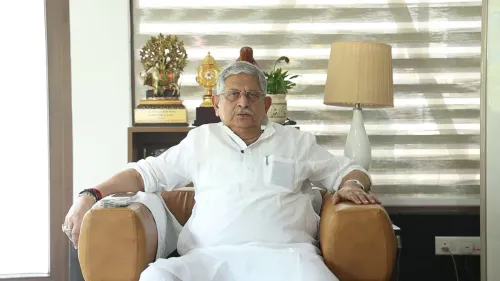
Leader of Opposition in Lok Sabha Rahul Gandhi and Union Panchayati Raj Minister Rajiv Ranjan Singh (alias Lalan Singh) clashed sharply on Friday, 6 November 2026, after the minister announced that voter ID cards — not Aadhaar — would serve as the primary basis for identifying beneficiaries under Panchayati Raj welfare schemes. The exchange, which quickly spilled onto social media, reflects a deepening fault line over welfare delivery architecture and electoral roll revisions.
What Lalan Singh Announced
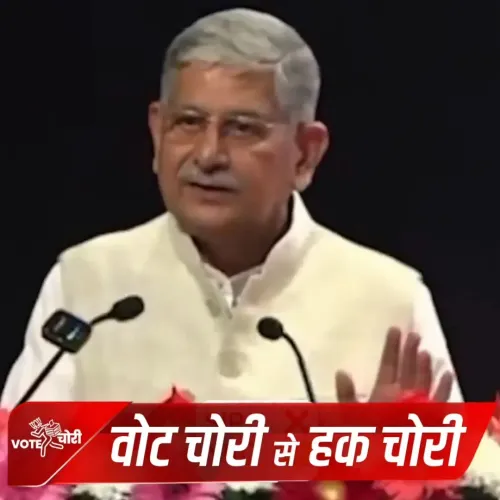
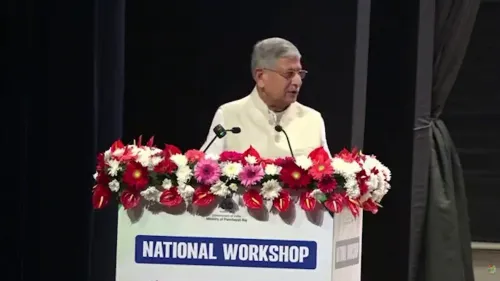
Addressing a national workshop on the Jan Yojana Abhiyaan in New Delhi, Rajiv Ranjan Singh said the government would no longer rely solely on Aadhaar for identifying scheme beneficiaries. 'Organisations that issue Aadhaar cards are available in every locality now. They can create an Aadhaar card for anyone within five minutes. So, Aadhaar won't be the basis (for identifying beneficiaries),' he said.
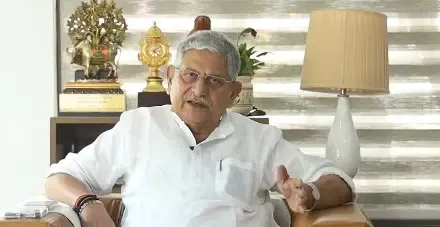
The minister later clarified that the shift was not an outright replacement. 'Along with Aadhaar, biometric verification and EPIC (Electors Photo Identity Card) numbers have also been added,' he said in a self-made video, adding that the Centre's intent was to ensure every entitled rupee reaches the genuine beneficiary without middlemen.
Rahul Gandhi's 'Conspiracy' Charge
Gandhi described the move as a 'conspiracy' of the Narendra Modi government. In a post on social media platform X, the LoP raised a cascade of concerns: 'Today it is Panchayati Raj welfare schemes. Tomorrow, will it be ration benefits? Pensions? MGNREGA? Housing schemes? Scholarships? Reservations?'
Gandhi went further, alleging systemic intent: 'This is not politics aimed at winning elections. It is an arrangement for stealing elections and a permanent mechanism for remaining in power.' He added, 'This is not just the theft of votes, it is the theft of rights. We will not allow this to happen.'
Gandhi's remarks pointedly linked the voter ID requirement to the ongoing Special Intensive Revision (SIR) of electoral rolls — a process that has separately drawn criticism from opposition parties over alleged voter deletions.
Lalan Singh Hits Back
Rajiv Ranjan Singh responded sharply, calling Gandhi a 'restless soul' and accusing him of distorting facts. 'He is so adept at twisting facts to suit his narrative that he could be awarded a PhD for it,' the minister said. He further alleged that Gandhi habitually connects unrelated issues to the SIR, adding: 'Nowadays, it seems that even when you sleep at night, all you see is SIR.'
Lalan Singh also invoked the legacy of late Prime Minister Rajiv Gandhi, quoting the Congress leader's own father: 'It was your late father, who served as Prime Minister of this country, and said that when Rs 100 was sent, only Rs 10 reached the intended recipient, while Rs 90 is taken away by the middlemen.' The reference was aimed at underscoring the Modi government's direct-benefit transfer record by contrast.
The Bigger Context
The row comes amid heightened political sensitivity around electoral rolls and welfare delivery. The SIR exercise has already triggered opposition protests in several states, with critics alleging disproportionate deletions of marginalised voters. Notably, linking welfare entitlements to voter IDs — if implemented — would make scheme access contingent on electoral registration, a step that legal and civil society observers have previously flagged as fraught with exclusion risk.
The government's stated logic is anti-fraud: Aadhaar's decentralised issuance infrastructure, it argues, makes it vulnerable to duplication, while EPIC numbers are more tightly controlled. Whether this framing holds up to scrutiny is likely to be tested in Parliament and potentially in court.
What Happens Next
The opposition, led by Gandhi, has signalled it will resist the policy shift and is expected to raise the matter in the next parliamentary session. The Panchayati Raj Ministry has not yet released a formal circular or operational guideline implementing the EPIC-based verification, leaving the precise scope of the change open to interpretation.
Point of View
Even if his framing overstates it. The deeper issue mainstream coverage is glossing over is the absence of a published implementation circular: a ministerial workshop announcement is not a policy, and the gap between the two is where exclusion risks typically materialise. With the SIR controversy running in parallel, the government faces a credibility problem even if its intent is genuinely anti-corruption.
NationPress
6 Nov 2026
Frequently Asked Questions
What did Union Minister Lalan Singh announce about Panchayati Raj welfare schemes?
Lalan Singh announced at a Jan Yojana Abhiyaan workshop on 6 November 2026 that voter ID cards (EPIC), not Aadhaar, would serve as the primary basis for identifying beneficiaries of Panchayati Raj schemes. He later clarified that biometric verification and EPIC numbers would supplement Aadhaar, not entirely replace it.
Why did Rahul Gandhi call the voter ID welfare policy a 'conspiracy'?
Gandhi alleged the move was 'an arrangement for stealing elections and a permanent mechanism for remaining in power,' arguing it ties welfare access to electoral registration. He linked the policy to the ongoing Special Intensive Revision (SIR) of electoral rolls, which the opposition has separately challenged over alleged voter deletions.
How did Lalan Singh respond to Rahul Gandhi's criticism?
Lalan Singh called Gandhi a 'restless soul' and accused him of habitually distorting facts to link unrelated issues to the SIR. He also cited late Prime Minister Rajiv Gandhi's own remark that only ₹10 of every ₹100 sent by the government reached beneficiaries, contrasting it with the Modi government's direct-benefit transfer record.
What is the Special Intensive Revision (SIR) and why is it controversial?
The SIR is an exercise by the Election Commission of India to revise and update electoral rolls. Opposition parties have raised concerns about disproportionate deletions of marginalised voters during the process. Gandhi's reference to SIR in the welfare debate signals the opposition's attempt to frame both issues as part of a broader pattern.
Will Aadhaar be completely dropped as a welfare identifier?
No. Lalan Singh clarified that Aadhaar will not be entirely removed; instead, EPIC (voter ID) numbers and biometric verification will be added alongside it. The government has not yet released a formal circular, so the precise operational scope of the change remains to be detailed.