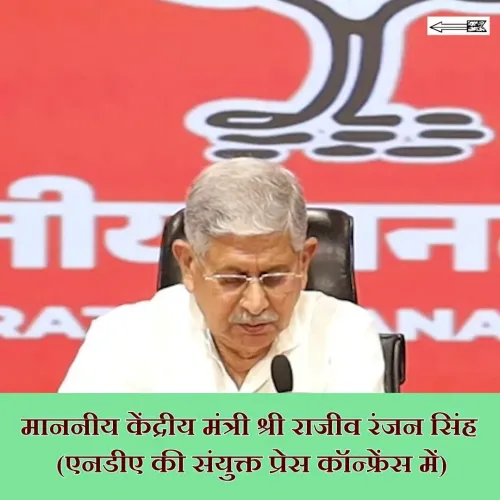
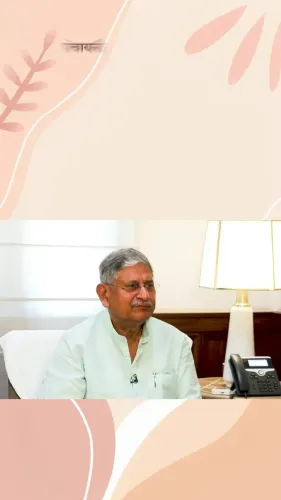
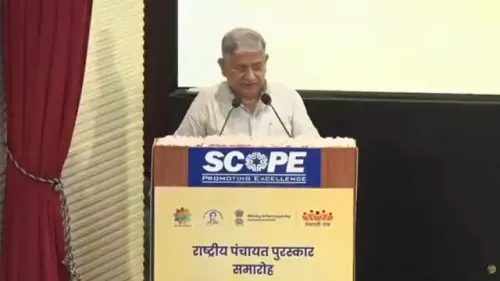
Lalan Singh: Panchayats Are Foundation of Strong Democracy
Synopsis
Union Panchayati Raj Minister Rajiv Ranjan Singh (Lalan Singh) declared on 30 October 2026 that panchayats are the foundation of strong democracy, urging local bodies to leverage their own resources and deliver development schemes to every section of rural society.
Key Takeaways
Lalan Singh posted on 30 October 2026 calling the panchayat 'the foundation of a strong democracy.' He urged panchayat bodies to understand local needs and channel development schemes to every social group using their own resources.
The post tagged the Ministry of Panchayati Raj (@mopr_goi) , signalling an official directional message to the ministry.
The 73rd Constitutional Amendment Act of 1992 gave Panchayati Raj institutions constitutional status and mandated elections and devolution.
Own-source revenue generation remains a persistent weak spot for gram panchayats, which depend heavily on central and state transfers.
The statement aligns with the Rashtriya Gram Swaraj Abhiyan framework pushing functions, funds, and functionaries to the grassroots.
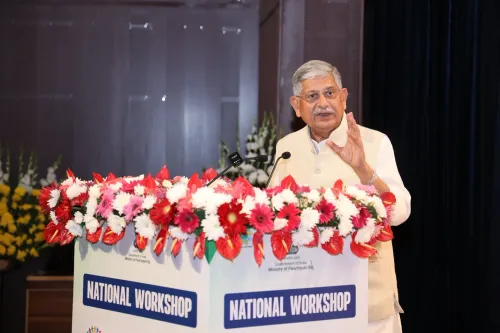
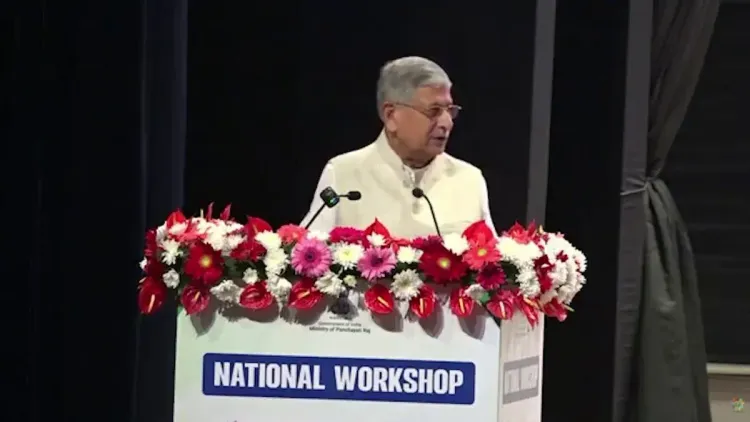
The panchayat is not just an administrative unit — it is the living foundation of Indian democracy. Union Panchayati Raj and Fisheries Minister Rajiv Ranjan Singh, popularly known as Lalan Singh, drove that point home on Friday, 30 October 2026, urging panchayat bodies to harness their own resources and carry development schemes to every section of society.
Posting in Hindi and tagging the Ministry of Panchayati Raj (@mopr_goi), the minister wrote: 'Panchayat mazboot loktantra ki neev hai. Logon ki zaroorat ko samajhkar apne sansaadhanon se samaaj ke har varg ke logon tak vikas ki yojanaon ko pahunchaaya jaae' — 'The panchayat is the foundation of a strong democracy. By understanding people's needs, development schemes must be delivered to every section of society through their own resources.'
A Constitutional Promise, Renewed From the Top
The minister's message carries the weight of a constitutional commitment. The 73rd Constitutional Amendment Act of 1992 gave Panchayati Raj institutions their formal legal standing, mandating regular elections, reservations, and devolution of power. More than three decades on, the gap between that promise and ground-level delivery remains the central challenge for India's roughly 2.5 lakh gram panchayats.
Successive governments have tried to bridge it through frameworks like the Rashtriya Gram Swaraj Abhiyan, which pushes the 'three Fs' — functions, funds, and functionaries — down to the grassroots. Singh's call for panchayats to mobilise 'their own resources' points squarely at that third imperative: local bodies must stop waiting for central transfers and start acting as self-reliant planning units.
Why 'Own Resources' Is the Hard Part
Resource mobilisation at the panchayat level has long been the weakest link in decentralisation. Many gram panchayats remain heavily dependent on Finance Commission grants and central scheme funds, with limited own-tax revenue from property taxes or local levies. When a minister at Singh's seniority publicly frames panchayat self-reliance as a priority, it signals pressure — downward through state governments to district collectors and panchayat development officers — to move faster on this front.
Singh, a Janata Dal (United) heavyweight from Bihar who helms the Union Ministry of Panchayati Raj alongside Fisheries, Animal Husbandry and Dairying, has consistently positioned panchayat empowerment as central to inclusive rural growth. His ministry works in tandem with state governments, since Panchayati Raj is a state subject under the Constitution.
With state-level devolution index reviews and gram sabha cycles on the horizon across several states, this statement lands at a moment when performance benchmarks for local bodies are being closely watched. The panchayat that knows what its village needs, and can fund at least part of the answer itself, is the one that actually delivers. That is the bar Singh has just reset — publicly.
Point of View
' he nudges state governments and panchayat bodies toward fiscal self-reliance, the most contested frontier of decentralisation. For a JD(U) leader whose party's political base sits in Bihar's rural heartland, championing gram panchayat empowerment also serves an electoral logic: positioning the NDA alliance as the credible custodian of grassroots governance ahead of any upcoming local body cycles. The statement fits a broader pattern of the current dispensation using ministerial social media to set directional benchmarks that percolate into administrative review processes.
NationPress
30 Oct 2026
Frequently Asked Questions
What did Lalan Singh say about panchayats on 30 October 2026?
He stated that the panchayat is the foundation of a strong democracy and called on local bodies to understand people's needs and use their own resources to deliver development schemes to every section of society.
What is the 73rd Constitutional Amendment and why does it matter for panchayats?
The 73rd Constitutional Amendment Act of 1992 gave Panchayati Raj institutions constitutional recognition, mandated regular elections and reservations, and created a framework for devolving functions, funds, and functionaries to gram panchayats across India.
What is the Rashtriya Gram Swaraj Abhiyan?
The Rashtriya Gram Swaraj Abhiyan is a central government scheme aimed at strengthening Panchayati Raj institutions by improving their governance capacities, financial management, and delivery of services at the grassroots level.
Who is Rajiv Ranjan Singh (Lalan Singh)?
Rajiv Ranjan Singh , known as Lalan Singh, is a senior Janata Dal (United) leader from Bihar and Union Minister for Panchayati Raj, Fisheries, Animal Husbandry and Dairying in the central government.
Why is panchayat own-source revenue important?
Most gram panchayats rely heavily on central Finance Commission grants and scheme funds rather than locally raised revenues. Building own-source income — through property taxes or local levies — makes panchayats more self-reliant and capable of needs-based planning, which is the core of decentralisation policy.