CM Rekha Gupta calls on President Murmu at Rashtrapati Bhavan

Synopsis
Delhi Chief Minister Rekha Gupta visited Rashtrapati Bhavan on 30 October 2026 for a courtesy meeting with President Draupadi Murmu, lauding the President's simplicity, dedication to service and Antyodaya values as a source of national inspiration.
Key Takeaways
Delhi CM Rekha Gupta paid a courtesy call on President Draupadi Murmu at Rashtrapati Bhavan on 30 October 2026 .
Gupta praised Murmu's 'simplicity, ease and warmth' as a reflection of core Indian values.
She highlighted the President's dedication to Antyodaya — the principle of serving the most marginalised — as an inspiration.
Draupadi Murmu has served as President since July 2022 and is the first person from a tribal community to hold the post.
Courtesy calls by chief ministers on the President are standard protocol under India's federal parliamentary system, fostering informal guidance without formal policy negotiations.
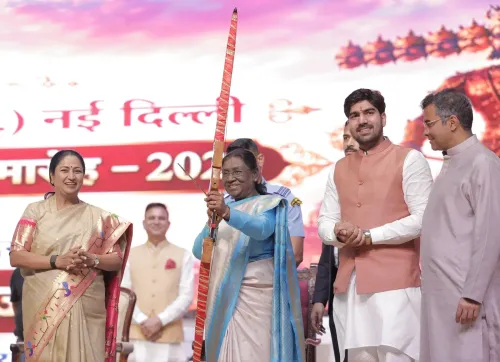
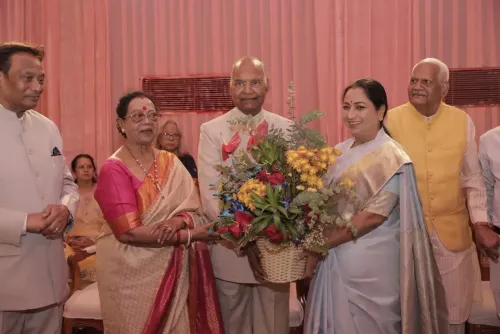
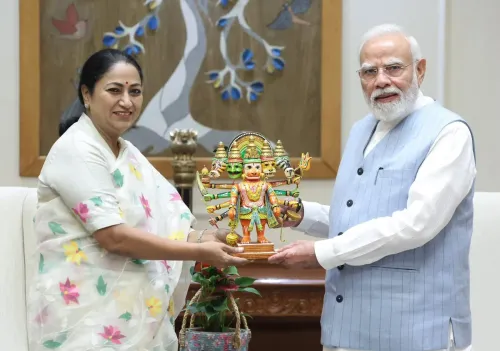
Delhi Chief Minister Rekha Gupta paid a courtesy call on President Draupadi Murmu at Rashtrapati Bhavan on Friday, 30 October 2026 — a meeting the Chief Minister described as both an honour and a source of personal inspiration, praising the President's simplicity and her lifelong commitment to the last person in society.
Sharing her impressions on X, Gupta wrote: 'उनकी सहजता, सरलता और आत्मीयता भारतीय जीवन मूल्यों की सुंदर अभिव्यक्ति है' — 'Her ease, simplicity and warmth are a beautiful expression of Indian values of life.' She added that Murmu's dedication to service, social harmony and Antyodaya (the welfare of the most marginalised) and her resolve to keep national interest paramount were an inspiration to all. Gupta concluded by expressing 'heartfelt gratitude' for the President's time, affectionate guidance and blessings.
Why a courtesy call carries weight
Under India's federal parliamentary system, meetings between state chief ministers and the President are a recognised — and regularly observed — protocol. They are not formal policy negotiations; rather, they open a channel for informal exchange of views and guidance. For a chief minister still in the early years of leading the capital's government, such a visit carries both ceremonial and symbolic significance.
Murmu's identity as a landmark President
Draupadi Murmu took office as President of India in July 2022, becoming the first person from a tribal community to hold the country's highest constitutional post. Her personal story — rooted in Odisha's Mayurbhanj district, shaped by hardship and public service — has made her presidency a reference point for conversations about inclusion and Antyodaya, the Gandhian principle of uplifting the weakest. The attributes Gupta highlighted — simplicity, service, harmony — are precisely the ones most associated with Murmu's public persona.
Courtesy calls of this kind rarely generate formal policy outcomes on the day. What they do is maintain the working relationship between a state administration and the constitutional head of the republic — a relationship that can matter when administrative or legislative matters eventually require Rashtrapati Bhavan's involvement.
Point of View
While largely ceremonial, serve as visible affirmations of constitutional propriety — a signal that a state executive respects the federal hierarchy. For Rekha Gupta, framing the visit around Murmu's tribal identity and Antyodaya philosophy also dovetails with the BJP's broader outreach to marginalised communities. Murmu's continued prominence as a symbol of inclusion gives such meetings political texture beyond mere protocol. Whether the engagement translates into substantive administrative collaboration between Delhi and Rashtrapati Bhavan will be the real measure of its significance.
NationPress
30 Oct 2026
Frequently Asked Questions
Why did Delhi CM Rekha Gupta meet President Draupadi Murmu?
Rekha Gupta paid a courtesy call on President Murmu at Rashtrapati Bhavan on 30 October 2026, a routine protocol meeting that allows chief ministers to seek informal guidance and maintain constitutional ties with the President.
Who is Draupadi Murmu?
Draupadi Murmu is the President of India since July 2022 and the first person from a tribal community to hold the country's highest constitutional office, widely associated with values of service, simplicity and Antyodaya.
What did Rekha Gupta say about President Murmu after the meeting?
Gupta said Murmu's simplicity, warmth and dedication to service and national interest were 'a beautiful expression of Indian values of life' and an inspiration to all, expressing heartfelt gratitude for her guidance and blessings.
Do courtesy calls between chief ministers and the President have any policy significance?
These meetings are standard protocol under India's federal parliamentary system. They are informal exchanges rather than formal policy negotiations, but they maintain the working relationship that can matter when administrative or legislative matters require the President's involvement.