CM Dhami: No one above law, corruption will be punished
Synopsis
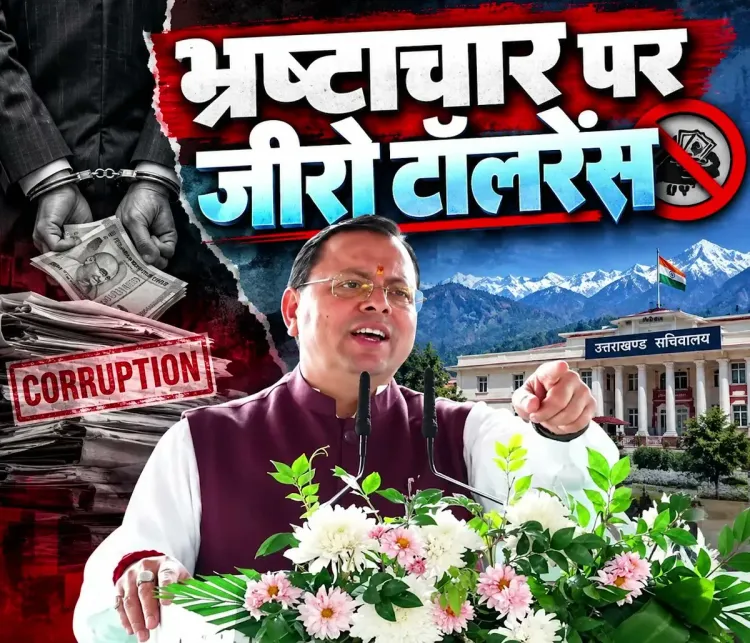
Uttarakhand CM Pushkar Singh Dhami declared on October 30, 2026 that good governance and accountability are his government's top priorities, warning that no individual, however powerful, is above the law and that anti-corruption action is already under way.
Key Takeaways
CM Pushkar Singh Dhami posted a strong anti-corruption statement on October 30, 2026 .
He stated that good governance, transparency, and accountability are the government's 'supreme priorities'.
Dhami warned that no person, however powerful or prominent, is above the law.
He framed strict action against the guilty as an ongoing process, not a future intent.
The legal framework underpinning this commitment includes the Prevention of Corruption Act, 1988 , as amended in 2018 .
The statement aligns with the BJP's national zero-tolerance governance narrative active since 2014 .
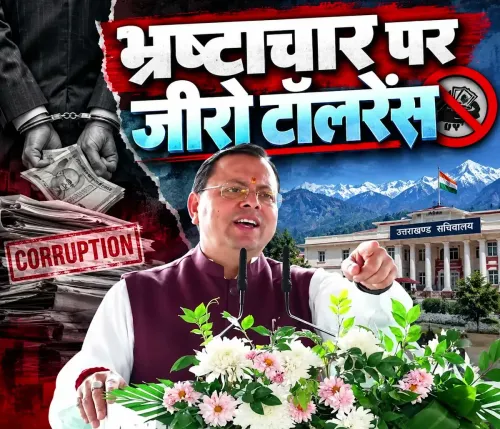
No rank, no influence, no political weight — Uttarakhand Chief Minister Pushkar Singh Dhami drew a hard line on corruption on Friday, October 30, 2026, declaring that good governance, transparency, and accountability are his government's highest priorities and that strict action against the guilty will be taken without discrimination.
Posting in Hindi on X, CM Dhami stated: 'सुशासन, पारदर्शिता और जवाबदेही हमारी सर्वोच्च प्राथमिकता है।' — 'Good governance, transparency, and accountability are our supreme priority.' He added that no matter how powerful or prominent a person involved in corruption may be, no one is above the law, and strict action is being ensured against those found guilty without any bias.
The 'no exceptions' signal from Dehradun
The language Dhami chose is deliberate and pointed. The phrase 'no matter how powerful or prominent' is a direct signal to state-level officials, contractors, and public servants that institutional protection will not shield the guilty. The operative phrase — 'strict action is being ensured' — frames this not as a future promise but as an ongoing process, suggesting active vigilance machinery is already at work.
Uttarakhand's anti-corruption framework rests on the Prevention of Corruption Act, 1988, significantly strengthened by the 2018 amendments that expanded the definition of criminal misconduct and tightened timelines for prosecution. That legal backbone gives the state's Vigilance Establishment real teeth — if deployed without fear or favour.
BJP's zero-tolerance governance arc since 2014
Dhami has served as Uttarakhand's Chief Minister since 2021, steering a state that sits at the intersection of high public-service delivery expectations — pilgrimage infrastructure, disaster management, hill-district administration — and the chronic vulnerabilities to graft those demands create. His statement fits squarely within the BJP's national governance narrative, active since 2014, that positions the party as the institutional scourge of corruption at every tier of government.
What separates rhetoric from record, though, is specificity. The post does not name a case, a department, or an accused — which means the real test will come in the follow-through: vigilance reports filed, suspensions ordered, prosecutions launched. That follow-through is what Uttarakhand residents and observers will now watch for.
Point of View
Firm, and deliberately without a named target, which maximises political cover while keeping pressure on the bureaucracy. It fits the BJP's decade-long effort to own the anti-corruption narrative at both national and state levels. The absence of a specific case, however, means its credibility will be measured entirely by what Uttarakhand's Vigilance Establishment does next. For a state government heading deeper into its term, a high-profile prosecution or departmental action would convert this tweet from a talking point into a governance milestone.
NationPress
30 Oct 2026
Frequently Asked Questions
What did Uttarakhand CM Dhami say about corruption on October 30, 2026?
CM Pushkar Singh Dhami declared that good governance, transparency, and accountability are his government's supreme priorities, and that no person — however powerful — is above the law, with strict action being taken against the guilty without discrimination.
What law governs anti-corruption action in Uttarakhand?
The primary legal framework is the Prevention of Corruption Act, 1988, which was significantly strengthened by amendments in 2018 that broadened the definition of criminal misconduct and tightened prosecution timelines.
Has CM Dhami named any specific case or official in his corruption crackdown?
No. The October 30 post did not name any specific case, department, or individual. Observers are watching for follow-up announcements of specific inquiries or administrative actions.
How long has Pushkar Singh Dhami been Uttarakhand's Chief Minister?
Pushkar Singh Dhami has served as Chief Minister of Uttarakhand since 2021.
Does the BJP have a broader anti-corruption governance policy?
Yes. BJP-led governments at the centre and in states have consistently promoted a zero-tolerance stance on corruption as a core governance pillar since 2014, and Dhami's statement aligns directly with that national narrative.