CM Dhami Vows to Hand Over a Secure Uttarakhand to Next Generation
Synopsis
Chief Minister Pushkar Singh Dhami on 25 June 2026 pledged to hand over a secure Uttarakhand to the next generation, reinforcing his government's focus on disaster resilience, law and order, and youth retention ahead of the 2027 state elections.
Key Takeaways
The Chief Minister's Office of Uttarakhand posted CM Pushkar Singh Dhami's pledge on 25 June 2026 to deliver a secure state to the next generation.
The statement builds on the Dhami government's 'Safe Uttarakhand' campaign launched in 2022-23 , covering anti-drug drives, women's safety, and slope stabilisation.
Uttarakhand , a Himalayan state formed in 2000 , faces recurring floods, landslides, and youth out-migration — the core problems the pledge aims to address.
The commitment is politically significant with 2027 Uttarakhand assembly elections approaching, framing BJP's governance as an inter-generational contract.
Policy watchers are awaiting the next State Action Plan on Disaster Management and potential youth-employment legislation in the coming monsoon session.
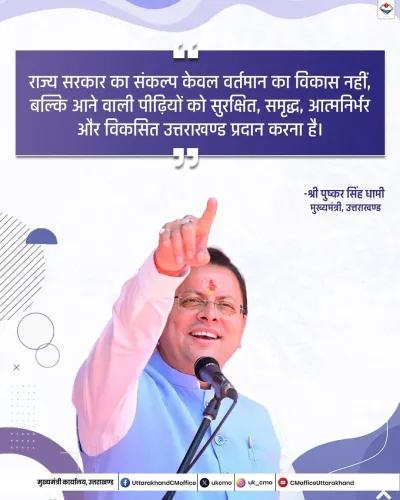
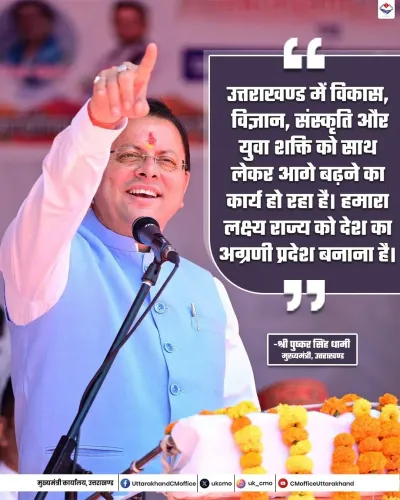
The Chief Minister's Office of Uttarakhand on Thursday, 25 June 2026, shared a statement by Chief Minister Pushkar Singh Dhami pledging to deliver a safe and secure state to the next generation — a commitment framed around law and order, disaster resilience, and sustainable hill-state development.
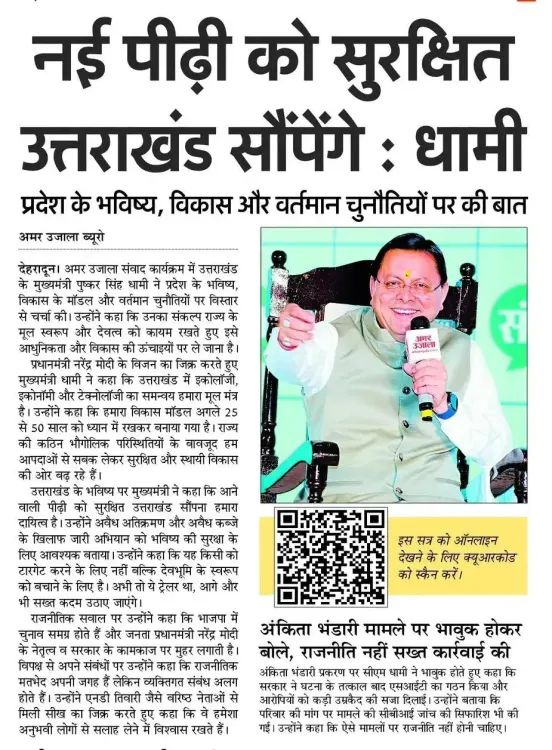
The post, shared from the official CMO handle, quoted Dhami as saying: 'Nayi peedhi ko surakshit Uttarakhand soupenge' — 'We will hand over a secure Uttarakhand to the new generation.' The statement is brief but carries significant political and policy weight as the state heads toward its 2027 assembly elections.
Context
Pushkar Singh Dhami has served as Chief Minister of Uttarakhand since March 2021 and was re-elected following the 2022 state assembly elections. His administration has consistently centred its governance narrative on three pillars: law and order, environmental protection, and reversing the chronic out-migration that has hollowed out many hill districts.
The June 25 statement is the latest articulation of that vision, signalling that the Dhami government intends to make 'a secure Uttarakhand for future generations' a defining electoral promise going into the next cycle.
Policy Backdrop
The pledge draws on a policy lineage that includes the Dhami government's 'Safe Uttarakhand' campaign, launched in 2022-23, which bundled anti-drug operations, dedicated women's safety cells, and slope-stabilisation projects in the aftermath of the devastating 2021 Chamoli disaster.
Uttarakhand, a Himalayan state carved out in 2000, faces recurring threats from floods, landslides, and seismic activity — all of which disproportionately affect younger residents and accelerate migration to the plains. Successive state governments have framed governance around inter-generational equity, linking disaster-risk reduction with youth retention and economic opportunity.
The Dhami administration has also pursued anti-encroachment drives and land-protection measures as part of its broader security framework — policies that resonate strongly with hill communities anxious about demographic and environmental change.
Stakeholders and Impact
The primary beneficiaries of the stated vision are Uttarakhand's youth and its hill communities, who bear the heaviest cost of natural disasters and economic stagnation. For young residents, a 'secure' state implies not just physical safety but livelihood security — a reason to stay rather than migrate to cities like Dehradun, Delhi, or beyond.
Women's safety and anti-drug measures, both central to the 'Safe Uttarakhand' framework, also speak to families and community leaders who have long demanded stronger state presence in remote areas. Any new legislation or executive action emerging from the upcoming monsoon session of the state legislature will be watched closely as a test of these commitments.
What's Next
Policy watchers will look for the release of the next State Action Plan on Disaster Management, as well as any new youth-employment or land-protection legislation introduced during the monsoon legislative session. With the 2027 Uttarakhand assembly elections on the horizon, the frequency and specificity of such statements are expected to increase.
The framing of governance as an inter-generational contract — handing over a 'developed and secure' state — positions the BJP-led government to contest the next election on a record of stability, a narrative it will need to substantiate with measurable outcomes on disaster preparedness, employment, and public safety.
Point of View
Compressing the BJP's governance record into a single inter-generational promise. It connects disaster resilience, anti-drug campaigns, and land protection under one emotive umbrella — a framing that has proven effective in hill-state politics where physical insecurity and out-migration are lived realities. The statement also pre-empts opposition narratives by placing the burden of proof on the government's own stated ambition, raising the stakes for concrete policy delivery before 2027. Whether it translates into legislation or executive action in the monsoon session will determine how much political currency the pledge actually carries.
NationPress
23 Sept 2026
Frequently Asked Questions
What did Uttarakhand CM Pushkar Singh Dhami say on 25 June 2026?
CM Pushkar Singh Dhami pledged to hand over a safe and secure Uttarakhand to the next generation, a statement shared by the official Chief Minister's Office on X on 25 June 2026.
What is the 'Safe Uttarakhand' campaign?
The 'Safe Uttarakhand' campaign, launched by the Dhami government in 2022-23, combined anti-drug operations, women's safety cells, and slope-stabilisation projects, particularly following the 2021 Chamoli disaster.
Why is Uttarakhand focused on youth and security?
Uttarakhand faces chronic youth out-migration driven by limited employment, recurring natural disasters like floods and landslides, and difficult terrain — making security and economic opportunity central to state governance.
When are the next Uttarakhand assembly elections?
The next Uttarakhand assembly elections are scheduled for 2027, and CM Dhami's governance pledges are widely seen as laying the groundwork for the BJP's electoral campaign.
What policies has the Dhami government used to improve law and order in Uttarakhand?
The Dhami government has pursued anti-drug drives, dedicated women's safety cells, anti-encroachment measures, and slope-stabilisation projects as part of its broader law-and-order and disaster-resilience agenda.