CM Dhami: Uttarakhand govt committed to future generations
Synopsis
Chief Minister Pushkar Singh Dhami has reaffirmed that the Uttarakhand government's resolve goes beyond present development — its core commitment is to deliver a secure, prosperous, self-reliant, and developed state for future generations.
Key Takeaways
CM Pushkar Singh Dhami stated the government's resolve is to provide a 'safe, prosperous, self-reliant, and developed Uttarakhand' to future generations.
The statement was shared by the official Chief Minister's Office of Uttarakhand on 15 July 2026 .
Dhami has led the BJP government in Uttarakhand since 2021 , winning re-election in the 2022 assembly elections .
The intergenerational development framing reflects a consistent theme in the Dhami administration's governance messaging.
The statement echoes national self-reliance priorities while addressing Uttarakhand-specific challenges such as out-migration and Himalayan ecology.
Policy watchers will look to upcoming state budget sessions and vision documents for concrete follow-through measures.
The Chief Minister's Office of Uttarakhand, on Wednesday, 15 July 2026, shared a statement by Chief Minister Pushkar Singh Dhami reaffirming the state government's long-term development vision — one centred not merely on present-day growth but on building a secure, prosperous, self-reliant, and developed Uttarakhand for generations to come.
Context
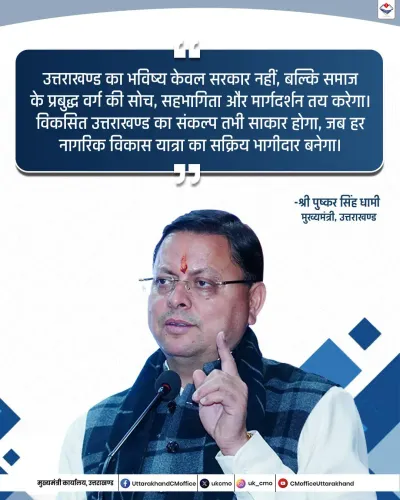
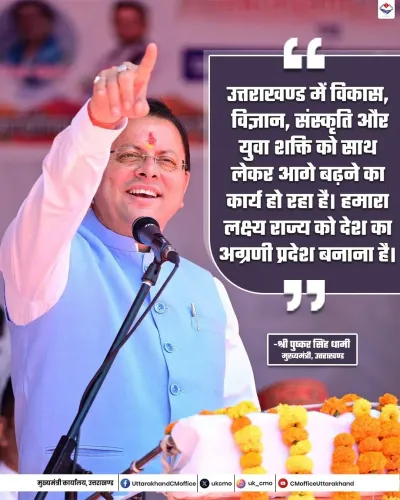
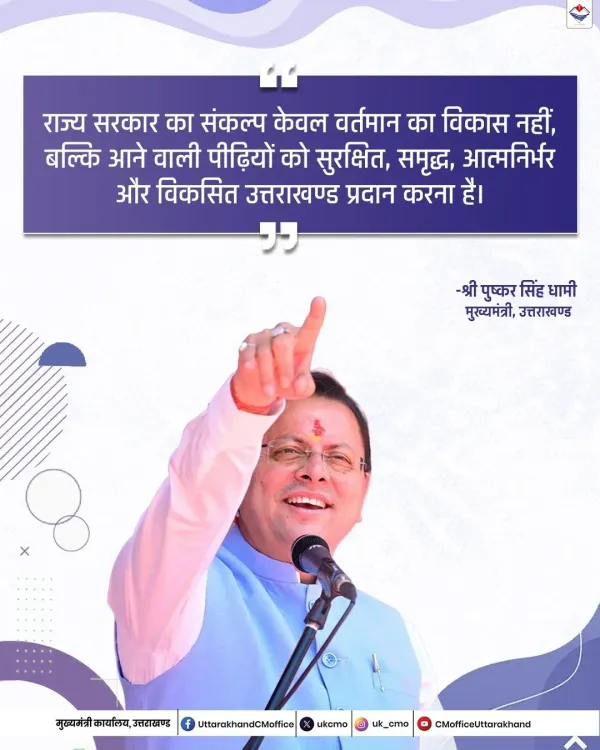
CM Dhami stated: 'Rajya sarkar ka sankalp keval vartaman ka vikas nahin, balki aane wali peedhiyon ko surakshit, samridh, aatmanirbhar aur viksit Uttarakhand pradaan karna hai' — ('The resolve of the state government is not merely the development of the present, but to provide a safe, prosperous, self-reliant, and developed Uttarakhand to the generations to come.')
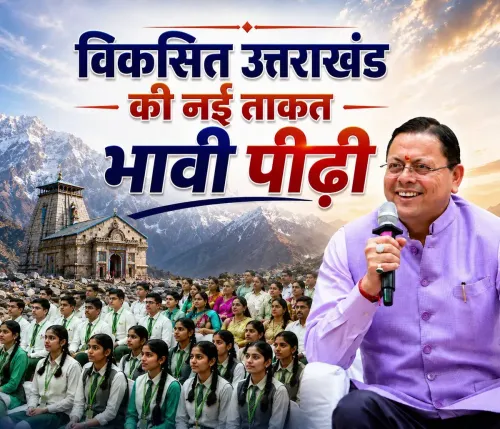
The statement was shared by the official Chief Minister's Office account on X, accompanied by an image, and reflects a governance posture that the Dhami administration has consistently communicated since assuming office in 2021.
Policy Backdrop
Pushkar Singh Dhami, a BJP leader, first became Chief Minister in 2021 and was returned to power after the 2022 Uttarakhand assembly elections. His government has repeatedly framed development as an intergenerational responsibility, balancing economic progress with the ecological sensitivities of a Himalayan state.
The emphasis on aatmanirbharta (self-reliance) echoes national-level policy priorities while addressing Uttarakhand-specific challenges — including out-migration from hill districts, sustainable infrastructure development, and environmental protection. Similar language has appeared in state budget speeches and long-term vision documents over the past several years.
Uttarakhand, carved out as a separate state in 2000, has historically grappled with balancing tourism-driven growth, Himalayan ecology, and the economic aspirations of its residents — making intergenerational framing particularly resonant in state politics.
Stakeholders and Impact
The statement is directed at the broadest possible constituency: every resident of Uttarakhand, with particular relevance to the state's youth and future generations. The four-pillar framing — secure, prosperous, self-reliant, and developed — maps onto ongoing policy priorities including employment generation, disaster resilience, tourism infrastructure, and ecological sustainability.
For communities in the hill districts, where out-migration remains a persistent challenge, the government's articulation of a forward-looking vision carries direct political and social weight. Civil society groups and local governance bodies are among the key stakeholders who will watch for concrete policy follow-through.
What's Next
The statement is likely a precursor to, or accompaniment of, broader policy announcements — observers will watch the next state budget cycle and any updates to Uttarakhand's long-term vision document for specifics on sustainable infrastructure, youth employment schemes, and ecological programmes. The Dhami government's ability to translate this intergenerational commitment into measurable outcomes will be the defining test of this political positioning.
Point of View
Prosperous, self-reliant, developed) mirrors the vocabulary of national BJP governance, suggesting a conscious alignment between state and central messaging ahead of future electoral cycles. For a Himalayan state where out-migration and ecological fragility are structural concerns, this framing is both politically astute and substantively relevant. The real test will come when budget allocations and scheme outcomes are measured against this aspirational benchmark.
NationPress
13 Oct 2026
Frequently Asked Questions
What did CM Pushkar Singh Dhami say about Uttarakhand's development?
CM Dhami stated that the state government's resolve is not merely present-day development but to provide a secure, prosperous, self-reliant, and developed Uttarakhand to future generations.
When did Pushkar Singh Dhami become Chief Minister of Uttarakhand?
Pushkar Singh Dhami first became Chief Minister of Uttarakhand in 2021 and was re-elected after the 2022 state assembly elections.
What is the Uttarakhand government's long-term development vision?
The Dhami government has consistently framed its development agenda around intergenerational responsibility, balancing economic growth with ecological sustainability and self-reliance.
What challenges does Uttarakhand face in achieving long-term development?
Uttarakhand faces specific challenges including out-migration from hill districts, sustainable infrastructure needs, Himalayan ecological sensitivity, and the need for youth employment generation.
What should we watch for next from the Uttarakhand government?
Observers will track the next state budget and any updates to Uttarakhand's long-term vision document for concrete policy measures on sustainable infrastructure, youth employment, and ecological programmes.