CM Rekha Gupta Hails India–UK Trade Pact Coming Into Force
Synopsis
Delhi Chief Minister Rekha Gupta on 15 July 2026 hailed the India–UK Comprehensive Economic and Trade Agreement entering into force, saying it will empower MSMEs, strengthen exporters and deepen bilateral economic ties under PM Modi's leadership.
Key Takeaways
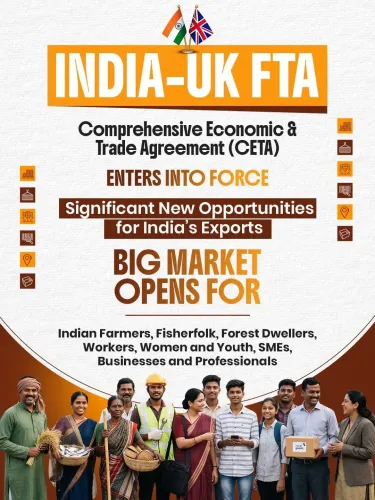
The India–UK Comprehensive Economic and Trade Agreement (CETA) came into force on 15 July 2026 .
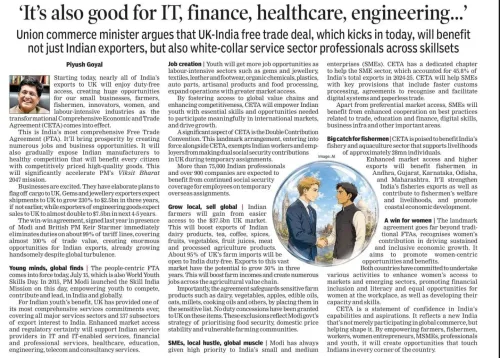
Delhi CM Rekha Gupta called the development 'a proud milestone in India's growth story.' The pact is expected to benefit Indian exporters, MSMEs and skilled professionals seeking opportunities in the United Kingdom .
Negotiations were formally launched in January 2022 following a 2021 India–UK joint statement on trade.
The agreement covers tariffs, services, investment and mobility — aligning with India's Viksit Bharat 2047 economic ambitions.
India has pursued similar deals with Australia , the UAE and ASEAN members as part of a broader trade-diversification strategy since 2014 .
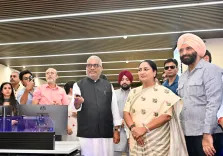
Delhi Chief Minister Rekha Gupta on Wednesday, 15 July 2026 welcomed the coming into force of the India–UK Comprehensive Economic and Trade Agreement (CETA), calling it 'a proud milestone in India's growth story' and crediting the development to the leadership of Prime Minister Narendra Modi.
Context
In her post on X, CM Gupta stated that the agreement 'will strengthen our exporters, empower MSMEs, create new opportunities for Indian talent and deepen economic ties between two trusted partners.' She framed the pact as evidence of India 'expanding its global footprint with confidence' under what she described as the 'visionary leadership' of PM Modi.
The agreement carries the hashtag #IndiaUKFTA, signalling coordinated political messaging around the treaty's enforcement date. Gupta's statement positions the deal within the broader Viksit Bharat framework — the government's stated ambition of achieving developed-economy status by 2047.
Policy Backdrop
Formal negotiations between India and the United Kingdom were launched in January 2022, following a joint statement on enhanced trade talks issued in 2021. The talks gained urgency after Brexit prompted London to seek independent bilateral trade arrangements with major economies, and New Delhi identified the UK as a priority partner for goods, services, investment and professional mobility.
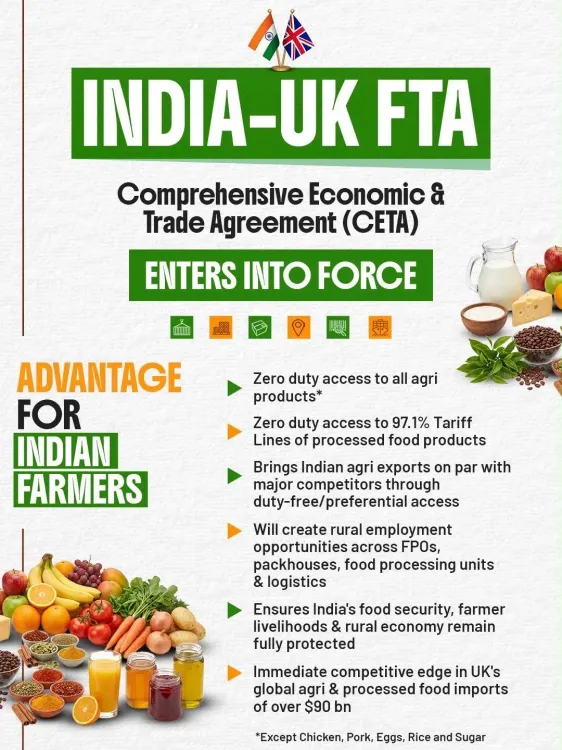
The India–UK CETA covers tariff reductions, services liberalisation, investment protections and provisions on the movement of skilled workers — areas of particular interest to Indian IT firms, pharmaceutical exporters and MSMEs seeking European market access through the United Kingdom. Since 2014, India has concluded or advanced trade agreements with partners including Australia, the UAE and ASEAN members, diversifying its export markets as part of a deliberate economic diplomacy strategy.
Stakeholders and Impact
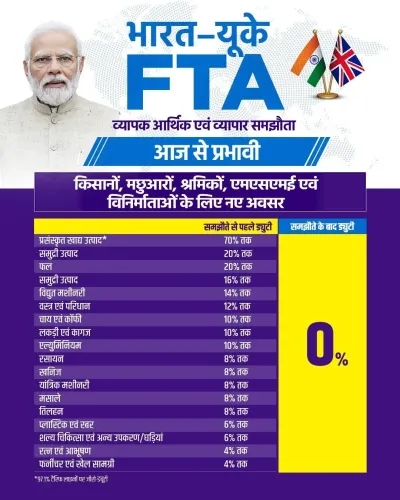
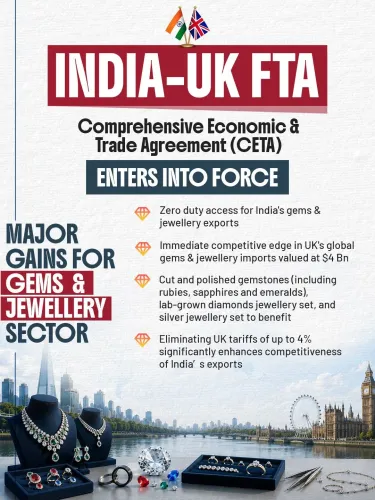
Indian exporters and micro, small and medium enterprises (MSMEs) are the primary beneficiaries cited in official messaging. Lower tariffs on goods such as textiles, leather, processed foods and engineering products are expected to improve competitiveness for Indian manufacturers in the UK market, while the services and mobility chapters could ease the path for Indian professionals working in Britain.
On the UK side, industries such as Scotch whisky, automobiles and financial services are expected to gain improved access to Indian consumers. The agreement is seen as a flagship post-Brexit trade win for London and a demonstration that India is a willing and capable partner for comprehensive economic pacts.
What's Next
Attention will now turn to the publication of first-quarter trade statistics under the new tariff schedules, which will offer the first empirical test of whether the agreement delivers measurable gains for Indian exporters. Parliamentary scrutiny of implementing legislation in both countries will also be closely watched by industry bodies and trade-policy analysts.
For Delhi, the political significance lies in the ruling party's ability to point to tangible international economic outcomes as part of its Viksit Bharat 2047 narrative heading into future electoral cycles. CM Gupta's statement underscores how national trade diplomacy is being amplified at the state-leadership level to reinforce the broader economic-progress message.
Point of View
Which has increasingly prioritised bilateral deals to reduce dependence on stalled multilateral negotiations. Delhi CM Rekha Gupta's statement is notable for its explicit linkage of a national trade achievement to PM Modi's leadership — a pattern that reflects the BJP's strategy of projecting economic diplomacy wins as a unified party narrative. The emphasis on MSMEs and Indian talent signals an effort to broaden the political constituency that identifies with trade liberalisation beyond large industry. Whether the agreement delivers on its promise will depend on implementation quality, and the first quarterly trade data will be an early and closely watched indicator.
NationPress
13 Oct 2026
Frequently Asked Questions
What is the India–UK Comprehensive Economic and Trade Agreement?
The India–UK Comprehensive Economic and Trade Agreement (CETA) is a bilateral pact between India and the United Kingdom covering tariff reductions, services liberalisation, investment protections and provisions for the movement of skilled workers. It came into force on 15 July 2026 .
When did India–UK FTA negotiations begin?
Formal negotiations were launched in January 2022 , following a 2021 India–UK joint statement on enhanced trade talks. The UK's departure from the European Union accelerated its push for an independent trade deal with India.
How will the India–UK trade deal benefit MSMEs?
The agreement is expected to lower tariffs on goods such as textiles, leather, processed foods and engineering products, improving the competitiveness of Indian MSMEs in the UK market. Services and mobility provisions may also ease access for Indian professionals.
What did Delhi CM Rekha Gupta say about the India–UK FTA?
CM Rekha Gupta called the agreement 'a proud milestone in India's growth story,' saying it will 'strengthen our exporters, empower MSMEs, create new opportunities for Indian talent and deepen economic ties between two trusted partners.'
What is Viksit Bharat and how does the India–UK deal relate to it?
Viksit Bharat is the Indian government's stated objective of achieving developed-economy status by 2047 . The India–UK CETA is presented as part of this agenda, aiming to raise India's trade-to-GDP ratio and integrate Indian industries into global value chains.