CM Sai Marks World Youth Skills Day, Backs Skill Push
Synopsis
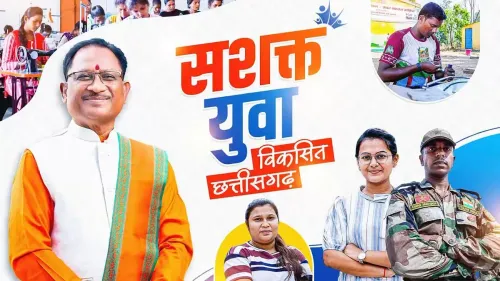
On World Youth Skills Day 2026, Chhattisgarh CM Vishnu Deo Sai reaffirmed the state government's focus on skill development, employment-linked training, and entrepreneurship, framing youth capability as the foundation of a prosperous Chhattisgarh and a developed India by 2047.
Key Takeaways
Chief Minister Vishnu Deo Sai marked World Youth Skills Day on 15 July 2026 with a message to Chhattisgarh's youth.
He described youth skill, innovation, and entrepreneurship as the 'greatest strength' of both Viksit Bharat and a prosperous Chhattisgarh .
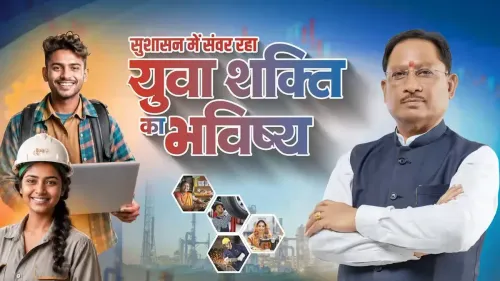
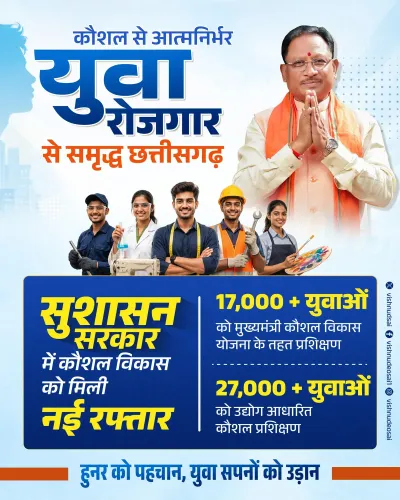
The state government is working to provide skill development, employment-oriented training, and self-reliance opportunities for young people.
The message aligns with the Skill India Mission and Pradhan Mantri Kaushal Vikas Yojana , which have been active in Chhattisgarh since 2015 .
Chhattisgarh has district-level skill centres linked to key industries including steel , mining , and IT .
State budget allocations for 2026-27 skill infrastructure and industry MoUs will be the next key markers of intent.
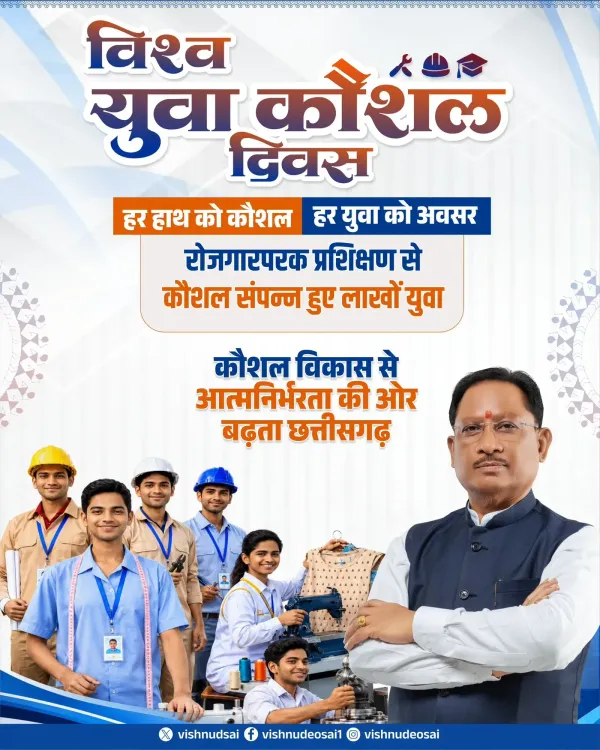
Chhattisgarh Chief Minister Vishnu Deo Sai on Wednesday, 15 July 2026 extended greetings to young people across the state on World Youth Skills Day, reaffirming his government's commitment to skill development, employment-oriented training, and self-reliance for the youth of Chhattisgarh.
Context
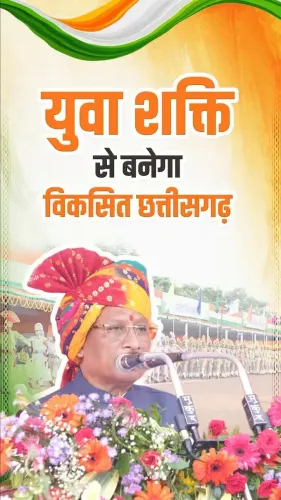
World Youth Skills Day is observed every year on 15 July under a United Nations mandate, a tradition that began in 2015 to spotlight the importance of technical and vocational education in improving youth employability worldwide. Chief Minister Sai used the occasion to address young people directly, writing in Hindi: 'युवाओं का कौशल, नवाचार और उद्यमिता ही विकसित भारत तथा समृद्ध छत्तीसगढ़ की सबसे बड़ी शक्ति है' — 'The skill, innovation, and entrepreneurship of youth is the greatest strength of a developed India and a prosperous Chhattisgarh.'
He added that the state government is 'continuously working' to provide youth with better opportunities in skill development, employment-linked training, and self-sufficiency, expressing confidence that young people will 'establish new dimensions of success through their talent and hard work' and contribute meaningfully to nation-building.
Policy Backdrop
The statement aligns with a national policy architecture built over the past decade. The Skill India Mission, launched in 2015, set an ambitious target of skilling 400 million people through short-term training and recognition of prior learning. It was reinforced by the National Policy on Skill Development and Entrepreneurship 2015 and successive phases of the Pradhan Mantri Kaushal Vikas Yojana (PMKVY), which expanded in 2016 and again in 2020 to include placement-linked training across all states, including Chhattisgarh.
CM Sai's reference to Viksit Bharat — the national vision of a fully developed India by 2047 — places the state's skill agenda within the broader framework articulated by the central government in 2023. Chhattisgarh, with its significant tribal and rural youth population, has established district-level skill development centres tied to local industries such as steel, mining, and IT.
Stakeholders and Impact
The primary beneficiaries of the policies referenced by CM Sai are young job-seekers and aspiring entrepreneurs in Chhattisgarh, a state where rural and tribal youth represent a substantial share of the working-age population. Placement-linked training programmes under central and state schemes are designed to connect this demographic with industries operating in the state's economic corridors.
The Atmanirbhar Bharat and Make in India frameworks have sought to convert India's demographic dividend into employable human capital — a goal that state governments, including Chhattisgarh, have mirrored through local skill infrastructure and industry partnerships under schemes such as the National Apprenticeship Promotion Scheme.
What's Next
Attention will now turn to state budget allocations for 2026-27 skill centres and any new agreements with industry partners that the Chhattisgarh government may announce in the coming months. Annual performance data on placement rates from the Chhattisgarh Skill Development Authority will serve as a key indicator of how effectively these policy commitments translate into outcomes for young people on the ground.
Point of View
Reinforcing BJP's consistent branding of youth skilling as a pillar of governance. By invoking both 'Viksit Bharat' and 'Atmanirbhar Bharat' in spirit, the statement positions Chhattisgarh as an active participant in the national demographic dividend strategy rather than a passive recipient of central schemes. For a state with a large tribal and rural youth base, the emphasis on self-reliance and entrepreneurship also carries electoral resonance ahead of future cycles. The real test, however, will lie in placement data and budget outlays — metrics that will determine whether the rhetoric translates into measurable opportunity.
NationPress
13 Oct 2026
Frequently Asked Questions
What is World Youth Skills Day and when is it observed?
World Youth Skills Day is a United Nations-mandated annual observance held on 15 July every year since 2015 , dedicated to highlighting the importance of technical and vocational skills for youth employability worldwide.
What did Chhattisgarh CM Vishnu Deo Sai say on World Youth Skills Day 2026?
CM Vishnu Deo Sai extended greetings to youth on 15 July 2026 and said the state government is continuously working to provide skill development, employment-linked training, and self-reliance opportunities, expressing confidence in youth contributing to nation-building.
What skill development schemes are active in Chhattisgarh?
Chhattisgarh implements central schemes including the Pradhan Mantri Kaushal Vikas Yojana and the National Apprenticeship Promotion Scheme , supplemented by district-level skill centres linked to industries such as steel, mining, and IT.
What is Viksit Bharat and how does it relate to skill development?
Viksit Bharat is a national vision articulated in 2023 aiming for a fully developed India by 2047 , with human capital, entrepreneurship, and skill development identified as core pillars of achieving that goal.
Who is Vishnu Deo Sai?
Vishnu Deo Sai is a BJP leader who has served as Chief Minister of Chhattisgarh since December 2023 , overseeing state-level implementation of central skill, employment, and development schemes.