CM Vishnu Deo Sai Reaffirms Chhattisgarh's Commitment to Girl-Child Welfare
Synopsis
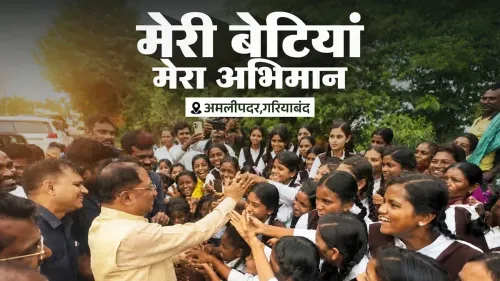
Chhattisgarh Chief Minister Vishnu Deo Sai on 12 July 2026 reaffirmed his government's resolve to empower girl children through welfare schemes covering education, health, security, and economic self-reliance, calling empowered daughters the state's greatest strength.
Key Takeaways
CM Vishnu Deo Sai posted on 12 July 2026 reaffirming the Chhattisgarh government's commitment to girl-child welfare.
The Chief Minister described empowered daughters as the 'greatest strength' of a developed and self-reliant Chhattisgarh .
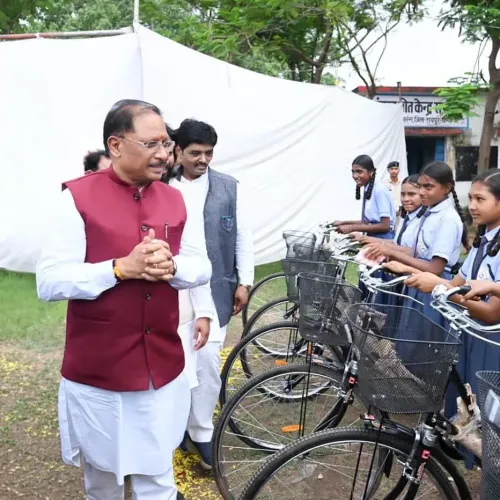
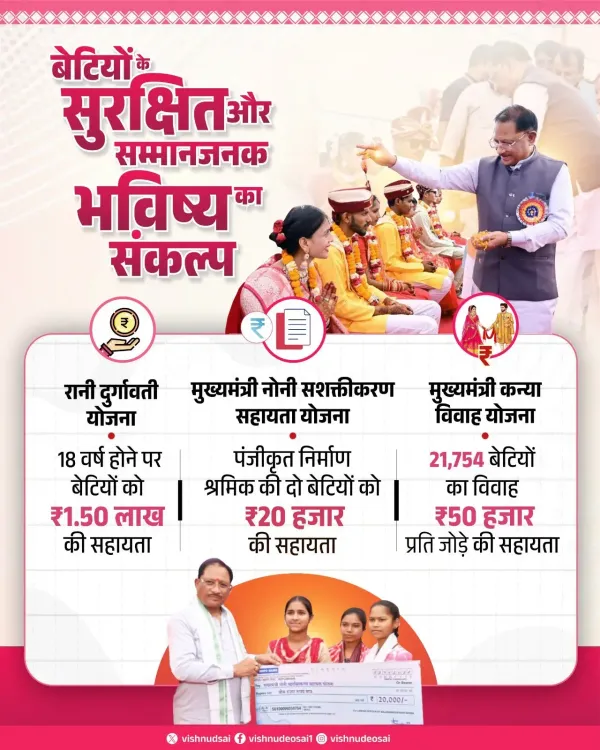
The government stated it is providing quality education, health, security, economic support, and self-reliance opportunities through various public welfare schemes.
The messaging aligns with the national Beti Bachao Beti Padhao programme launched in 2015 .
The BJP has governed Chhattisgarh since December 2023 , with women's empowerment as a stated policy priority.
No new scheme was announced; the post reaffirms commitment to existing welfare architecture.
Chhattisgarh Chief Minister Vishnu Deo Sai on Sunday, 12 July 2026, reaffirmed his government's commitment to empowering the state's girl children, stating that empowered daughters are the greatest strength of a developed, self-reliant, and prosperous Chhattisgarh. Writing on X, the Chief Minister said the state government is laying a strong foundation for the bright future of girls through various public welfare schemes covering quality education, better health, security, economic support, and self-reliance.
Context
In his post, CM Sai wrote — 'सशक्त बेटियां विकसित, आत्मनिर्भर और समृद्ध छत्तीसगढ़ की सबसे बड़ी शक्ति हैं' ['Empowered daughters are the greatest strength of a developed, self-reliant, and prosperous Chhattisgarh']. He added that the government's resolve is to ensure that every daughter in the state receives respect, security, and equal opportunities to progress. The statement is a reaffirmation of the BJP-led government's stated priority of women-centred development since it came to power in December 2023.
Policy Backdrop
The Chhattisgarh government's messaging aligns with the national Beti Bachao Beti Padhao programme, launched in 2015, which targets improvement in the child sex ratio and promotes education and protection of girls across India. BJP-governed states have consistently amplified this framework at the state level, weaving central scheme objectives into local welfare delivery. Chhattisgarh, a state with a large tribal population and significant rural communities, has been a focal point for girl-child welfare outreach given the socio-economic challenges many families face.
The Chief Minister's post does not announce a new scheme or legislation but underlines the government's stated intent to use existing welfare architecture — spanning education, health, and economic empowerment — to improve outcomes for girls. The BJP secured a decisive mandate in the November 2023 Chhattisgarh assembly elections, with welfare delivery and women's empowerment forming a central plank of its campaign.
Stakeholders and Impact
The primary beneficiaries of the welfare push described by CM Sai are girl children and women across Chhattisgarh, particularly in rural and tribal districts where access to quality education and healthcare has historically been uneven. Civil society organisations and grassroots workers engaged in women's welfare programmes are key implementation partners for such state-level commitments. The statement signals continued political will at the top of the state government to prioritise this demographic.
For families in the state, the Chief Minister's public reaffirmation is a signal that schemes related to girl-child education, health coverage, and economic support are expected to remain active policy priorities in the near term. Observers note that translating such stated commitments into measurable outcomes depends on budget allocations and administrative follow-through at the district level.
What's Next
Attention will now turn to Chhattisgarh's upcoming state budget discussions and whether allocations for girl-child welfare schemes reflect the scale of ambition expressed by the Chief Minister. Review meetings on the implementation of existing programmes — particularly in tribal and remote districts — will be a key indicator of how the government intends to operationalise its stated resolve. Policy watchers will also track whether this messaging precedes the announcement of any new state-specific initiative targeting girls' education, health, or financial security.
Point of View
Particularly between budget cycles and ahead of scheme review periods. The statement draws rhetorical strength from the national 'Beti Bachao Beti Padhao' framework while keeping the focus on Chhattisgarh's specific socio-economic context, including its large tribal and rural population. Notably, the post does not announce a new policy instrument, which means its political value lies in signalling sustained intent rather than fresh legislative action. The real test of this commitment, as with similar declarations, will be visible in budget allocations and district-level implementation data in the months ahead.
NationPress
10 Oct 2026
Frequently Asked Questions
What did Chhattisgarh CM Vishnu Deo Sai say about girl-child welfare?
CM Vishnu Deo Sai stated on 12 July 2026 that empowered daughters are the greatest strength of a developed and self-reliant Chhattisgarh, and that the government is working to provide girls with quality education, health, security, economic support, and self-reliance through various welfare schemes.
Which schemes does Chhattisgarh have for girl-child welfare?
While CM Sai's post referenced various public welfare schemes for girls covering education, health, and economic empowerment, the national Beti Bachao Beti Padhao programme launched in 2015 remains the key framework that state-level efforts in Chhattisgarh align with. Specific state scheme names were not mentioned in the post.
When did the BJP come to power in Chhattisgarh?
The BJP formed the government in Chhattisgarh in December 2023 after winning the November 2023 state assembly elections, with Vishnu Deo Sai sworn in as Chief Minister.
What is Beti Bachao Beti Padhao and how does it relate to Chhattisgarh?
Beti Bachao Beti Padhao is a national programme launched in 2015 to address the declining child sex ratio and promote education and protection of girls. Chhattisgarh, like other BJP-governed states, aligns its state-level girl-child welfare messaging and delivery with this central programme's objectives.
What is the focus of Chhattisgarh government's policy on women empowerment?
The Chhattisgarh government under CM Vishnu Deo Sai has stated a focus on providing every girl in the state with respect, security, quality education, better health, and equal opportunities for economic self-reliance and advancement.