CM Sai Greets Chhattisgarh on Children's Rights Day
Synopsis
Chhattisgarh Chief Minister Vishnu Deo Sai greeted state residents on International Children's Protection Day on 1 June 2026, calling children the nation's brightest future and pledging sensitive fulfilment of responsibilities toward their rights, safety, health and education.
Key Takeaways
CM Vishnu Deo Sai extended greetings on International Children's Protection Day on 1 June 2026 .
He described children as 'the bright future of the nation and the most precious heritage of society.' The message called on all citizens to fulfil responsibilities toward children's rights, safety, health and quality education .
Chhattisgarh's child-welfare framework draws on central laws including the Right to Education Act, 2009 and the POCSO Act, 2012 .
The state's large tribal population makes child welfare particularly significant, with gaps noted in school enrolment and protection in interior districts.
Budget allocations for the Department of Women and Child Development in the next fiscal cycle will be a key indicator of follow-through.
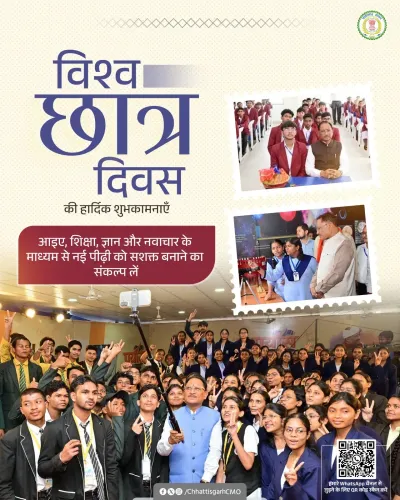
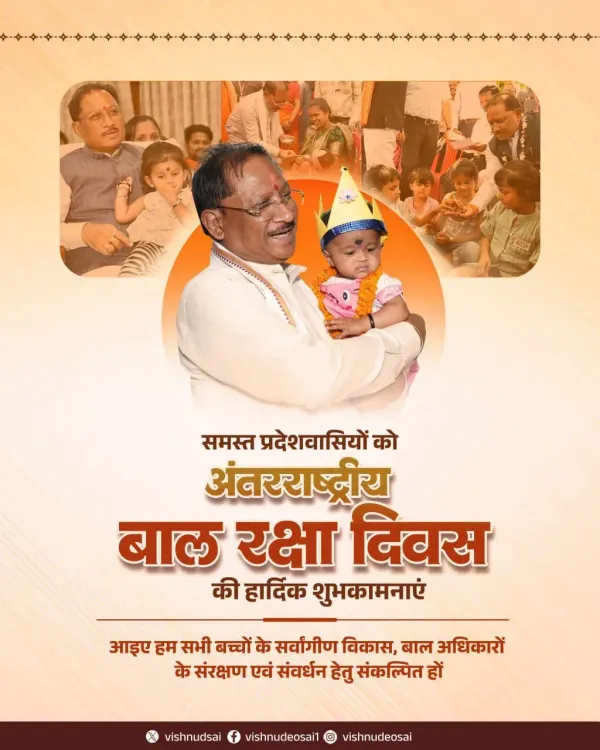
Chhattisgarh Chief Minister Vishnu Deo Sai on Monday, 1 June 2026 extended greetings to all residents of the state on the occasion of International Children's Protection Day, calling on citizens to honour their responsibilities toward children's rights, safety, health and quality education.
Context
In his post on X, CM Sai wrote: 'समस्त प्रदेशवासियों को अंतरराष्ट्रीय बाल रक्षा दिवस की हार्दिक शुभकामनाएँ' ('Heartfelt greetings to all residents of the state on International Children's Protection Day'). He described children as 'the bright future of the nation and the most precious heritage of society.' The message carried a pledge to discharge responsibilities toward children with sensitivity.
Chhattisgarh has a significant tribal population, and child welfare in the state is closely tied to access to education, nutrition, and protection from exploitation in rural and forested districts. The occasion of 1 June is widely observed as a day to reaffirm commitments to child rights globally.
Policy Backdrop
India's child-protection architecture rests on several central frameworks that state governments are required to operationalise. The Right to Education Act, 2009 mandates free and compulsory education for children aged 6 to 14, and the Protection of Children from Sexual Offences (POCSO) Act, 2012 established child-friendly procedures for reporting and prosecution of offences against minors.
The National Policy for Children, 2013 outlined four pillars — survival, development, protection and participation — that provide the framework states including Chhattisgarh follow when designing welfare programmes. BJP-governed states have consistently linked child-protection messaging to concurrent priorities such as school enrolment drives, nutrition schemes and anti-trafficking measures.
Stakeholders and Impact
Children in Chhattisgarh, particularly those belonging to tribal communities in districts such as Bastar, Surguja and Korba, stand at the centre of the state's welfare agenda. Convergence between the Departments of Women and Child Development, Education, and Health is considered critical to translating policy commitments into on-ground outcomes.
Civil society organisations working on child rights have long highlighted gaps in institutional care, school dropout rates and child labour in the state's interior regions. Messages from senior political leadership on occasions such as this are seen as signals of administrative intent, even when no specific programmatic announcement accompanies them.
What's Next
Observers will watch the state's Department of Women and Child Development budget allocations in the next fiscal cycle for concrete follow-through on the CM's stated commitments. District-level child protection committees and school safety audits are among the mechanisms through which the state can translate such pledges into accountable action.
India's alignment with the Sustainable Development Goals framework, particularly SDG 4 (quality education) and SDG 16 (protection from violence and exploitation), means that state-level performance on child welfare will increasingly face scrutiny at both national and international levels.
Point of View
But it lands against a backdrop of genuine child-welfare challenges in one of India's most tribal-intensive states. By explicitly naming rights, safety, health and education together, the statement mirrors the four-pillar framework of the National Policy for Children, 2013 — suggesting an alignment, at least in rhetoric, with the national policy architecture. For a state where school dropout rates and child labour in forested districts remain persistent concerns, the political value of such messaging lies in whether it is followed by departmental action and budget commitments. Analysts will treat this as a baseline statement against which the administration's next budget cycle and district-level child protection committee activity will be measured.
NationPress
17 Oct 2026
Frequently Asked Questions
What is International Children's Protection Day?
International Children's Protection Day, observed on 1 June, is a day dedicated globally to raising awareness about the rights, safety and welfare of children, with origins in the international children's rights movement.
What did Chhattisgarh CM Vishnu Deo Sai say on Children's Day 2026?
CM Vishnu Deo Sai greeted all residents of Chhattisgarh on 1 June 2026, calling children the nation's brightest future and urging citizens to sensitively fulfil their responsibilities toward children's rights, safety, health and quality education.
What laws protect children's rights in Chhattisgarh?
Children in Chhattisgarh are protected by central legislation including the Right to Education Act 2009, which mandates free schooling for ages 6 to 14, and the POCSO Act 2012, which provides child-friendly procedures for offences against minors.
Who is Vishnu Deo Sai?
Vishnu Deo Sai is a BJP leader who has served as Chief Minister of Chhattisgarh since December 2023, following the party's victory in the state assembly elections.
What are the child welfare challenges in Chhattisgarh?
Chhattisgarh faces notable child welfare challenges including school dropout rates, child labour and limited institutional care in tribal-dominated interior districts such as Bastar, Surguja and Korba.