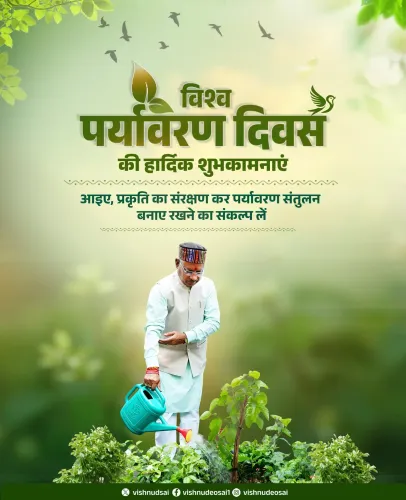
CM Sai Calls for Biodiversity Pledge on World Environment Day
Synopsis
Chhattisgarh Chief Minister Vishnu Deo Sai marked World Biodiversity Day on 22 May 2026 by calling on all state residents to pledge conservation of the state's rich natural heritage of forests, water and land, linking ecological stewardship to cultural identity and future generations.
Key Takeaways
Chief Minister Vishnu Deo Sai posted biodiversity greetings on 22 May 2026 , coinciding with the UN-observed International Day for Biological Diversity .
Chhattisgarh is one of India's most forested states, with tribal communities playing a central role in local biodiversity management.
Sai invoked jal, jungle, zameen [water, forest, land] — a phrase carrying strong cultural and political resonance in central India's tribal belt.
India ratified the Convention on Biological Diversity in 1994 and enacted the Biological Diversity Act in 2002 , creating State Biodiversity Boards and local Biodiversity Management Committees.
The CM called for a collective pledge on conservation, promotion of biodiversity, and fulfilment of responsibilities towards nature.
Observers will watch for follow-up state action including BMC convening, updated biodiversity action plans, and protected-area notifications.
Chhattisgarh Chief Minister Vishnu Deo Sai on Friday, 22 May 2026, extended greetings to all residents of the state on the occasion of World Biodiversity Day, urging citizens to renew their commitment to protecting and nurturing the state's natural heritage for future generations.
Context
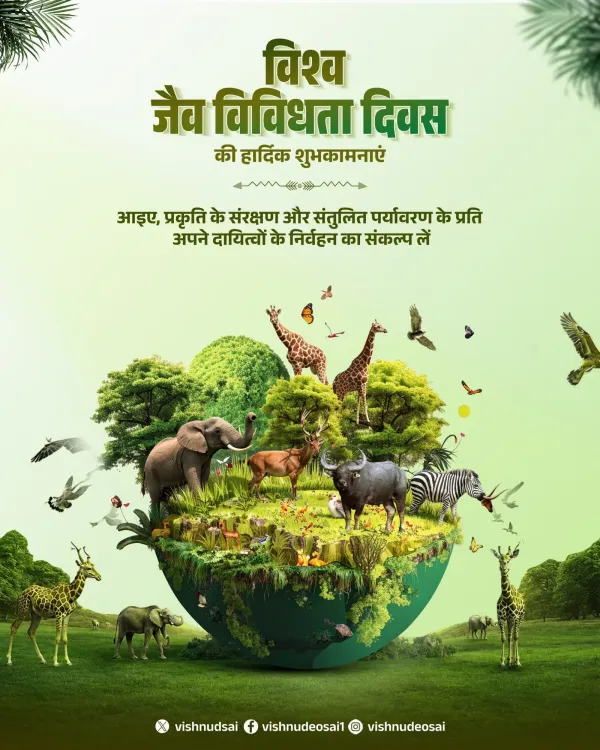
Posting on X, Chief Minister Sai wrote — 'समस्त प्रदेशवासियों को विश्व जैव विविधता दिवस की हार्दिक शुभकामनाएँ' [Heartfelt greetings to all residents of the state on World Biodiversity Day] — and went on to describe Chhattisgarh's forests, water bodies and land as the foundation of ecological balance and a secure future for coming generations. He called on citizens to take a pledge for the conservation and promotion of biodiversity and the fulfilment of their responsibilities towards nature.
The International Day for Biological Diversity is observed every year on 22 May under the aegis of the United Nations, in recognition of the Convention on Biological Diversity (CBD). India ratified the CBD in 1994 and subsequently enacted the Biological Diversity Act, 2002, establishing national and state-level mechanisms for conservation and the regulation of access to genetic resources.
Policy Backdrop
Chhattisgarh is among India's most forest-rich states, with its landscape sustaining significant tribal populations whose traditional practices have historically underpinned local biodiversity. The state operates under the framework of the Biological Diversity Act, 2002, which mandates the creation of State Biodiversity Boards and grassroots-level Biodiversity Management Committees (BMCs) across local bodies.
Chief Minister Sai's message explicitly invoked the phrase 'जल, जंगल, जमीन' [water, forest, land] — a formulation with deep resonance in central Indian tribal and environmental discourse — framing biodiversity stewardship as both a cultural identity and a constitutional duty. This framing aligns with the broader national policy emphasis on community-based conservation.
Stakeholders and Impact
The primary stakeholders in Chhattisgarh's biodiversity landscape are its tribal communities and forest dwellers, who depend on forest ecosystems for livelihood and cultural sustenance. Their participation in Biodiversity Management Committees is central to the state's obligations under the 2002 Act.
The state also faces ongoing pressures from industrial activity and mining operations across its mineral-rich belt, making public reaffirmations of ecological responsibility by senior leadership particularly significant for communities and conservation advocates. Sai's call for a collective 'sankalp' [pledge] signals the administration's intent to keep biodiversity on the public agenda amid these competing demands.
What's Next
Observers will watch for any follow-up administrative action, including the convening or strengthening of Biodiversity Management Committees at the panchayat level, updates to the state's biodiversity action plan, or new notifications relating to protected areas. The 22 May message sets a public benchmark against which the state government's on-ground conservation steps will be measured in the months ahead.
Point of View
Jungle, zameen' in a state where forest rights and mining pressures are constant fault lines. By framing conservation as a cultural identity rather than a regulatory obligation, the BJP government positions itself as a custodian of tribal and ecological heritage — a narrative with electoral salience in Chhattisgarh's heavily forested constituencies. The call for a public 'pledge' stops short of announcing concrete policy, but it sets a reputational benchmark that civil society and opposition will invoke when evaluating on-ground forest and biodiversity governance. Ultimately, the message reflects a broader national pattern of chief ministers using UN environment days to signal green credentials amid unresolved tensions between resource extraction and ecological protection.
NationPress
5 Oct 2026
Frequently Asked Questions
What is World Biodiversity Day and when is it observed?
World Biodiversity Day, formally the International Day for Biological Diversity, is a UN-observed annual event held on 22 May to promote global awareness of the importance of biodiversity conservation under the Convention on Biological Diversity.
What did Chhattisgarh CM Vishnu Deo Sai say on World Biodiversity Day 2026?
CM Vishnu Deo Sai extended greetings to all Chhattisgarh residents and called on citizens to pledge conservation and promotion of biodiversity, describing the state's forests, water bodies and land as the foundation of ecological balance and a secure future for coming generations.
Why is Chhattisgarh significant for biodiversity in India?
Chhattisgarh is among India's most forest-rich states, home to extensive tribal populations whose traditional practices support local ecosystems; the state operates Biodiversity Management Committees under the Biological Diversity Act, 2002.
What is the Biological Diversity Act, 2002?
The Biological Diversity Act, 2002 is an Indian law enacted to conserve biological diversity, ensure its sustainable use and regulate access to genetic resources; it established the National Biodiversity Authority, State Biodiversity Boards and local Biodiversity Management Committees.
What does 'jal jungle zameen' mean and why is it significant in Chhattisgarh?
'Jal jungle zameen' translates to 'water, forest, land' and is a phrase with deep resonance in central India's tribal belt, representing the interconnected natural resources on which indigenous communities depend for livelihood and cultural identity.