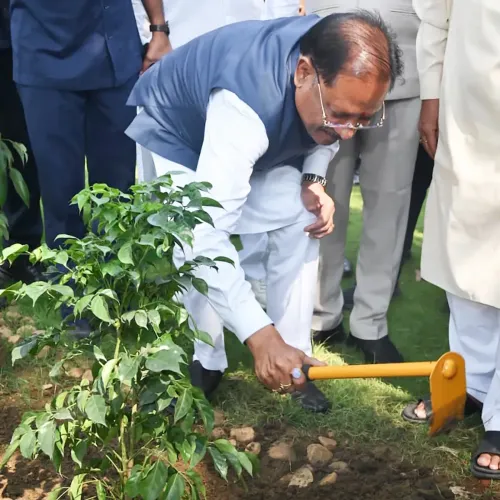
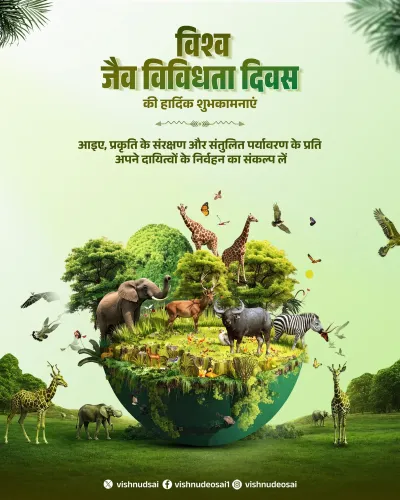
CM Sai Calls for Green Commitment on World Environment Day
Synopsis
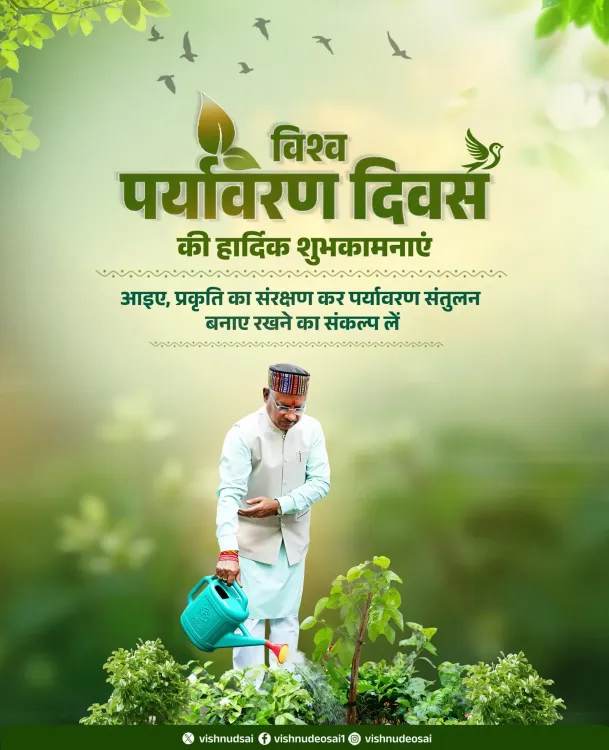
On World Environment Day 2026, Chhattisgarh Chief Minister Vishnu Deo Sai called on state residents to commit to environmental protection and natural resource conservation, framing it as a moral responsibility to future generations and linking it to the vision of a green, clean and prosperous India.
Key Takeaways
CM Vishnu Deo Sai posted a World Environment Day message on 5 June 2026 addressed to all residents of Chhattisgarh .
He described nature as the 'greatest protector of our culture, civilisation and existence', going beyond its role as a material resource.
The post frames environmental protection as a moral responsibility towards future generations , not merely a statutory duty.
Chhattisgarh is one of India's most forested states, making environmental commitments central to its governance and tribal welfare agenda.
India's broader climate commitments include the National Action Plan on Climate Change (2008) and a net-zero emissions target by 2070 pledged at COP26 .
Analysts will track whether the message is followed by concrete budget allocations or new notifications from the state's environment and forest department.
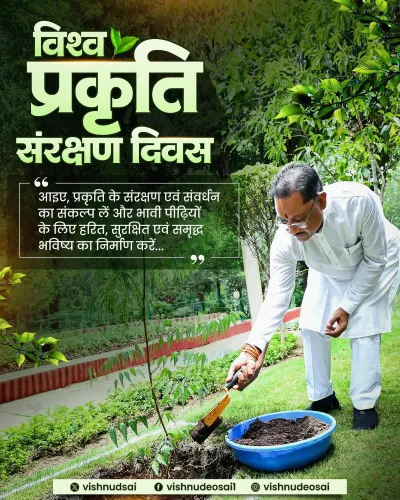
Chhattisgarh Chief Minister Vishnu Deo Sai extended greetings to all residents of the state on World Environment Day, 5 June 2026, calling on citizens to pledge themselves to environmental protection, conservation of natural resources, and the building of a green, clean and prosperous India.
Posting on X in Hindi, CM Sai wrote: 'प्रकृति केवल हमारे जीवन का आधार नहीं, बल्कि हमारी संस्कृति, सभ्यता और अस्तित्व की भी सबसे बड़ी संरक्षक है' — 'Nature is not merely the foundation of our lives, but also the greatest protector of our culture, civilisation and existence.' He added that environmental protection is not just a duty but a moral responsibility towards future generations.
Context
World Environment Day is observed every year on 5 June under the auspices of the United Nations, a tradition that dates to 1973. The day serves as the principal global platform for raising public awareness and mobilising political will around pressing environmental challenges. Chief ministers and senior leaders across India routinely use the occasion to reaffirm state-level commitments to sustainability and green development.
Chhattisgarh is among India's most forest-rich states, with significant biodiversity hotspots and a large tribal population whose livelihoods are closely tied to forest ecosystems. This makes environmental messaging particularly resonant in the state's governance discourse.
Policy Backdrop
India's domestic environmental architecture rests on the National Action Plan on Climate Change (NAPCC), launched in 2008, which outlines eight national missions including the Green India Mission and the Sustainable Habitat Mission. These missions guide state-level implementation of afforestation, pollution control, and sustainable land-use programmes.
At the international level, India announced a commitment to achieve net-zero emissions by 2070 at the COP26 climate summit in Glasgow in 2021, alongside targets to expand renewable energy capacity. State governments, including Chhattisgarh, are expected to align their forest and environment policies with these national and international commitments.
Stakeholders and Impact
The message is addressed broadly to all residents of Chhattisgarh, but carries particular weight for the state's tribal communities, who depend directly on forest resources for sustenance, cultural identity, and economic activity. Conservation pledges made on occasions such as World Environment Day shape the public expectations around state budget allocations for the environment and forest department.
Future generations are explicitly invoked in CM Sai's post as the primary moral beneficiaries of present-day conservation efforts — a framing that aligns with the intergenerational equity principle embedded in India's climate commitments.
What's Next
Observers will watch whether CM Sai's public pledge translates into concrete policy action, including fresh allocations or notifications from the Chhattisgarh environment and forest department in the months ahead. Progress on national programmes such as the Green India Mission within the state will serve as a practical measure of the government's follow-through on the commitments articulated on World Environment Day 2026.
Point of View
However, such messaging carries added political weight given the state's vast forest cover and its complex balancing act between mineral extraction, tribal rights, and conservation. The explicit invocation of intergenerational moral responsibility — rather than just regulatory compliance — is a rhetorical step that positions the BJP-led state government alongside India's COP26 narrative of long-horizon climate stewardship. Whether this translates into measurable policy action in the state's environment and forest budget will determine how substantive the pledge proves to be.
NationPress
20 Oct 2026
Frequently Asked Questions
Why did Chhattisgarh CM Vishnu Deo Sai post on World Environment Day 2026?
CM Vishnu Deo Sai posted on World Environment Day, 5 June 2026, to extend greetings to Chhattisgarh residents and call on citizens to pledge commitment to environmental protection, natural resource conservation, and building a green and clean India.
What did Vishnu Deo Sai say about nature on World Environment Day?
He said nature is not merely the foundation of life but the greatest protector of culture, civilisation and existence, and that protecting it is a moral responsibility towards future generations.
Why is World Environment Day significant for Chhattisgarh?
Chhattisgarh is one of India's most forest-rich states with significant biodiversity and a large tribal population dependent on forest ecosystems, making environmental policy especially important to the state's governance and welfare agenda.
What is India's net-zero emissions target?
India pledged to achieve net-zero emissions by 2070 at the COP26 climate summit in Glasgow in 2021, alongside commitments to expand renewable energy capacity.
What is the Green India Mission?
The Green India Mission is one of eight national missions under India's National Action Plan on Climate Change, launched in 2008, aimed at protecting and enhancing India's forest cover and responding to climate change.