CM Sai Hails Tribal Communities as Nature's Guardians
Synopsis
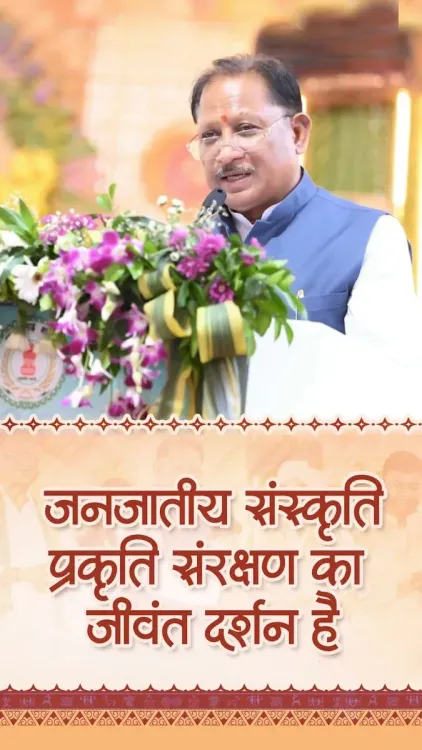
On World Environment Day 2026, Chhattisgarh Chief Minister Vishnu Deo Sai honoured tribal communities as centuries-old guardians of nature, calling their reverence for trees and the natural world an inspiration for balanced, environment-friendly living for all citizens.
Key Takeaways
Chief Minister Vishnu Deo Sai posted his World Environment Day message on 5 June 2026 .
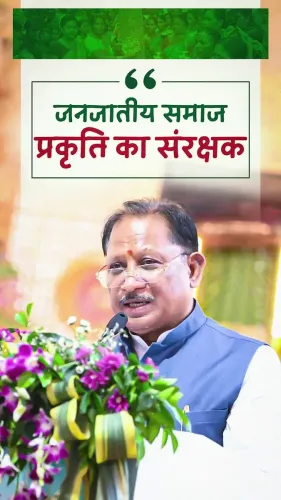
He described tribal society as a centuries-old 'carrier of nature conservation' ( prakriti sanrakshan ka samvahak ).
Chhattisgarh has one of India's highest proportions of Scheduled Tribe population, giving the statement particular local resonance.
The Forest Rights Act, 2006 formally institutionalised tribal communities' conservation role through gram sabha-level forest governance.
The message reinforces a broader national policy pattern of positioning indigenous communities as ecological custodians in Schedule V forest areas.
State-level follow-through — community forest resource management plans and new afforestation schemes — will be the key policy indicator to watch.
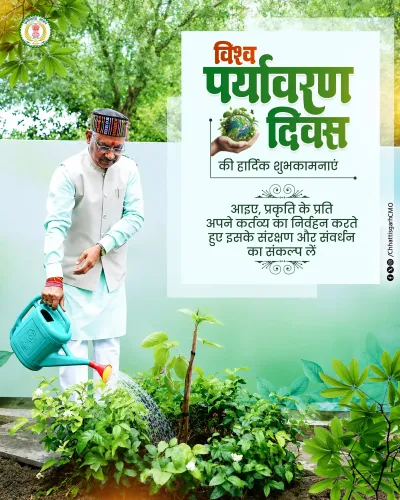
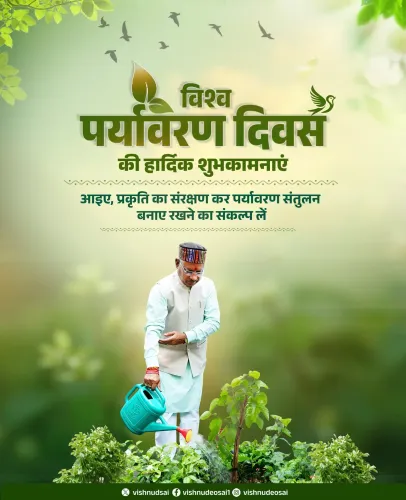
Chhattisgarh Chief Minister Vishnu Deo Sai on Friday, 5 June 2026 — World Environment Day — paid tribute to India's tribal communities, describing them as centuries-old custodians of nature and urging all citizens to draw inspiration from their harmonious relationship with the natural world.
Posting in Hindi on the occasion, the Chief Minister wrote: 'Hamara janjatiya samaj sadiyon se prakriti sanrakshan ka samvahak raha hai' ('Our tribal society has for centuries been a carrier of nature conservation'). He added that the faith tribal communities hold towards trees, plants and nature inspires everyone to live a life in balance with the environment.
Context
World Environment Day, observed every year on 5 June, is the United Nations' principal platform for raising global awareness about environmental action. Chhattisgarh, a central Indian state, has one of the highest proportions of Scheduled Tribe population in the country, making it a natural stage for conversations that link indigenous identity with ecological stewardship. Chief Minister Sai, himself from a tribal community, has consistently foregrounded this identity in his public communication since assuming office.
Policy Backdrop
The sentiment expressed by CM Sai aligns closely with the framework of the Scheduled Tribes and Other Traditional Forest Dwellers (Recognition of Forest Rights) Act, 2006 — commonly known as the Forest Rights Act. The legislation formally recognised community rights over forests and vested conservation responsibilities with tribal gram sabhas, institutionalising what had long been an informal ecological compact between forest-dwelling communities and their natural surroundings.
Indian policy has for decades positioned tribal communities as traditional custodians of forests, invoking indigenous ecological practices to support afforestation targets and biodiversity goals in Schedule V areas. Successive central and state governments have built on this framing to advance conservation programmes in tribal belts.
Stakeholders and Impact
The statement speaks directly to Chhattisgarh's large tribal population — forest dwellers, community forest resource rights holders, and gram sabhas entrusted with local conservation mandates. By publicly elevating the ecological role of tribal communities on a globally recognised environmental occasion, the Chief Minister signals state-level political support for community-led conservation models.
Environmental advocates and tribal rights groups have long argued that recognising indigenous ecological knowledge is not merely symbolic — it has practical implications for how forest management plans are drawn up and how afforestation schemes are implemented at the ground level.
What's Next
Attention will now turn to whether the Chhattisgarh government follows the statement with concrete policy action — particularly the rollout of community forest resource management plans and any new afforestation or biodiversity schemes targeting tribal areas. The World Environment Day message sets a rhetorical foundation; the state's budget allocations and scheme announcements in the months ahead will indicate how deeply the philosophy is embedded in governance.
Point of View
Publicly centring indigenous conservation knowledge serves both a governance and a political purpose. The message also fits a wider national arc in which the ruling dispensation has sought to project tribal welfare as a core pillar of its development agenda. Whether the rhetoric translates into strengthened community forest resource rights on the ground will be the real test of its policy weight.
NationPress
20 Oct 2026
Frequently Asked Questions
What did Chhattisgarh CM Vishnu Deo Sai say on World Environment Day 2026?
CM Vishnu Deo Sai said that tribal society has for centuries been a custodian of nature conservation and that their reverence for trees and the environment inspires everyone to live in balance with nature.
Why is Chhattisgarh significant in discussions about tribal communities and forests?
Chhattisgarh has one of the highest proportions of Scheduled Tribe population in India and large forest cover, making it a key state for policies on tribal forest rights and community-led conservation.
What is the Forest Rights Act and how does it relate to tribal conservation?
The Scheduled Tribes and Other Traditional Forest Dwellers (Recognition of Forest Rights) Act, 2006, formally recognised tribal communities' rights over forests and gave gram sabhas conservation responsibilities, aligning law with long-standing indigenous ecological practice.
What is World Environment Day and when is it observed?
World Environment Day is observed every year on 5 June as the United Nations' principal platform for raising global awareness about environmental protection and action.
What policy actions could follow CM Sai's environment statement?
Observers will watch for the Chhattisgarh government's rollout of community forest resource management plans and any new afforestation or biodiversity schemes targeting tribal areas in the state.