CM Sai Pushes Startup Culture, Grants for Chhattisgarh Youth
Synopsis
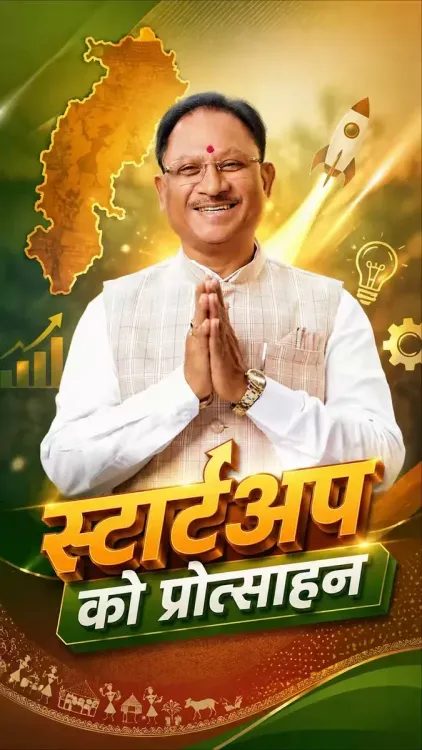
Chhattisgarh Chief Minister Vishnu Deo Sai on 28 May 2026 highlighted the state government's active push to build a startup ecosystem, noting that grants are being provided to young entrepreneurs and that new employment is being generated as the ecosystem grows rapidly.
Key Takeaways
CM Vishnu Deo Sai posted on 28 May 2026 emphasising the state government's commitment to strengthening startup culture in Chhattisgarh .
The government is providing grants to young entrepreneurs as part of its Atmanirbhar (self-reliant) youth agenda.
The state's startup ecosystem is described as developing rapidly, with new employment opportunities being created.
The initiative aligns with the national Startup India programme launched in 2016 and the Atmanirbhar Bharat framework.
Chhattisgarh's Industrial Policy 2019-24 laid earlier groundwork for MSME and startup incentives that the current government is building upon.
Key indicator to watch: growth in DPIIT -recognised startups from the state in 2026-27 budget and departmental records.
Chhattisgarh Chief Minister Vishnu Deo Sai on Thursday, 28 May 2026, highlighted his government's ongoing efforts to strengthen the state's startup ecosystem, stating that grants are being made available to help young entrepreneurs become self-reliant and that new employment opportunities are being created across the state.
Posting in Hindi, the Chief Minister wrote: 'नवाचार को प्रोत्साहन, युवाओं के सपनों को मिल रही नई उड़ान' ['Encouraging innovation, the dreams of youth are getting a new flight'], adding that the Chhattisgarh 'good governance government' is continuously working to strengthen startup culture and that the startup ecosystem in the state is developing rapidly.
Context
Vishnu Deo Sai took charge as Chief Minister of Chhattisgarh in December 2023 after the BJP returned to power in the state assembly elections. Since then, his administration has positioned industrial growth, youth employment, and entrepreneurship as central planks of governance.
The post reflects a broader communication strategy of the state government to highlight welfare and economic initiatives aimed at the youth demographic, particularly as out-migration of young workers from Chhattisgarh to other states has remained a persistent concern.
Policy Backdrop
The push aligns with the national Startup India initiative, launched in 2016, which established a framework of tax benefits, funding support, and regulatory easing for new ventures across the country. States have since built complementary policies on top of this foundation.
Chhattisgarh's Industrial Policy 2019-24 included specific incentives for MSMEs and new ventures, and the post-2023 government has continued along this trajectory. The broader Atmanirbhar Bharat push since 2020 has encouraged states to develop local startup ecosystems as a way to diversify employment beyond traditional sectors such as mining and agriculture, both of which are significant in Chhattisgarh.
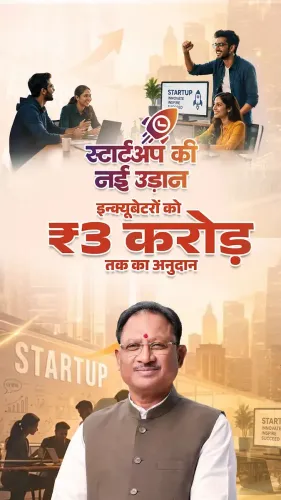
Grants to young entrepreneurs form a key instrument in this approach, reducing the financial barrier to entry for first-generation founders in smaller cities and rural districts of the state. The Chief Minister's post specifically mentions grant availability as an active, ongoing measure rather than a future promise.
Stakeholders and Impact
The primary beneficiaries of these initiatives are young entrepreneurs and startup founders based in Chhattisgarh, particularly those outside the state capital Raipur who have historically had limited access to institutional funding and incubation support.
A growing startup ecosystem also carries downstream benefits for employment: DPIIT-recognised startups are required to report job creation, and a rise in the number of recognised startups from the state would contribute measurably to formal employment figures. Small and medium enterprises that graduate from startup status also feed into the state's broader industrial base.
Youth who might otherwise migrate to metros such as Hyderabad, Pune, or Bengaluru for opportunities are the demographic the government is most directly targeting through this messaging and the grant mechanism it references.
What's Next
The concrete measure of progress will lie in the disbursement of the announced grants and the growth in DPIIT-recognised startups from Chhattisgarh reflected in the 2026-27 state budget documents and departmental reports.
If the ecosystem expands as signalled, Chhattisgarh could emerge as a case study for how resource-rich but traditionally agriculture-and-mining-dependent states can build parallel innovation economies — a model that carries political as well as developmental significance for the ruling party heading into future electoral cycles.
Point of View
Signalling continuity with both central BJP policy and the state's own industrial incentive framework. The emphasis on grants as an active, ongoing measure — rather than a future announcement — is designed to project delivery rather than aspiration, a distinction that matters in a state where the BJP is keen to consolidate its 2023 electoral gains. Positioning Chhattisgarh as a startup-friendly state also serves a longer strategic purpose: diversifying the state's economic identity away from its image as primarily a minerals and agriculture economy. If grant disbursements and DPIIT recognitions show measurable growth, this narrative will become a significant plank in the party's 2028 assembly campaign.
NationPress
11 Oct 2026
Frequently Asked Questions
What is Chhattisgarh government doing for startups in 2026?
The Chhattisgarh government, led by Chief Minister Vishnu Deo Sai, is actively providing grants to young entrepreneurs and working to strengthen the state's startup ecosystem, with the aim of creating new employment opportunities and making youth self-reliant.
What is the Startup India scheme and how does it relate to Chhattisgarh?
Startup India is a national programme launched in 2016 to promote innovation and entrepreneurship through tax benefits, funding support, and regulatory easing. Chhattisgarh's state-level startup and industrial policies are built in alignment with this national framework.
Who is Vishnu Deo Sai and when did he become Chief Minister?
Vishnu Deo Sai is a BJP leader who became Chief Minister of Chhattisgarh in December 2023 after the BJP won the state assembly elections. He has since focused on industrial growth, youth employment, and startup promotion.
How is Chhattisgarh supporting youth entrepreneurship?
The state government is offering grants to young entrepreneurs, working to build incubation and support infrastructure, and aligning with national schemes like Startup India and Atmanirbhar Bharat to reduce barriers for first-generation founders.
What should we watch to measure Chhattisgarh's startup progress?
The key indicators to track are the actual disbursement of the announced grants and the number of DPIIT-recognised startups from Chhattisgarh reported in the 2026-27 state budget documents and departmental data.