CM Sai: Digital India vision scaling new heights in Chhattisgarh
Synopsis
Chhattisgarh Chief Minister Vishnu Deo Sai on 18 June 2026 declared that his government is scaling Digital India to new heights by delivering technology-driven services at citizens' doorsteps, positioning the state as a model for modern, e-governance-led development.
Key Takeaways
CM Vishnu Deo Sai announced on 18 June 2026 that Chhattisgarh is advancing the Digital India vision through technology-driven citizen services.
Services are now being delivered directly to citizens' doorsteps, reducing the need for physical visits to government offices.
The Digital India programme was launched nationally in July 2015 ; Chhattisgarh has expanded its scope to cover land records, pensions, and certificates.
The BJP government in Chhattisgarh, in power since December 2023 , has made e-governance a central policy priority.
The initiative is particularly significant for the state's large rural and tribal population, for whom physical access to government services has historically been limited.
Future state budget allocations for digital infrastructure and new integrations with central platforms such as UMANG and DigiLocker will be key indicators of progress.
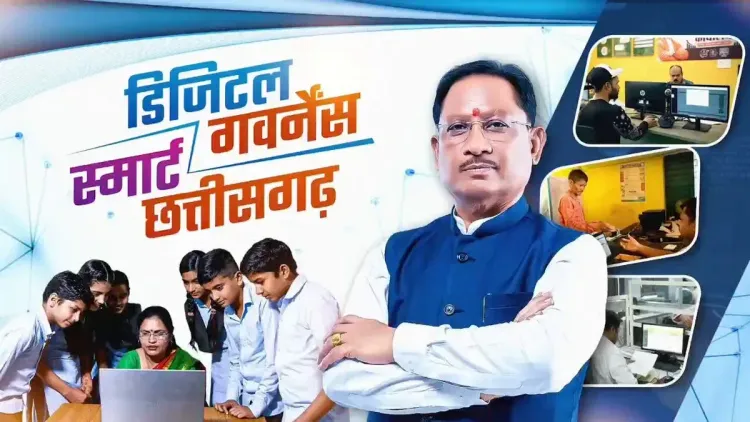
Chhattisgarh Chief Minister Vishnu Deo Sai on Thursday, 18 June 2026, declared that his government is carrying the Digital India vision to new heights in the state, with technology-driven services now reaching citizens directly at their doorsteps, saving time, labour, and resources.
Context
Posting on X, CM Sai wrote in Hindi: 'डिजिटल इंडिया के संकल्प को छत्तीसगढ़ में सुशासन सरकार नई ऊंचाइयों तक पहुंचा रही है' — 'The good-governance government in Chhattisgarh is taking the resolve of Digital India to new heights.' He added that services delivered through technology are now reaching citizens at their doors, saving time, effort, and resources, and that Chhattisgarh is rapidly advancing toward becoming a modern and developed state through the promotion of digital governance.
The post was accompanied by a video, which the Chief Minister shared to illustrate the state's digital governance outreach. The statement positions the BJP-led state government as an active partner in the Centre's flagship digital agenda.
Policy Backdrop
The Digital India programme was launched by the Government of India in July 2015 with the aim of expanding online infrastructure and enabling the electronic delivery of government services across the country. It has since become a central pillar of the ruling party's governance narrative at both the national and state levels.
An earlier milestone, the National e-Governance Plan, was approved in 2006 to establish common service centres and state-wide area networks for citizen-facing services. Since 2014, the central government has encouraged states to integrate with national digital platforms such as UMANG and DigiLocker for seamless service delivery. Chhattisgarh has expanded online portals covering certificates, pensions, and land records in line with this national direction.
The BJP government in Chhattisgarh, which came to power after the December 2023 state assembly elections, has made e-governance a stated priority, mirroring similar pushes in other BJP-ruled states aimed at reducing physical interfaces and administrative leakage.
Stakeholders and Impact
Chhattisgarh has a substantial rural and tribal population, for whom physical access to government offices has historically been a barrier. Digital service delivery — covering land records, pension disbursals, and certificate issuance — directly addresses this friction for millions of households across the state's 33 districts.
By reducing the need for citizens to travel to government offices, the initiative has the potential to lower both the time cost and the informal payments that often accompany in-person bureaucratic transactions. The approach aligns with the broader national goal of last-mile delivery of welfare services.
What's Next
Attention will now turn to the state's budget allocations for digital infrastructure and any new integration announcements with central portals during the forthcoming assembly session. CM Sai's public communication on digital governance signals that the theme will remain prominent in the government's outreach ahead of the next electoral cycle. Sustained investment in rural connectivity will be critical to translating the stated vision into measurable outcomes for Chhattisgarh's most underserved communities.
Point of View
Reinforcing the BJP's unified 'double-engine government' messaging ahead of future electoral cycles. By framing digital service delivery as 'suशासन' — good governance — the Chief Minister is converting a technocratic initiative into a political identity marker. The emphasis on doorstep delivery is strategically targeted at Chhattisgarh's large rural and tribal voter base, for whom reduced bureaucratic friction carries tangible daily value. This fits a broader pattern of BJP-ruled states using e-governance milestones to demonstrate administrative competence and differentiate from predecessor governments.
NationPress
18 Sept 2026
Frequently Asked Questions
What did Chhattisgarh CM Vishnu Deo Sai say about Digital India?
CM Vishnu Deo Sai stated on 18 June 2026 that his government is taking the Digital India vision to new heights in Chhattisgarh, with technology-driven services now reaching citizens at their doorsteps, saving time, labour, and resources.
What is the Digital India programme?
Digital India is a national initiative launched by the Government of India in July 2015 to expand online infrastructure and enable electronic delivery of government services, promoting digital empowerment across the country.
How is Chhattisgarh implementing digital governance?
Chhattisgarh has expanded online portals for services such as land records, pension disbursals, and certificate issuance, and has integrated with central platforms like UMANG and DigiLocker to improve last-mile service delivery.
When did the BJP government come to power in Chhattisgarh?
The BJP government led by Vishnu Deo Sai came to power in Chhattisgarh following the state assembly elections in December 2023.
Who benefits most from digital governance in Chhattisgarh?
The rural and tribal populations of Chhattisgarh, spread across its 33 districts, benefit most, as digital service delivery reduces the need to travel to government offices and lowers barriers to accessing welfare and administrative services.