CM Fadnavis Vows to Fight On at Mumbai Democracy March
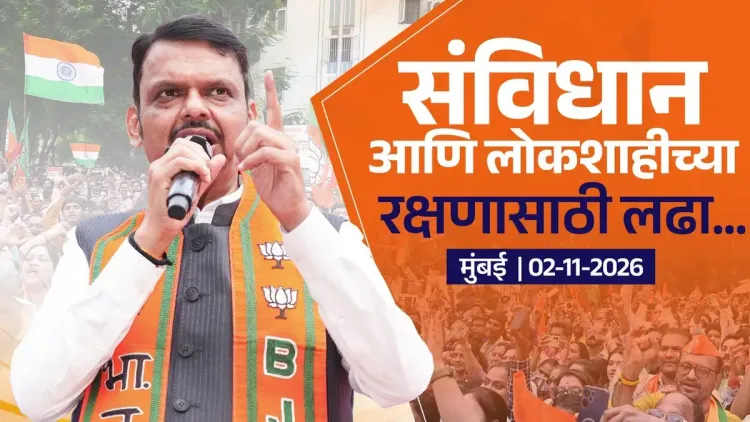
Synopsis
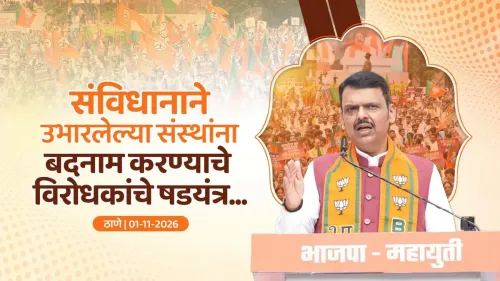
Maharashtra CM Devendra Fadnavis, at a Mumbai padyatra on 2 November 2026, declared the fight against alleged regime change, constitutional alteration, and obstruction of democracy will continue — using the 'Save Democracy, Remove Anarchy' march as a platform for a sharp state-level political mobilisation.
Key Takeaways
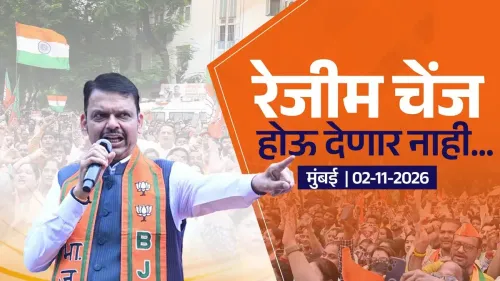
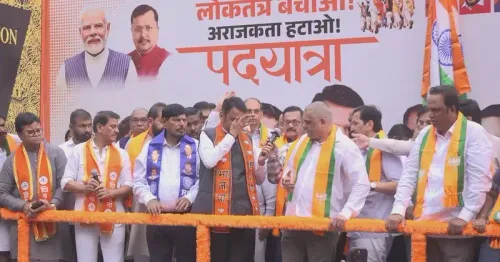
Devendra Fadnavis , Maharashtra CM, posted a combative declaration at the 'Lokshahi Vachva Arajkata Hatva' (Save Democracy, Remove Anarchy) padyatra in Mumbai on 2 November 2026 .
The bilingual Marathi-Hindi battle-cry vows the fight will not end until plans for 'regime change', constitutional alteration, and obstruction of democracy are 'annihilated'.
The padyatra format — a public foot-march — is a historically resonant form of political mobilisation in India.
Fadnavis has served as Chief Minister of Maharashtra in multiple tenures since 2014 , making him the state's dominant BJP figure.
The constitutional-threat framing is a recurring motif in Maharashtra politics, with rival parties deploying it against each other.
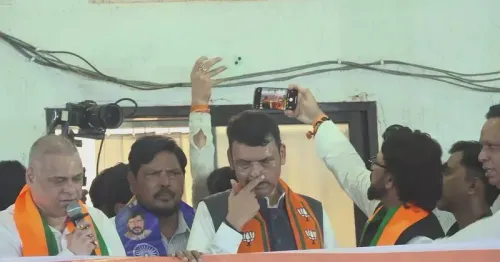
A padyatra through Mumbai's streets on 2 November 2026 became a platform for a sharp political declaration — Maharashtra Chief Minister Devendra Fadnavis posting a rallying cry that the fight will not stop until what he called plans for 'regime change', constitutional alteration, and the obstruction of democracy are 'wiped out'.
In a bilingual post in Marathi and Hindi, Fadnavis quoted the battle-cry of the 'Lokshahi Vachva Arajkata Hatva' (Save Democracy, Remove Anarchy) padyatra in Mumbai: 'Joparyant regime change, sanvidhan badlanyache ani lokshahila badha aanyache manasube nestanabut hot nahit, toparyant ha ladha suruach rahil!' — 'Until the designs of regime change, altering the constitution, and obstructing democracy are annihilated, this fight will continue!'
The 'Save Democracy, Remove Anarchy' March in Mumbai
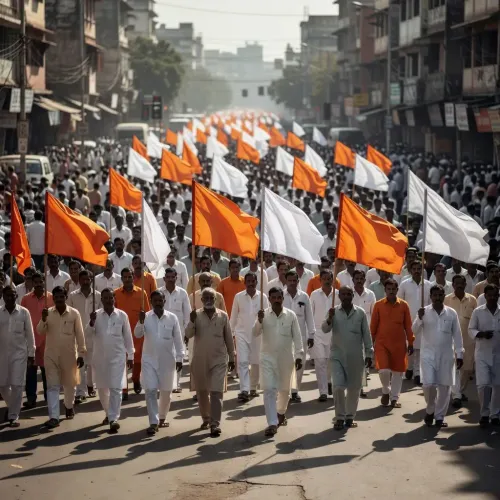
The padyatra — a public foot-march, a format with deep roots in Indian political mobilisation — was held in Mumbai, the state capital, on 2 November 2026. The event's name frames it as a defensive campaign: 'save democracy' paired with 'remove anarchy' is a pointed two-front framing, positioning the march's organisers as guardians of constitutional order while labelling their opponents a source of chaos. The hashtags #SaveDemocracyRemoveAnarchy and #Maharashtra anchored the message on social media.
Fadnavis, who has led Maharashtra as Chief Minister in multiple tenures since 2014, addressed the march from the perspective of a long-running political battle rather than a single event. The language of the declaration — 'the fight will continue' — signals that the BJP's state leadership intends to sustain this as an ongoing campaign theme, not a one-off rally.
The Constitutional Framing at the Centre of Maharashtra Politics
Claims and counter-claims over who truly threatens India's constitution and democratic institutions have become a defining fault-line in Maharashtra politics — and in national discourse more broadly. BJP leaders have repeatedly organised public campaigns framing opposition positions as risks to constitutional order; opposition blocs have done the same in reverse, each side casting itself as the republic's last line of defence.
The specific trinity invoked by Fadnavis — regime change, constitutional change, obstruction of democracy — maps directly onto charges that have been traded across party lines in the state for years. By encoding those charges into a padyatra's name and a battle-cry, the BJP's Maharashtra unit is attempting to crystallise an abstract argument into a street-level, marching-pace political identity ahead of future electoral cycles.
Whether the opposition in Maharashtra responds to this framing — or attempts to reframe it entirely — will be one of the sharpest tests of the state's political temperature in the weeks ahead.
Point of View
The kind of phrase cadres can chant and voters can recall. The 'regime change' framing is notable because it inverts an attack commonly levelled at the BJP itself, turning defence into offence. For the Maharashtra BJP, sustaining this as an ongoing campaign theme rather than a one-day event is the real strategic bet — it keeps the base mobilised between election cycles and forces the opposition to engage on ground the BJP has chosen. The test will be whether the opposition can disrupt that framing or gets drawn into fighting on these terms.
NationPress
3 Nov 2026
Frequently Asked Questions
What is the 'Lokshahi Vachva Arajkata Hatva' padyatra?
It is a foot-march organised in Mumbai on 2 November 2026, the name translating to 'Save Democracy, Remove Anarchy.' The event was used by Maharashtra CM Devendra Fadnavis to issue a declaration that the BJP's political fight against alleged threats to democracy and the constitution will continue.
What did Devendra Fadnavis say at the Mumbai padyatra?
Fadnavis declared, in both Marathi and Hindi, that the fight will not stop until plans for 'regime change', altering the constitution, and obstructing democracy are completely wiped out.
Why is Devendra Fadnavis calling for a fight to save democracy?
Fadnavis is framing his political opponents as threats to constitutional order and democratic institutions — a recurring charge in Maharashtra politics — and using the padyatra as a platform to sustain this as an active campaign theme.
Who is Devendra Fadnavis?
Devendra Fadnavis is the Chief Minister of Maharashtra and a senior BJP leader who has held the chief ministership in multiple tenures since 2014, making him the state's most prominent BJP figure.
What does 'regime change' mean in Fadnavis's speech?
In this context, 'regime change' refers to political efforts Fadnavis alleges are aimed at forcibly or unconstitutionally unseating the current government in Maharashtra — a charge he has grouped alongside alleged threats to the constitution and democratic processes.