CM Fadnavis Vows to Guard Constitution at Mumbai Padyatra
Synopsis
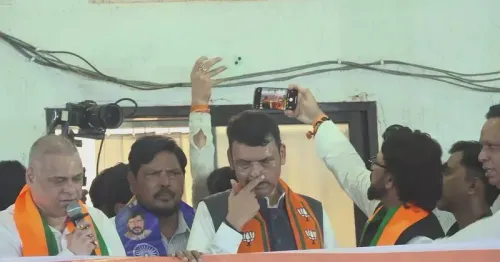
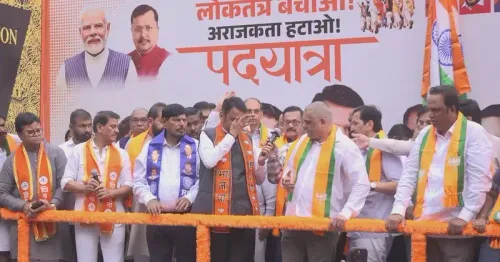
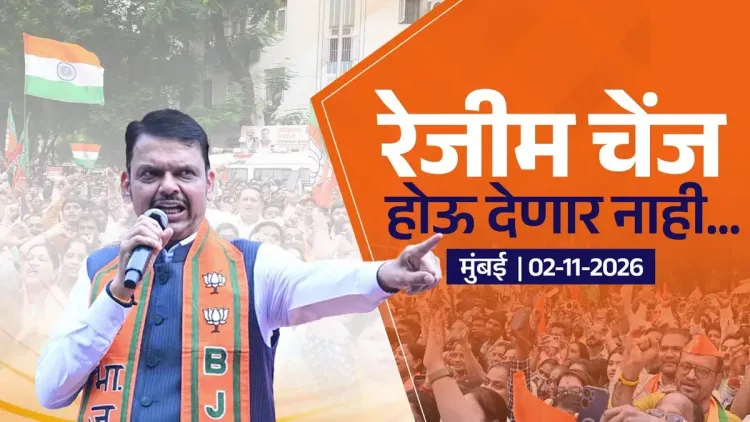
At a 'Save Democracy, Remove Anarchy' padyatra in Mumbai on 2 November 2026, Maharashtra Chief Minister Devendra Fadnavis pledged in Marathi and Hindi that neither the Constitution nor the ruling dispensation would be upended on his watch.
Key Takeaways
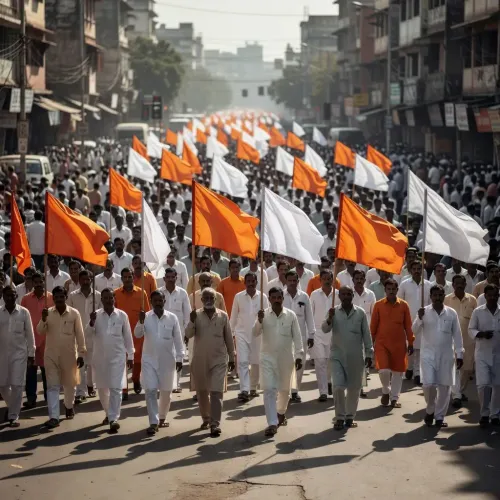
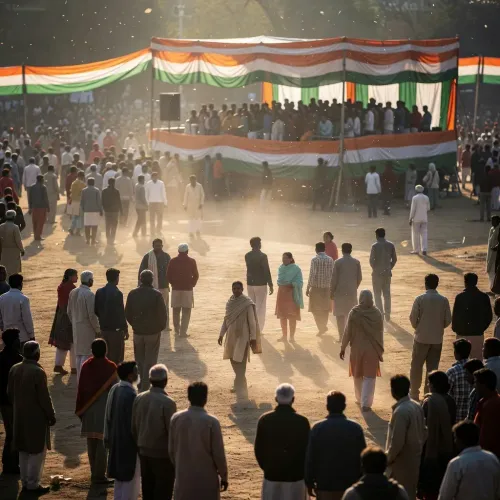
Devendra Fadnavis addressed the Lokshahi Vachva Arajkata Hatva ('Save Democracy, Remove Anarchy') padyatra in Mumbai on 2 November 2026 .
He vowed in both Marathi and Hindi that 'no matter what happens, we will not let anyone touch the Constitution.' He also declared there will be no 'regime change' in Maharashtra.
The march used the dual-pronged slogan to appeal to both institutional-stability voters and those concerned about street-level disruption.
Opposition party responses and follow-up statements in the Maharashtra assembly are being watched as the next political pressure point.
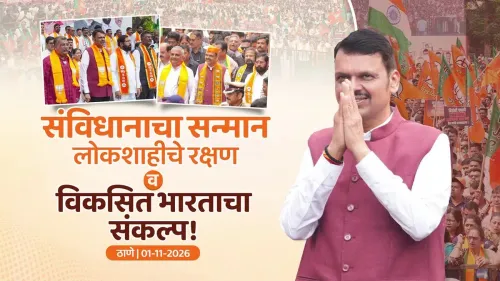
A street march through Mumbai on 2 November 2026 turned into a declaration of political intent — Maharashtra Chief Minister Devendra Fadnavis took to the podium and issued what amounted to a double-language oath: the Constitution will not be touched, and no 'regime change' will be permitted on his watch.
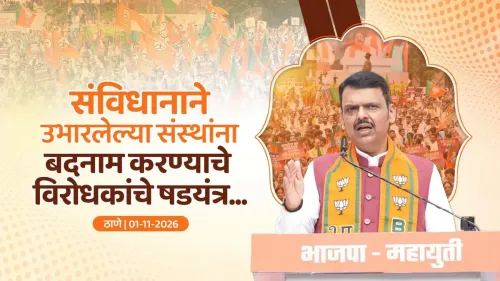
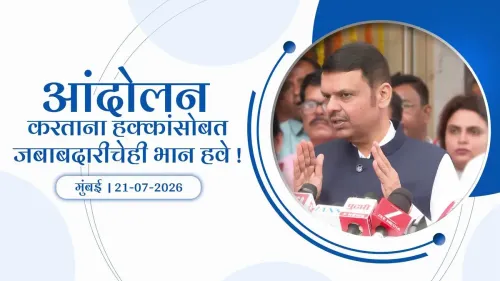
Addressing the 'Lokshahi Vachva Arajkata Hatva' padyatra — roughly, 'Save Democracy, Remove Anarchy' — Fadnavis repeated the pledge in both Marathi and Hindi for unmistakable effect: 'Kahihi zale tari Sanvidhanala haat lavoo denar nahi ani regime change hooo denar nahi' ('No matter what happens, we will not let anyone touch the Constitution, and we will not allow a regime change.')
The Street as Stage: What the Padyatra Signals
Public marches centred on constitutional protection have become a recurring feature of Indian state politics, deployed by ruling and opposition parties alike during periods of political contestation. By leading — or endorsing — such a march in Mumbai, the state's financial and political nerve centre, Fadnavis is staking out a clear governance frame: his administration as the guardian of democratic order, and any challenge to it as 'anarchy.'
The twin targets embedded in the slogan are worth reading together. 'Save Democracy' addresses voters who prize institutional stability; 'Remove Anarchy' is a sharper charge aimed at street-level disruption. Linking both in a single rally title — and repeating the message in both Marathi and Hindi — ensures it lands across Mumbai's linguistically layered electorate.
The 'Regime Change' Warning
The phrase 'regime change' carries deliberate weight. In Indian political vocabulary, it evokes both external interference and internal destabilisation — a framing that allows a sitting Chief Minister to position incumbency itself as a constitutional value. Fadnavis's insistence that he will 'not allow' such a change is a direct signal to opposition forces in Maharashtra that the ruling dispensation intends to contest every challenge on symbolic as well as electoral terrain.
Responses from opposition parties and any follow-up statements in the Maharashtra Legislative Assembly will be the next pressure test for this framing.
A Chief Minister marching on the streets of his own state's capital is a statement in itself — the question now is whether the opposition picks up the gauntlet or lets the slogan define the political weather heading into the next assembly cycle.
Point of View
Collapsing two distinct anxieties (institutional subversion and political destabilisation) into a single street-level message. Delivering it in both Marathi and Hindi at a Mumbai padyatra maximises its reach across Maharashtra's electorate and signals that the BJP intends to fight the next political cycle on democratic-legitimacy terrain rather than purely on development metrics. The 'regime change' formulation is particularly pointed: it pre-emptively labels any opposition electoral mobilisation as anti-democratic, raising the rhetorical cost for challengers before they have even formally begun. Whether the opposition can credibly reclaim the constitutional-protection narrative — or is forced to fight on Fadnavis's chosen ground — will shape Maharashtra's political temperature well into the next assembly period.
NationPress
2 Nov 2026
Frequently Asked Questions
What did CM Devendra Fadnavis say at the Mumbai padyatra on 2 November 2026?
Fadnavis pledged that no one would be allowed to 'touch the Constitution' and that no 'regime change' would take place in Maharashtra, repeating the vow in both Marathi and Hindi.
What is the 'Lokshahi Vachva Arajkata Hatva' padyatra?
It is a public march held in Mumbai on 2 November 2026, whose name translates to 'Save Democracy, Remove Anarchy' — a rally focused on constitutional protection and opposition to political disruption.
What does 'regime change' mean in Fadnavis's statement?
In this context, Fadnavis used 'regime change' to describe any attempt to destabilise or unseat the current Maharashtra government, framing resistance to such moves as a constitutional duty.
Why did Fadnavis speak in both Marathi and Hindi?
Mumbai's electorate is linguistically diverse; repeating the pledge in both Marathi and Hindi ensured the message reached the widest possible cross-section of the city's voters and communities.
What is the political significance of a 'Save Democracy' march led by a sitting Chief Minister?
When a ruling Chief Minister leads such a march, it reframes incumbency as constitutional guardianship, positioning any opposition challenge as a threat to democratic order rather than a legitimate electoral contest.