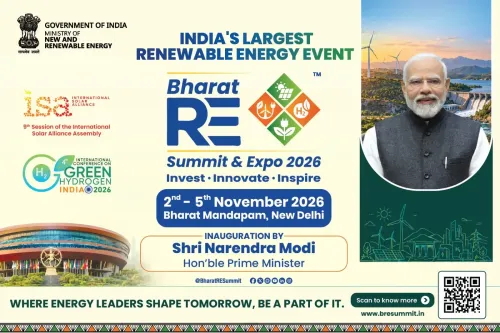
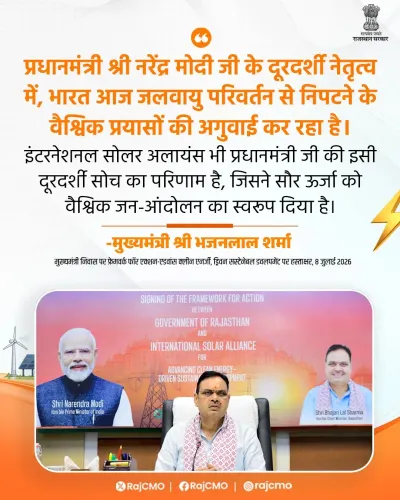
CM Bhajan Lal Shares Modi's Clean Energy Vision at Bharat RE Summit 2026
Synopsis
Rajasthan CM Bhajan Lal Sharma shared PM Narendra Modi's address at the Bharat RE Summit 2026, highlighting India's International Solar Alliance vision and the call to bring renewable energy funding and technology to every developing nation this decade.
Key Takeaways
Rajasthan CM Bhajan Lal Sharma shared PM Narendra Modi's remarks at #BharatRESummit2026 on 2 November 2026 .
Modi invoked India's G20 theme — 'One Earth, One Family, One Future' — as the philosophical basis for India's clean energy diplomacy.
The International Solar Alliance , co-launched by India and France at COP21 in 2015 , was cited as the institutional vehicle for sharing renewable funding, technology, and expertise globally.
India's Panchamrit commitment at COP26 (2021) targets 500 GW of non-fossil fuel capacity by 2030 .
Modi described the coming decade as 'very important' for climate goals, calling on all Summit participants to ensure every country and sector joins the clean energy transition.
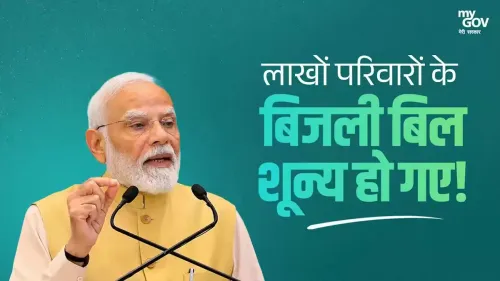
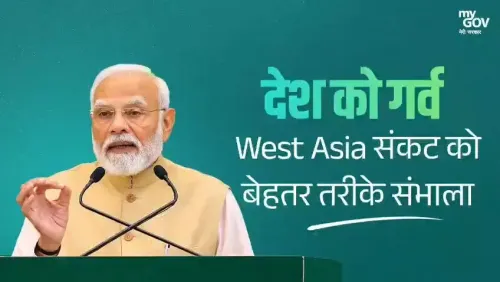
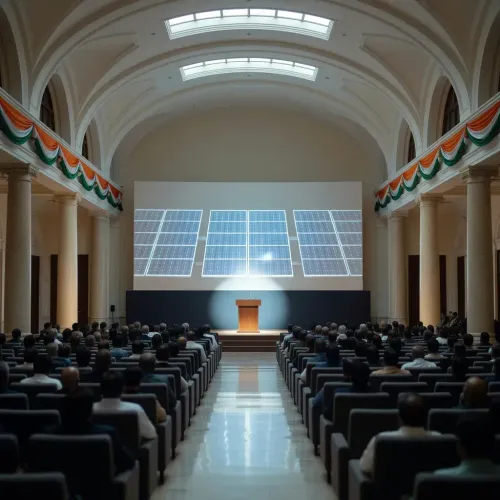
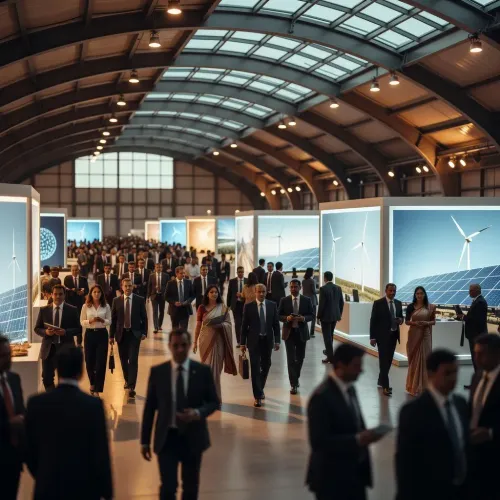
A decade that will define the planet's climate future is already underway — and India, Rajasthan Chief Minister Bhajan Lal Sharma reminded his followers on Monday, 2 November 2026, is determined to lead it. Sharma shared Prime Minister Narendra Modi's address at the #BharatRESummit2026, in which Modi framed India's clean energy journey as inseparable from a global mission to bring renewable funding, technology, and expertise to every nation that needs it.
Modi's words at the Summit: the 'One Earth' doctrine applied to energy
Quoting the Prime Minister directly, Sharma's post carried a message that linked India's G20 legacy to its climate ambitions: 'भारत ने दुनिया को One Earth, One Family, One Future का संदेश दिया है' ('India has given the world the message of One Earth, One Family, One Future'). Modi tied that philosophy explicitly to the International Solar Alliance (ISA), describing it as the institutional expression of the same idea — solar-rich nations pooling resources to light up the countries that cannot yet afford the transition on their own.
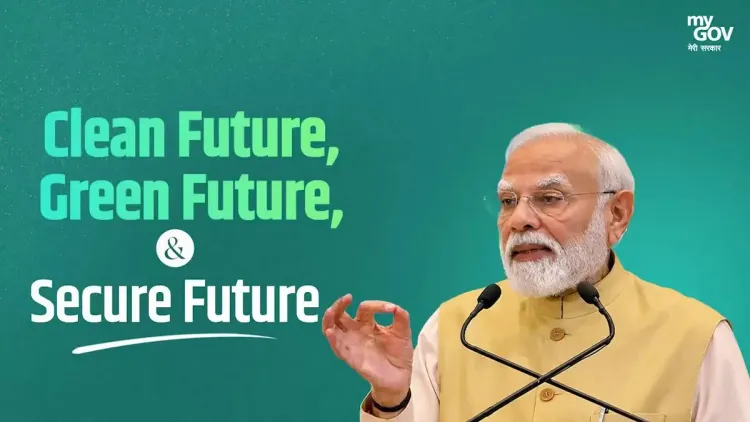
The Prime Minister's remarks underlined an urgent timeline: 'आने वाला दशक हमारे Climate Goals के लिए बहुत महत्वपूर्ण है' — 'the coming decade is very important for our climate goals.' He called on every participant at the Summit to play a decisive role, and issued a clear call to action: connect every country to this campaign, make every sector a partner in the transformation. The destination, in his framing, is a 'Clean Future, Green Future, and Secure Future.'
The ISA: from Paris promise to Global South engine
The International Solar Alliance was born at the Paris Climate Conference in 2015, a joint initiative by India and France designed to mobilise solar deployment across member states — many of them sun-drenched but capital-starved. More than a decade on, the ISA has become the centrepiece of India's pitch to the developing world: that decarbonisation need not be a rich-country privilege. The Bharat RE Summit is the latest venue for that argument.
India's domestic targets provide the credibility behind the rhetoric. At COP26 in 2021, New Delhi committed to the Panchamrit pledges, including 500 GW of non-fossil fuel capacity by 2030 — a number that, if realised, would make India one of the largest renewable energy markets on the planet. The 'One Earth, One Family, One Future' theme that anchored India's G20 presidency in 2023 drew on the ancient Sanskrit concept of Vasudhaiva Kutumbakam, and Modi is now folding that philosophical foundation into climate diplomacy with increasing consistency.
Funding and technology transfer: the real test ahead
The aspirational language at summits is familiar. The harder question — who pays, and how much, and when — is where climate pledges have historically stalled. Modi's remarks acknowledged the gap directly: the aim is to ensure renewable energy funding, technology, and expertise reach every country in need. Whether the ISA and its partners can translate that into binding, bankable commitments will determine whether this decade's climate goals survive contact with reality.
For Rajasthan — a state with one of India's highest solar irradiance levels and an expanding renewables footprint — the Summit carries local resonance too. CM Sharma's amplification of the message signals the state's alignment with the national clean energy push, even as implementation details for the Bharat RE Summit 2026 remain to be confirmed publicly.
The scoreboard for this decade gets written in gigawatts installed, dollars mobilised, and nations genuinely brought aboard — not in the eloquence of the opening address.
Point of View
The G20 sustainability agenda, and now the Bharat RE Summit — reflects a deliberate strategy to convert energy ambition into geopolitical capital, particularly among Global South nations. By repeatedly anchoring climate diplomacy in the 'One Earth, One Family' framework, New Delhi is crafting an identity as the indispensable bridge between developed-country climate finance and developing-country energy needs. The credibility of that bridge, however, hinges on verified progress toward the 500 GW non-fossil target and tangible ISA funding flows — benchmarks that will face scrutiny as 2030 draws closer. CM Sharma's amplification of the message from Rajasthan, a high-solar state, also signals that the national clean energy narrative is being actively embedded in state-level political communication ahead of a consequential climate decade.
NationPress
2 Nov 2026
Frequently Asked Questions
What is the Bharat RE Summit 2026?
The Bharat RE Summit 2026 is a renewable energy summit at which Prime Minister Narendra Modi addressed participants, calling for global collaboration on clean energy funding and technology transfer. Specific details about the event's organisers and full agenda have not yet been confirmed in public records.
What is the International Solar Alliance and who founded it?
The International Solar Alliance (ISA) is a coalition launched jointly by India and France at the Paris Climate Conference in 2015. It aims to mobilise solar energy deployment and funding among solar-rich member countries, particularly in the developing world.
What are India's Panchamrit climate commitments?
India's Panchamrit commitments, announced at COP26 in 2021, include achieving 500 GW of non-fossil fuel energy capacity by 2030, among other targets. They form the core of India's Nationally Determined Contribution under the Paris Agreement.
What does 'One Earth, One Family, One Future' mean in India's climate policy?
'One Earth, One Family, One Future' was the theme of India's G20 presidency in 2023, drawn from the Sanskrit concept of Vasudhaiva Kutumbakam. PM Modi has applied this philosophy to climate diplomacy, arguing that renewable energy access and technology must be shared globally, not confined to wealthy nations.
Why did Rajasthan CM Bhajan Lal Sharma post about the Bharat RE Summit?
CM Sharma shared PM Modi's address from the Bharat RE Summit 2026 on 2 November 2026, signalling Rajasthan's alignment with India's national clean energy agenda. Rajasthan is one of India's highest-solar-potential states and a key player in the country's renewable energy expansion.