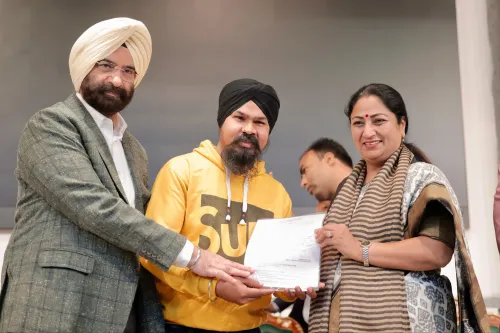
CM Rekha Gupta calls 1984 Delhi massacre a planned crime

Synopsis
Delhi Chief Minister Rekha Gupta marked the 42nd anniversary of the 1984 anti-Sikh violence by calling the killings a premeditated crime and a chapter that shames humanity, renewing scrutiny of accountability for one of India's gravest episodes of mass violence.
Key Takeaways
Delhi CM Rekha Gupta posted on 30 October 2026 calling the 1984 Delhi killings a 'premeditated crime,' not ordinary violence.
The anti-Sikh violence broke out following the assassination of Prime Minister Indira Gandhi on 31 October 1984 , killing thousands across Delhi and other cities.
The Nanavati Commission , set up in 2000 and reporting in 2005 , examined the role of Congress leaders and police in enabling the riots.
The phrase suniyojit apradh (premeditated crime) directly challenges narratives framing the killings as spontaneous public grief.
Victims' families have spent four decades demanding full accountability, with prosecutions continuing through special courts in subsequent years.
Annual BJP commemorations around 31 October keep the 1984 violence at the centre of India's political discourse on justice and historical memory.
Forty-two years on, the wounds of October–November 1984 refuse to close. Delhi Chief Minister Rekha Gupta marked the anniversary of the anti-Sikh violence on Friday, 30 October 2026, calling the killings that swept the capital a meticulously organised crime — not a spontaneous eruption of grief — and a chapter that shames humanity itself.
Posting on X, CM Gupta wrote: '1984 mein Dilli mein hua narsanhar koi samanya hinsa nahin, balki ek suniyojit apradh tha… manavta ko sharmsar karne wala adhyay hai.' ('The massacre that took place in Delhi in 1984 was not ordinary violence, but a premeditated crime… it is a chapter that shames humanity.')
What happened in Delhi in 1984
The violence erupted in the immediate aftermath of the assassination of Prime Minister Indira Gandhi on 31 October 1984. Mobs swept through Sikh neighbourhoods across Delhi and other cities over several days, leaving thousands dead. Survivors and historians have long documented how the killings bore the hallmarks of coordination — targeted voter rolls, organised transport, kerosene — rather than spontaneous communal rage.
The scale and pattern of the violence made it one of independent India's most painful episodes of mass killing, and its victims' families have spent four decades demanding accountability.
The Nanavati Commission and the long road to justice
India's formal reckoning came slowly. The Nanavati Commission, constituted in 2000, submitted its report in 2005, examining the role of Congress leaders and the police in the riots. Its findings fed years of political controversy. Special Investigation Teams, fast-track courts, and fresh prosecutions followed in subsequent years, yet many victims' families maintain that full accountability has never arrived.
The phrase 'premeditated crime' — suniyojit apradh — carries deliberate legal and political weight. It directly counters the long-contested narrative that the killings were an uncontrollable public outburst, placing culpability squarely on those who organised or enabled the violence.
A BJP voice, an anniversary, and a political fault line that endures
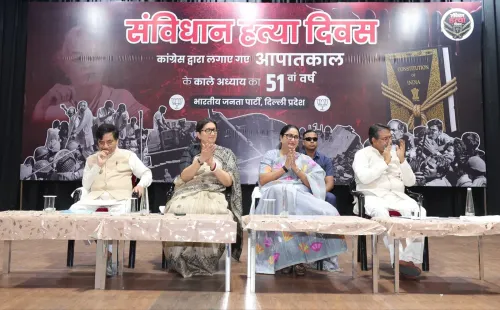
For the BJP, annual commemoration of 1984 is both a solemn tribute and a standing indictment of the Congress. As Delhi's Chief Minister, Rekha Gupta leads a city that bore the worst of the carnage, governing constituencies where Sikh families still carry the memory of those days. Her framing — organised crime, not chaos — echoes the central demand of survivor groups: that the state acknowledge deliberate agency, not just collective madness.
With commemorative events expected around the 31 October anniversary each year, such statements set the political tone for how the tragedy is remembered — and how justice, or its absence, continues to be contested.
For the families still waiting, the question is no longer just what happened in 1984. It is whether any government will finally make it impossible for another generation to ask the same question.
Point of View
Not merely a tribute — it advances the BJP's decades-long effort to hold the Congress institutionally responsible rather than treating the violence as leaderless mob fury. Delivering it as Delhi Chief Minister, governing the city where the worst of the carnage occurred, adds administrative weight to what might otherwise be a routine anniversary statement. The language also signals to Delhi's substantial Sikh community that the incumbent government regards their historical grievance as a matter of criminal accountability, not just communal memory. How that framing translates into concrete legal or compensatory action remains the real test.
NationPress
30 Oct 2026
Frequently Asked Questions
What happened in Delhi in 1984?
Following the assassination of Prime Minister Indira Gandhi on 31 October 1984, large-scale violence targeting Sikhs erupted in Delhi and other Indian cities over several days, resulting in thousands of deaths in what many historians and survivor groups describe as organised massacres.
Why does Rekha Gupta call the 1984 riots a premeditated crime?
CM Rekha Gupta used the phrase 'premeditated crime' — suniyojit apradh — to reject the narrative that the killings were a spontaneous outburst, arguing they were deliberately organised, a position long held by survivor groups and supported by evidence of coordination documented in various judicial inquiries.
What did the Nanavati Commission find about 1984?
The Nanavati Commission, constituted in 2000 and reporting in 2005, examined the role of Congress leaders and police in the 1984 riots and found evidence pointing to organised culpability, which led to further prosecutions and political controversy in subsequent years.
Has anyone been convicted for the 1984 anti-Sikh riots?
Some convictions have been secured through Special Investigation Teams and fast-track courts set up in later years, but victims' families and advocacy groups maintain that accountability has remained incomplete and many perpetrators were never prosecuted.
Why does BJP commemorate the 1984 riots every year?
The BJP uses annual commemorations of the 1984 violence to highlight what it argues was the Congress party's failure to prevent — or active role in enabling — the killings, making it both a tribute to victims and a standing political indictment of its principal rival.