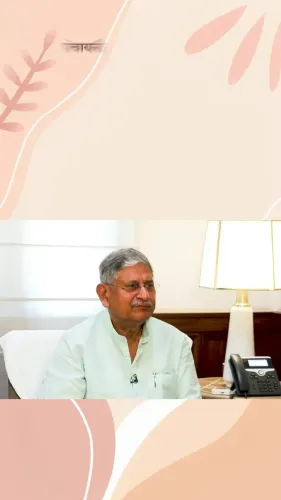
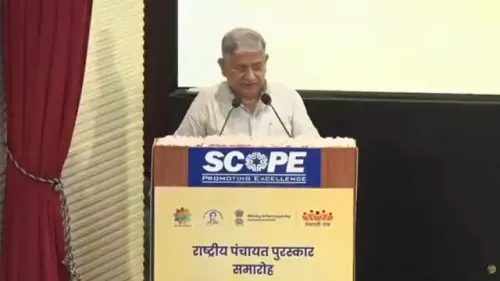
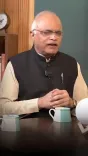
Lalan Singh: Panchayats Must Build Own Revenue, Not Just Rely on Centre
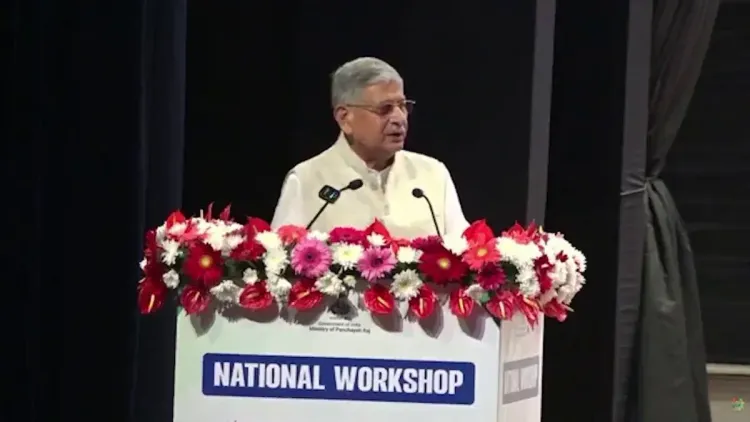
Synopsis
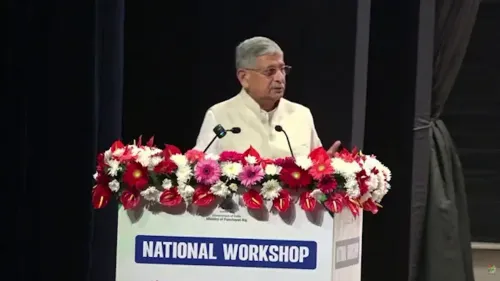
Union Panchayati Raj Minister Rajiv Ranjan Singh (Lalan Singh) publicly called on panchayats to develop independent income sources and urged state governments to take initiative, saying central grants alone are insufficient for village-level governance.
Key Takeaways
Lalan Singh posted on 30 October 2026 urging panchayats not to rely solely on central funds and to build own-source revenue.
He called on state governments to take the initiative in enabling panchayat income generation.
Article 243H of the Constitution, introduced via the 73rd Amendment (1992) , already empowers panchayats to levy taxes, fees and duties — a power largely underused.
The 15th Finance Commission (2021–26) channelled tied and untied grants to rural local bodies but highlighted the structural dependence on external transfers.
Key watchpoints include state-level legislative amendments and new Ministry of Panchayati Raj guidelines on local revenue mobilisation.
Central grants are flowing to village councils — but they are not enough on their own. Union Panchayati Raj and Fisheries Minister Rajiv Ranjan Singh, widely known as Lalan Singh, fired a pointed call on Friday, 30 October 2026, urging India's panchayats to stop depending solely on funds from New Delhi and instead develop independent income streams — with state governments taking the lead in making that happen.
Posting on X and tagging both Prime Minister Narendra Modi and the Ministry of Panchayati Raj, the minister wrote: 'प्रधानमंत्री जी पंचायतों को पैसा दे रहे हैं, लेकिन पंचायतों को समझना होगा कि केवल यही पैसा पर्याप्त नहीं है।' ('The Prime Minister is giving money to panchayats, but panchayats must understand that this money alone is not enough.') He added that panchayats must develop their own sources of income, and that state governments need to take the initiative to enable this.A constitutional right that most panchayats never use
The message lands against a backdrop that is decades old. The 73rd Constitutional Amendment of 1992 — one of the landmark decentralisation moves in Indian history — gave panchayats the authority to levy taxes, fees and duties under Article 243H. In practice, however, own-source revenue generation by gram panchayats remains thin across most of India. Village councils continue to depend overwhelmingly on central and state transfers for their day-to-day operations, from maintaining roads to running water-supply schemes.
The 15th Finance Commission (2021–26) reinforced this concern, channelling tied and untied grants to rural local bodies for basic services and infrastructure — but it also flagged the structural weakness of panchayat finances when external transfers slow or carry conditionalities. Successive central governments have made the same argument Lalan Singh is making now: transfers are a floor, not a ceiling.
Why state governments are the real pivot
The minister's framing is deliberate. The constitutional mandate for devolving taxation powers to panchayats runs through the states — it is state legislatures and executives that must amend laws, notify taxable items and properties, and build the administrative machinery for local revenue collection. Without state-level action, a gram panchayat has little legal or administrative muscle to raise its own funds, no matter how much the Centre encourages it.
Lalan Singh, a senior Janata Dal (United) leader and a key NDA ally, is essentially calling on chief ministers and state cabinets to treat panchayat fiscal autonomy as an active policy priority — not a constitutional aspiration quietly gathering dust. The call is consistent with a broader federalism argument: genuine decentralisation means local bodies that can tax, borrow, and spend on their own terms, not merely sub-contract central schemes.
What a genuinely self-sufficient panchayat would look like
Watchpoints now include whether the Ministry of Panchayati Raj follows the minister's public statement with concrete guidelines or capacity-building programmes on revenue mobilisation. State-level amendments expanding panchayat taxation powers, or executive orders enabling lease income from panchayat land and water bodies, would be the most direct translation of his call into action.
The gap between constitutional promise and fiscal reality at the gram panchayat level is not new — but a sitting Union minister naming it this bluntly, and directing the pressure squarely at state governments, signals that the debate is entering a more urgent register.
Point of View
The minister shields the Centre from blame while directing reform pressure downward. Whether this translates into actual MoPR policy or remains rhetorical depends largely on how state governments respond — and on whether the ministry backs the call with binding guidelines.
NationPress
30 Oct 2026
Frequently Asked Questions
What did Lalan Singh say about panchayat funding?
Lalan Singh said that while PM Modi is sending money to panchayats, this central funding alone is not sufficient. He urged panchayats to develop their own sources of income and called on state governments to take the initiative to make that possible.
Can panchayats in India collect their own taxes?
Yes. Under Article 243H of the Constitution, introduced by the 73rd Constitutional Amendment of 1992 , panchayats are authorised to levy taxes, fees and duties — but this power must be activated by state legislation, and in practice most panchayats make little use of it.
What are own-source revenues for panchayats?
Own-source revenues refer to funds a panchayat raises locally — through property tax, user charges for water or sanitation, lease income from panchayat land and water bodies, and local levies — rather than transfers from central or state governments.
What is the role of state governments in panchayat finances?
State governments control the legal framework that determines what panchayats can tax and how. Without state-level legislative or executive action expanding these powers, gram panchayats have limited tools to raise independent revenue, regardless of central policy.
What did the 15th Finance Commission recommend for panchayats?
The 15th Finance Commission (2021–26) recommended both tied and untied grants to rural local bodies for basic services and infrastructure, while also flagging the long-term risk of panchayats remaining structurally dependent on external transfers rather than building their own fiscal base.