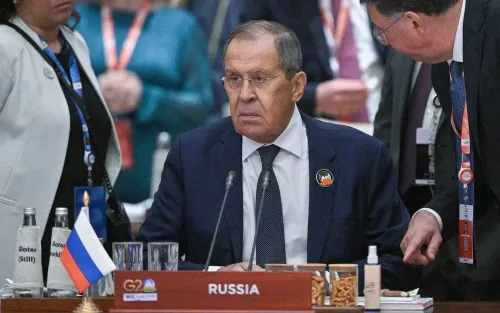
G20 Atlanta: Lavrov's presence splits West as family photo row deepens

Synopsis
Lavrov walking into the G20 meeting room in Atlanta isn't just a diplomatic footnote — it's a stress test for transatlantic unity. The family-photo row from Asheville is back, Ukraine isn't in the room, and Washington wants everyone talking economics. The gap between what the Trump administration wants from this G20 and what its own allies will accept is widening in real time.
Key Takeaways
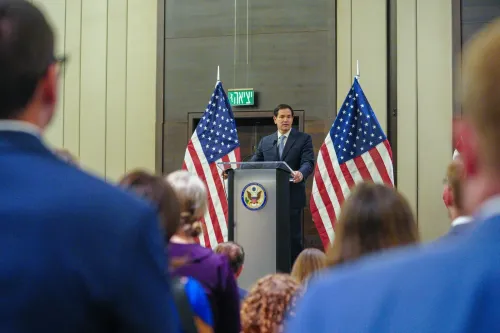
Sergei Lavrov is attending the G20 Foreign Ministers' Meeting in Atlanta on 30–31 October 2026 , chaired by US Secretary of State Marco Rubio .
Western unity on isolating Moscow has 'broken down,' according to analyst Nicholas Lokker of the Center for a New American Security .
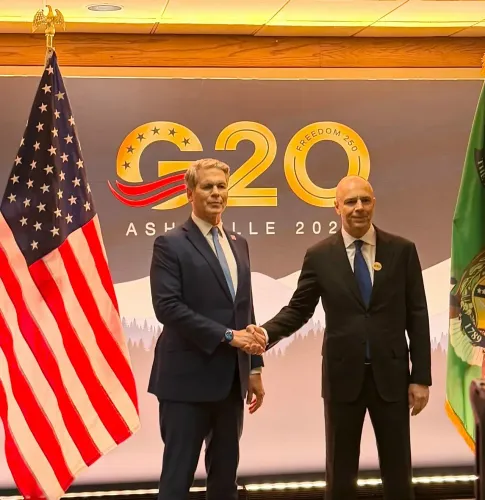
A family-photo dispute first surfaced at a G20 finance meeting in Asheville in August , when European delegates objected to Russian Finance Minister Anton Siluanov 's inclusion.
Ukraine was not invited, as Washington limited attendance to formal G20 members.
Russian Foreign Ministry spokeswoman Maria Zakharova said visas for Russia's delegation were cleared only at the last minute.
Whether a joint communiqué or only a chair's summary will emerge from the meeting remains undecided.
Russian Foreign Minister Sergei Lavrov's attendance at the G20 Foreign Ministers' Meeting in Atlanta on 30–31 October 2026 has exposed a deepening rift among Western governments over how to engage Moscow, casting a shadow over the US-hosted grouping's ability to deliver consensus on its economic agenda.
The Meeting and Its Key Players
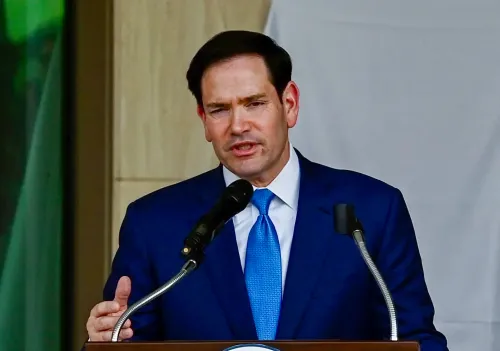
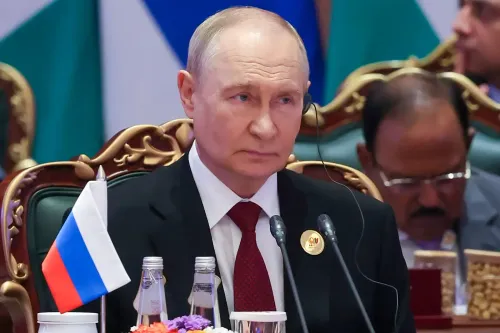
US Secretary of State Marco Rubio is chairing the two-day gathering, which serves as a precursor to the G20 Leaders' Summit that President Donald Trump plans to host in Miami in December. Russian President Vladimir Putin has reportedly been invited to that summit, though it remains unclear whether he will attend.
Lavrov's presence in Atlanta has reignited a debate about whether diplomatic engagement with Russian officials — while the war in Ukraine continues — amounts to a tacit return to normalcy with Moscow.
The Family Photo Fracture
The tension has already produced a symbolic flashpoint. German Foreign Minister Johann Wadephul said he would not boycott a group photograph with all participants, arguing that dialogue is part of his mandate — but he stressed there could be 'no normalcy' with Moscow for as long as the war persists.
This echoes an earlier incident. At a G20 finance ministers' meeting in Asheville, North Carolina in August, European delegates objected after US Treasury Secretary Scott Bessent held a bilateral meeting with Russian Finance Minister Anton Siluanov, and pushed for Siluanov to be excluded from that session's family photograph, according to Nicholas Lokker, an adjunct fellow at the Center for a New American Security in Washington.
'For the first several years after Russia's full-scale invasion of Ukraine, the United States and its European allies were united in refusing to return to business as usual with Moscow, including by avoiding legitimising it through normal diplomatic engagement,' Lokker said. 'That consensus has since broken down.'
Ukraine's Absence Adds to the Friction
Compounding the divisions is Ukraine's exclusion from the talks. Washington limited invitations to formal G20 members, leaving Kyiv off the guest list entirely.
James Lamond, a senior fellow at the Center for European Policy Analysis, warned that Lavrov's presence makes substantive discussion of the Ukraine conflict nearly impossible. 'Anything of substance cannot be negotiated without Ukraine being represented,' he said. Lamond added that the wars in Ukraine and the Middle East are likely to dominate the talks, making it difficult for ministers to stay focused on the G20's stated economic priorities.
Washington's 'Back to Basics' Agenda Under Pressure
The Trump administration has signalled it wants to steer the G20 back to core economic issues — growth, deregulation, innovation, energy, and trade — but analysts suggest the geopolitical baggage Lavrov brings makes that reorientation harder to execute.
Moscow, for its part, has aired its own grievances. Russian Foreign Ministry spokeswoman Maria Zakharova said visas for the Russian delegation were resolved only at the last minute, suggesting that 'not everyone in Washington is happy' about Lavrov's participation. Lavrov himself has stated his intention to use the platform to advocate for reform of global economic institutions and a more multipolar world order.
What Comes Next
Whether the ministers will produce a joint communiqué or whether the US will issue a chair's summary at the close of the meeting remains uncertain. A bilateral meeting between Rubio and Lavrov in Atlanta has not been announced. The outcome — or absence — of a joint statement will be closely watched as a barometer of how fractured transatlantic unity has become ahead of the December leaders' summit.
Point of View
But what it reveals is structural: the Trump administration's transactional approach to Russia has quietly dissolved a multilateral norm that took years to build after February 2022. The Asheville precedent — where a US-Russia bilateral happened over European objections — was the first crack; Atlanta is the second. Ukraine's exclusion from a meeting nominally shaped around its war is not a procedural detail; it is a political signal. If the December Miami summit proceeds with Putin in attendance and Kyiv still off the guest list, the G20's credibility as a forum for anything beyond photo opportunities will deserve serious scrutiny.
NationPress
30 Oct 2026
Frequently Asked Questions
Why is Lavrov's attendance at the G20 Atlanta meeting significant?
Lavrov's presence at the G20 Foreign Ministers' Meeting in Atlanta on 30 October has reignited a debate over whether engaging Russian officials at multilateral forums signals a return to diplomatic normalcy while the war in Ukraine continues. Analysts say the Western consensus on isolating Moscow has fractured, partly due to the Trump administration's more transactional posture toward Russia.
What was the G20 family photo controversy in Asheville?
At a G20 finance ministers' meeting in Asheville, North Carolina in August, European delegates objected after US Treasury Secretary Scott Bessent held a bilateral meeting with Russian Finance Minister Anton Siluanov. European delegations also pushed for Siluanov to be excluded from the group photograph, according to analyst Nicholas Lokker of the Center for a New American Security.
Why is Ukraine not at the G20 Atlanta meeting?
Washington limited invitations to formal G20 member states, and Ukraine is not a G20 member. Analyst James Lamond of the Center for European Policy Analysis has warned that meaningful discussion of the Ukraine conflict is impossible without Kyiv represented at the table.
What agenda is the US pushing at the G20 Foreign Ministers' Meeting?
The Trump administration has said it wants to take the G20 'back to basics,' with a focus on economic growth, deregulation, innovation, energy, and trade. However, analysts say geopolitical tensions — particularly over Ukraine — are likely to dominate the agenda regardless.
Will there be a joint statement from the G20 Foreign Ministers' Meeting in Atlanta?
It is not yet known whether ministers will agree on a joint communiqué or whether the US will issue a chair's summary at the end of the two-day meeting on 31 October. The outcome will be closely watched as a measure of how much consensus Western and non-Western members can achieve.