CM Bhupendra Patel Hails Banaskantha Women Dairy Farmers' Nari Shakti

Synopsis
Gujarat Chief Minister Bhupendra Patel celebrated women dairy farmers of Banaskantha after their interaction with PM Narendra Modi, highlighting dairy and animal husbandry as drivers of women's economic empowerment under the #KisanKalyanSeRashtraKalyan banner.
Key Takeaways
Gujarat CM Bhupendra Patel praised Banaskantha women dairy farmers on 30 October 2026 via X.
The post celebrated a direct interaction between the Banaskantha women and PM Narendra Modi .
Patel described dairy, agriculture, and animal husbandry as 'a powerful engine of Nari Shakti in Gujarat.' Banaskantha is a major dairy and livestock district operating within Gujarat's GCMMF (Amul-model) cooperative framework, established in 1973 .
Operation Flood (1970) created India's cooperative dairy network, integrating rural women into formal income chains.
The hashtag #KisanKalyanSeRashtraKalyan links the moment to the BJP government's broader farmer and rural welfare narrative.
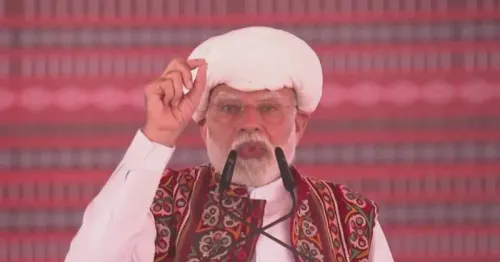
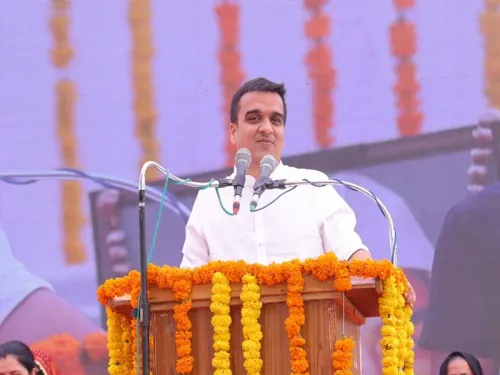
Every litre of milk tells a story in Banaskantha — and on Friday, 30 October 2026, Gujarat Chief Minister Bhupendra Patel made sure that story reached a national audience. Patel celebrated an interaction between women dairy farmers of the northern Gujarat district and Prime Minister Narendra Modi, calling it a proud reminder of how dairy, agriculture, and animal husbandry have become 'a powerful engine of Nari Shakti in Gujarat.'
Patel posted on X, 'The confidence in their voices says it all! The women of Banaskantha have turned every litre of milk into a story of self-reliance.' The hashtag #KisanKalyanSeRashtraKalyan — 'From farmer welfare, national welfare' — framed the moment squarely within the BJP-led government's agrarian outreach narrative.
Banaskantha's dairy backbone and its women
Banaskantha district sits in northern Gujarat and is among the state's most productive dairy and livestock belts. It falls within the orbit of the Gujarat Cooperative Milk Marketing Federation (GCMMF), the Amul-model institution established in 1973 that turned farmer-owned cooperatives into one of India's most replicable rural-economy blueprints.
Women have long been central to this ecosystem — managing livestock, handling milk collection, and increasingly leading village-level cooperative units. The cooperative structure, seeded by Operation Flood in 1970, specifically created entry points for rural women into formal income chains at a time when most agricultural policy looked the other way.
Why the PM interaction carries weight
A direct interaction between grassroots women beneficiaries and the Prime Minister is a deliberate piece of political and policy communication: it signals both programme visibility and ground-level reach. For Patel, amplifying the moment serves a dual purpose — honouring the women of Banaskantha and anchoring Gujarat's rural welfare record to the Centre's flagship agrarian agenda.
His closing line — 'when women prosper, the whole village prospers' — echoes a well-established development argument that female economic participation has compounding returns for household nutrition, children's education, and community resilience. In Gujarat's dairy belt, that argument is not abstract. It has co-operative balance sheets behind it.
Dairy as a development lever in Gujarat's policy arc
Gujarat has consistently positioned its cooperative dairy model as a template for Nari Shakti policy. Successive state and central governments have expanded women's self-help groups into animal husbandry, linking them to veterinary services, cattle insurance, and milk procurement networks. The optics of Banaskantha women speaking directly to PM Modi reinforces that arc — dairy not as a sector, but as a social-mobility corridor.
The kicker is in the numbers that don't need inventing: India is the world's largest milk producer, and Gujarat's cooperative model is a reason why. The women of Banaskantha didn't just fill a quota — they built the template.
Point of View
Not merely a legacy asset. Within a broader arc where animal husbandry schemes are being scaled nationally, Gujarat's cooperative model is being held up as the replicable template. The framing of 'every litre of milk as a story of self-reliance' is deliberate: it personalises an institutional achievement and keeps the human face — not the bureaucratic structure — front and centre.
NationPress
30 Oct 2026
Frequently Asked Questions
Who are the women dairy farmers of Banaskantha that CM Patel mentioned?
They are rural women from Banaskantha district in northern Gujarat who participate in the cooperative dairy network linked to the GCMMF (Amul model) , managing livestock and milk collection as part of village-level cooperatives.
What is the significance of Banaskantha for dairy farming in Gujarat?
Banaskantha is one of Gujarat's most productive dairy and livestock districts, operating within the cooperative framework established under the Gujarat Cooperative Milk Marketing Federation in 1973 , which scaled the Amul model of farmer-owned dairies.
What does #KisanKalyanSeRashtraKalyan mean?
#KisanKalyanSeRashtraKalyan translates to 'From farmer welfare, national welfare' — a hashtag used by BJP leaders to frame agricultural and rural development initiatives as central to India's broader national progress.
What is Operation Flood and why is it relevant to Gujarat's dairy sector?
Operation Flood , launched in 1970 , created India's cooperative dairy network and boosted rural milk production. It laid the institutional groundwork for Gujarat's own cooperative model and enabled rural women to enter formal milk value chains.
How does dairy farming contribute to women's empowerment in Gujarat?
Gujarat's cooperative dairy sector has historically integrated women into livestock management, milk collection, and cooperative leadership, providing household income and economic independence — a model CM Patel described as a 'powerful engine of Nari Shakti' in the state.