Kishan Reddy flags new dairy research hub in Banaskantha

Synopsis
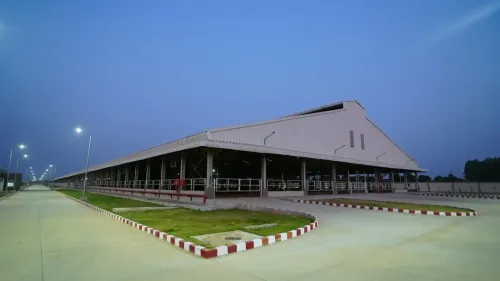
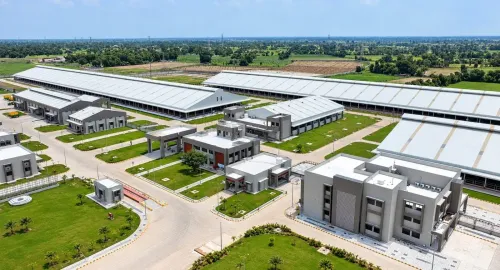
Union Minister G. Kishan Reddy highlights the new Bharat Bovine Breeding and Research Centre in Banaskantha, Gujarat — a ₹325 crore, 127-acre facility aimed at genetic improvement of indigenous cattle breeds and boosting milk productivity for India's livestock farmers.
Key Takeaways
Kishan Reddy posted about the Bharat Bovine Breeding and Research Centre (BBRC) in Banaskantha, Gujarat on 30 October 2026 .
The facility spans 127 acres and was built at a stated cost of ₹325 crore .
Its mandate covers genetic improvement of indigenous cattle breeds, modern breeding techniques, and raising milk productivity.
Reddy cited Gujarat's milk output nearly doubling — from 58.6 lakh tonnes to 111.1 lakh tonnes — between 2001 and 2014 under PM Modi's chief-ministership.
India's cooperative dairy model traces back to Operation Flood (1970) ; the BBRC represents the next phase focused on yield science over volume alone.
Banaskantha was chosen for its deep dairy cooperative heritage and proximity to existing livestock infrastructure in northern Gujarat.
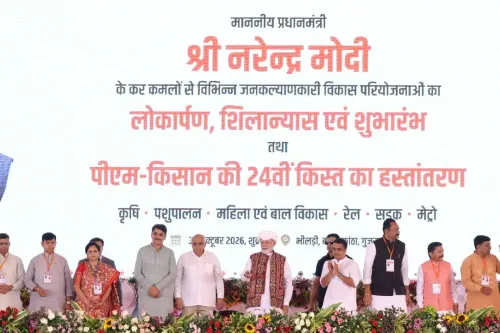
India's dairy ambitions are getting a dedicated scientific spine — and Union Coal and Mines Minister G. Kishan Reddy wants every livestock farmer to know why that matters. On Friday, 30 October 2026, Reddy posted on X to highlight the establishment of the Bharat Bovine Breeding and Research Centre (BBRC) in Banaskantha, Gujarat, framing it as the logical next chapter of a dairy revolution that gained momentum under Prime Minister Narendra Modi's Gujarat tenure.
Posting in Hindi, Reddy stated: 'भारत की डेयरी क्रांति को नई गति देने का संकल्प अब नई ऊंचाइयों की ओर अग्रसर है' — 'The resolve to give new momentum to India's dairy revolution is now moving toward new heights.' He cited a striking data point: during Modi's chief-ministership from 2001 to 2014, Gujarat's milk production climbed from 58.6 lakh tonnes to 111.1 lakh tonnes — a near-doubling in thirteen years. The new BBRC, he said, was built to carry that vision to a national scale.A ₹325 crore facility purpose-built for genetic science
The BBRC spans 127 acres in Banaskantha — a district in northern Gujarat long anchored by dairy cooperative culture — at a stated investment of ₹325 crore. The centre is designed around three pillars: genetic improvement of indigenous cattle breeds, adoption of modern breeding technologies, and raising the overall milk productivity of livestock. The explicit target is the prosperity of small-scale pashupalaks (animal husbandry households), who remain the backbone of India's dairy output.
Banaskantha is not an incidental choice. The district hosts one of India's largest dairy cooperatives and has historically been at the front line of breed improvement work in Gujarat. Anchoring a national-level research facility here connects institutional memory with fresh scientific infrastructure.
From Operation Flood to breed science: India's dairy arc
India's dairy story has two distinct phases. The first, sparked by Operation Flood in 1970, built the cooperative model that made India the world's largest milk producer through sheer organisational scale. The second — still unfolding — is about raising the quality of that output: improving yields per animal, preserving indigenous breeds, and reducing dependence on imported livestock genetics.
The BBRC is squarely a second-phase institution. By focusing on genetic improvement and modern breeding techniques, it addresses a persistent gap in India's dairy chain: the yield differential between indigenous breeds and crossbred or exotic cattle. Scientific breeding infrastructure at this scale could narrow that gap while keeping indigenous breeds viable and competitive — a balance that matters deeply to both animal welfare advocates and farmers working with traditional stock.
What Banaskantha's new centre could mean for India's dairy map
If the centre delivers on its mandate, the downstream effects could be substantial. Higher per-animal productivity means more income from the same herd size — a direct economic lever for marginal farmers. Advances in genetics developed here could be replicated through cooperative networks across states, extending Banaskantha's influence well beyond Gujarat's borders.
The facility also fits a broader policy posture: building self-reliance in livestock genetics so that India's dairy growth is not constrained by imported breed lines or foreign biotechnology. Reddy's post frames the BBRC as an extension of Modi-era governance philosophy — the same 'dूरदृष्टि' (doordarshita, farsightedness) that doubled Gujarat's milk output is now, he argues, being institutionalised at the national level.
Whether Banaskantha becomes a template — with similar centres seeded in dairy-rich states like Uttar Pradesh, Rajasthan, or Punjab — is now the question that India's livestock sector will be watching closely.
Point of View
Reinforcing the BJP's framing of Modi's CM record as a proof-of-concept for national governance. The BBRC sits at the intersection of two durable policy themes: agricultural self-reliance and rural income enhancement. If the centre produces replicable breeding advances, it could become a flagship in the government's livestock productivity pitch ahead of future electoral cycles. The real policy test, however, will be whether its research translates into usable tools for marginal farmers rather than remaining confined to institutional outputs.
NationPress
30 Oct 2026
Frequently Asked Questions
What is the Bharat Bovine Breeding and Research Centre (BBRC)?
The BBRC is a 127-acre livestock research facility in Banaskantha, Gujarat , built at a stated cost of ₹325 crore . It focuses on genetic improvement of indigenous cattle breeds, modern breeding technologies, and raising milk productivity to benefit small-scale animal husbandry farmers.
Where is the BBRC located and why was Banaskantha chosen?
Banaskantha is a district in northern Gujarat with a strong dairy cooperative tradition and one of India's largest dairy cooperatives. Its existing livestock infrastructure and expertise made it a natural site for a national-level bovine research centre.
What did G. Kishan Reddy say about the BBRC?
Kishan Reddy posted on X to highlight the BBRC as a continuation of PM Modi's dairy vision from his Gujarat chief-ministerial years, citing milk production growth from 58.6 lakh tonnes to 111.1 lakh tonnes between 2001 and 2014 .
How does the BBRC connect to India's dairy history?
India's dairy sector was built on the cooperative model established by Operation Flood in 1970 , which made India the world's largest milk producer. The BBRC represents a newer focus on scientific breeding and genetic improvement to raise yields — moving beyond volume to quality and per-animal productivity.
Will similar bovine research centres be set up in other states?
No official announcement has been made yet. However, the BBRC's success in Banaskantha could serve as a template for similar facilities in major dairy states like Uttar Pradesh, Rajasthan, and Punjab — something the sector will be watching closely.