CM Bhupendra Patel on PM Modi's Bhildi 'Khatal' Gathering
Synopsis
Gujarat CM Bhupendra Patel hailed PM Modi's public gathering in Bhildi, Banaskantha, on 30 October 2026, describing thousands of rural women seated on traditional cots as an emotional celebration of the bond between Modi and Gujarat's livestock-keeping communities under the #KisanKalyanSeRashtraKalyan banner.
Key Takeaways
PM Narendra Modi held a large public gathering in Bhildi, Banaskantha district, Gujarat on 30 October 2026 .
CM Bhupendra Patel described the event as a revival of Gujarat's traditional ' khatla parampara ' — the village practice of sitting on woven cots for community dialogue.
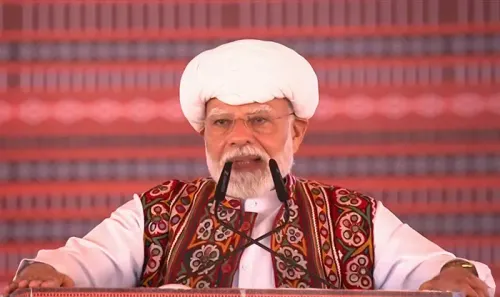
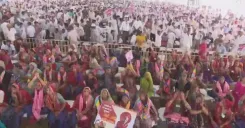
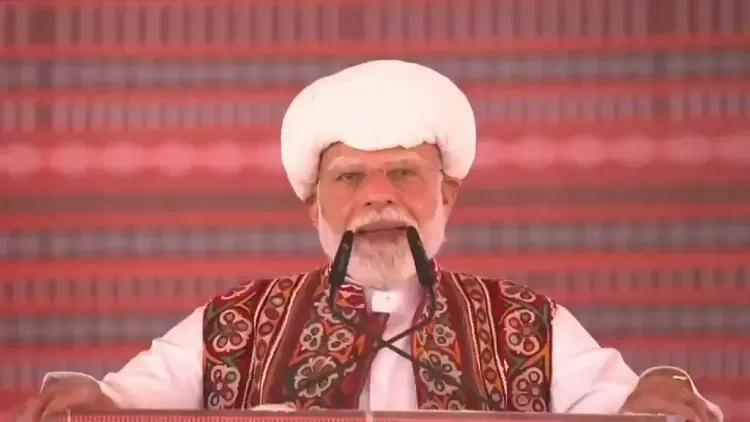
Thousands of rural women, farmers, and livestock keepers from across the state attended, with Modi dressed in traditional Banaskantha attire including a white safo .
The event was tagged #KisanKalyanSeRashtraKalyan , framing farmer welfare as a pillar of national development.
Banaskantha is a key agro-pastoral district in northern Gujarat with a large population dependent on dairy and animal husbandry.
The gathering fits a recurring BJP pattern of grassroots rural outreach in Gujarat, linking Modi's personal rapport with voters to agricultural and dairy sector policy messaging.
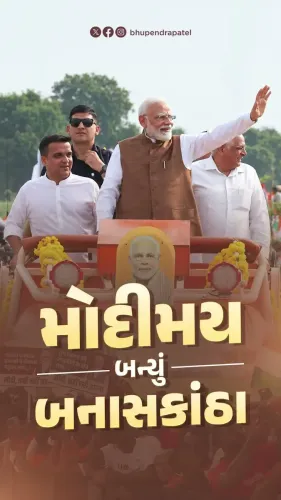
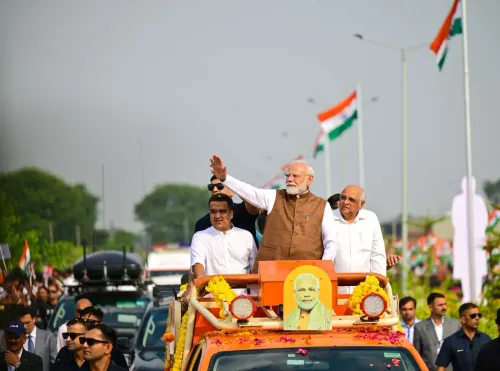
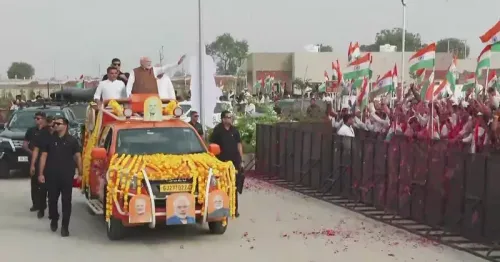
A white safo (turban) from Banaskantha, an embroidered bandi (jacket), and thousands of rural women seated on khatiyas — the ancient woven cots of Gujarat's countryside — listening to their Prime Minister as if he had walked into their own courtyard. Gujarat Chief Minister Bhupendra Patel captured this scene from Bhildi in a vivid post on Friday, 30 October 2026, describing Prime Minister Narendra Modi's public gathering in Banaskantha district as nothing short of a homecoming.
The 'Khatla Parampara' takes centre stage in Bhildi
Patel's post, written in Gujarati, described the setting with striking cultural specificity: 'ગામડાની ડેલીએ બેસીને વાતો કરવાની આપણી ખાટલા પરંપરા આજે ભવ્ય સ્વરૂપે જીવંત થઈ' — 'Our tradition of sitting on cots and talking at the village gate came alive in grand form today.' The khatla — a simple rope-woven cot — is a deeply rooted symbol of informal village discourse across rural Gujarat and Rajasthan. Deploying it as the centrepiece of a large public event is a deliberate visual choice, collapsing the distance between a sitting Prime Minister and his rural audience.
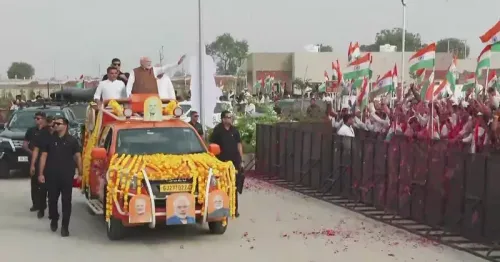
Modi arrived dressed in traditional Banaskantha attire — the white safo and embroidered bandi — a gesture that resonated strongly with the gathered crowd of farmers, women, and livestock keepers from across the region. Patel wrote that the atmosphere felt less like a political rally and more like a celebration of 'the years-old emotional bond between Banaskantha's livestock keepers and our Narendrabhai.'
Banaskantha's farmers and animal herders front and centre
Bhildi, a town in Banaskantha, sits in northern Gujarat's agro-pastoral belt — a landscape defined by dairy farming, cattle rearing, and small-scale agriculture. The district is home to a significant population dependent on animal husbandry, and the region has historically been central to Gujarat's dairy cooperative network. The crowd, Patel noted, included not only women from the surrounding villages but also farmers and livestock keepers who joined from across the state — all of them, he said, radiating equal enthusiasm and pride.
The event's hashtag — #KisanKalyanSeRashtraKalyan, meaning 'from farmer welfare to national welfare' — framed the gathering within a broader political and policy narrative that the BJP has consistently pushed: that rural agricultural prosperity is the engine of India's development story.
Modi's Gujarat outreach and the rural-women connect
This is not the first time Modi has leaned into the symbolism of Gujarat's rural heartland. Having governed the state for over a decade before becoming Prime Minister in 2014, Modi draws on a deep familiarity with its agrarian communities. The PM-KISAN direct income support scheme, launched in 2019, has been one of the BJP's flagship rural outreach instruments, channelling direct transfers to small and marginal farmers — a constituency very much present in Bhildi's fields and cattle pens.
For the BJP, these ground-level interactions serve a dual purpose: they reinforce Modi's carefully cultivated image as a leader who speaks the language of rural India, and they connect grassroots sentiment to national-level agricultural and dairy policy messaging. Patel's own post — rich in folk imagery, free of political jargon — mirrors that strategic register precisely.
Smiling faces, energetic slogans, and a cot-seated crowd that CM Patel says may be unprecedented in scale. Whether it translates into the next phase of state-level animal husbandry schemes or finds an echo in the Gujarat assembly will be worth watching — but today, in Bhildi, the khatla held a Prime Minister.
Point of View
Gujarat remains both an emotional base and a political laboratory — and events like this one double as proof-of-concept for the party's claim that welfare schemes have built genuine voter loyalty, not merely transactional support. CM Patel's post, drenched in cultural imagery rather than policy statistics, signals that in the run-up to future state cycles, the BJP intends to fight on emotional terrain as much as on delivery metrics. The hashtag's equation — farmer welfare equals national welfare — is a durable frame the party will keep stress-testing in districts exactly like Banaskantha.
NationPress
30 Oct 2026
Frequently Asked Questions
What happened at the PM Modi event in Bhildi on 30 October 2026?
PM Narendra Modi held a large public gathering in Bhildi, Banaskantha district, Gujarat, where thousands of rural women, farmers, and livestock keepers attended, many seated on traditional woven cots called khatiyas . CM Bhupendra Patel described it as a celebration of the emotional bond between Modi and Banaskantha's communities.
What is the 'khatla parampara' that CM Bhupendra Patel referred to?
The ' khatla parampara ' refers to the traditional Gujarati practice of gathering informally on rope-woven cots ( khatiyas ) at the village gate for community conversation. CM Patel said this tradition was revived in grand form at the Bhildi event.
What is the meaning of #KisanKalyanSeRashtraKalyan?
' #KisanKalyanSeRashtraKalyan ' translates to 'from farmer welfare to national welfare.' It is a BJP political hashtag used to connect rural and agricultural development policies to the broader goal of national progress.
Why is Banaskantha significant for PM Modi's outreach?
Banaskantha is a key agricultural and livestock-rearing district in northern Gujarat, with a large population of farmers and dairy workers. It is a strategically important constituency for the BJP's rural outreach, and PM Modi has historically maintained strong ties with Gujarat's agro-pastoral communities.
What is the PM-KISAN scheme mentioned in relation to Gujarat farmers?
PM-KISAN is a central government direct income support scheme launched in 2019 that provides financial transfers to small and marginal farmers across India, including those in Gujarat's Banaskantha district, and is frequently cited by the BJP as a marker of its farmer-welfare record.