PM Kisan: Modi releases 24th instalment from Banaskantha
Synopsis
Prime Minister Narendra Modi released the 24th instalment of PM Kisan Samman Nidhi from Banaskantha, Gujarat, crediting over ₹18,000 crore directly to nearly 10 crore farmer accounts. Union Education Minister Dharmendra Pradhan called farmers the strong pillars of Viksit Bharat.
Key Takeaways
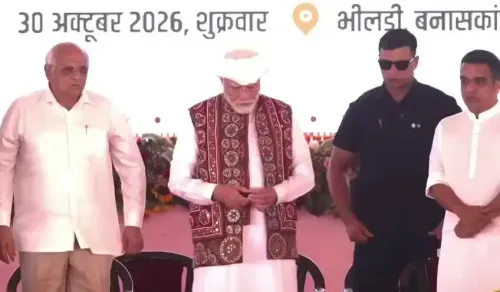
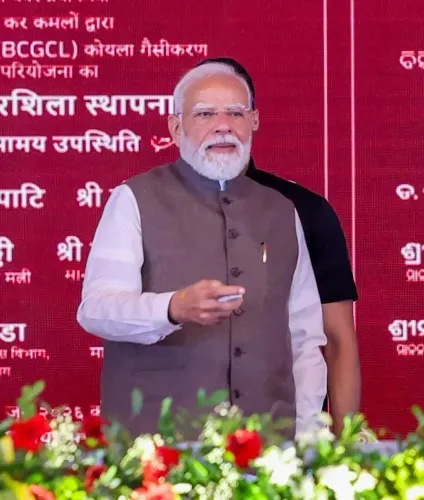
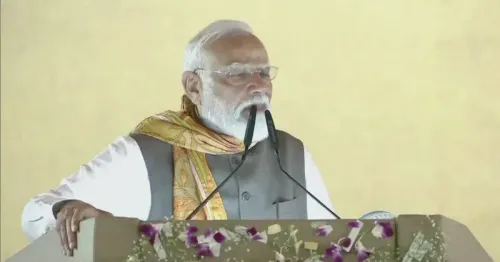
PM Modi released the 24th instalment of PM Kisan Samman Nidhi on 30 October 2026 from Banaskantha, Gujarat .
Over ₹18,000 crore was transferred directly to the bank accounts of nearly 10 crore eligible farmer families.
PM-KISAN provides ₹6,000 per year in three instalments of ₹2,000 each to landholding farm households.
The scheme was launched in February 2019 and has now completed 24 consecutive instalment cycles.
Union Education Minister Dharmendra Pradhan linked the payout to the government's 'Viksit Bharat' farmer welfare commitment.
Nearly 10 crore farming families woke up to a direct cash credit on Friday, 30 October 2026, as Prime Minister Narendra Modi released the 24th instalment of the PM Kisan Samman Nidhi from Banaskantha, Gujarat — pushing more than ₹18,000 crore into agricultural households in a single stroke. Union Education Minister Dharmendra Pradhan hailed the transfer as a reaffirmation of the government's commitment to farmer welfare and the 'Viksit Bharat' vision.
In his post, Pradhan wrote: 'देश के अन्नदाताओं को आर्थिक संबल देने और उनकी समृद्धि सुनिश्चित करने के संकल्प को आगे बढ़ाते हुए…' — ('Carrying forward the resolve to provide economic support and ensure the prosperity of the nation's farmers…') — underscoring the framing of farmers as the 'strong pillars of Viksit Bharat'.
What PM-KISAN pays out — and how it adds up
Launched in February 2019, the Pradhan Mantri Kisan Samman Nidhi is a direct benefit transfer scheme that delivers ₹6,000 per year to eligible landholding farm families in three equal instalments of ₹2,000 each. The money lands directly in registered bank accounts, bypassing intermediaries entirely — a design choice that was central to the scheme's original pitch.
At ₹18,000 crore-plus for a single instalment release, the aggregate scale of the 24th payout underlines how deeply the scheme has embedded itself in rural household finance. For many smallholder families, the twice-yearly credits now function as a predictable liquidity bridge between harvest cycles.
Why Banaskantha — and what the choice signals
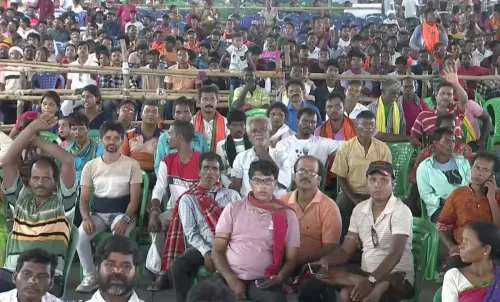
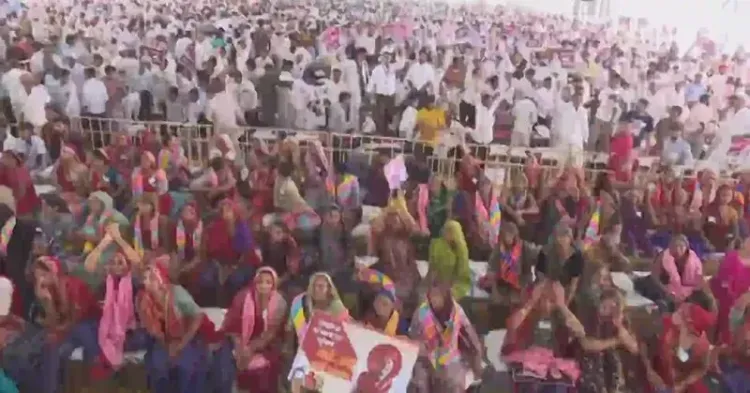
Banaskantha is one of Gujarat's most agriculturally active districts, known for its dairy cooperatives and groundnut cultivation. Choosing it as the launch venue carries a symbolic weight: a region where the farm economy is visible and tangible, not merely statistical. The site selection also fits a pattern of major rural-welfare announcements being staged in field locations rather than Delhi auditoriums — a deliberate optics choice that puts beneficiaries in the same frame as the policy.
Seven years in, a flagship that keeps its run rate
PM-KISAN has now completed 24 instalment cycles since 2019 — a run rate of roughly three to four releases per year — making it one of the most consistently executed direct-transfer programmes in India's welfare architecture. The cumulative outflow across all instalments runs into several lakh crore rupees, touching a beneficiary base that spans every state and Union Territory.
As the government drives the 'Viksit Bharat' agenda toward 2047, farm-income support through direct transfers remains a non-negotiable floor — and the 24th instalment is a reminder that the scheme shows no sign of slowing down.
Point of View
A working agricultural district, reinforces the BJP's long-running effort to keep farm-income support visible and personalised rather than bureaucratic. With 24 uninterrupted cycles since 2019, the scheme has become a structural feature of rural household economics, giving the government a dependable touchpoint with its largest voter bloc. As the 'Viksit Bharat 2047' narrative intensifies, the framing of farmers as its 'strong pillars' signals that direct income transfers will remain a centrepiece of both welfare and electoral strategy.
NationPress
30 Oct 2026
Frequently Asked Questions
What is PM Kisan Samman Nidhi and who gets it?
PM Kisan Samman Nidhi is a central government scheme launched in February 2019 that provides ₹6,000 per year in three instalments of ₹2,000 each directly to eligible landholding farmer families across India.
When was the 24th instalment of PM Kisan released?
The 24th instalment was released on 30 October 2026 by Prime Minister Narendra Modi from Banaskantha, Gujarat.
How much money was released in PM Kisan 24th instalment?
Over ₹18,000 crore was transferred in the 24th instalment, reaching nearly 10 crore farmer families directly in their bank accounts.
Why was the PM Kisan 24th instalment launched from Banaskantha?
Banaskantha is a major agricultural district in Gujarat known for dairy and groundnut farming. Staging the launch there follows the government's practice of announcing rural welfare payouts from active farm communities rather than from the capital.
What is the total annual benefit a farmer gets under PM-KISAN?
Each eligible farmer family receives ₹6,000 per year under PM-KISAN, paid in three equal instalments of ₹2,000 directly into registered bank accounts.