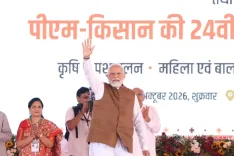
Smriti Irani Hails PM-KISAN 24th Instalment for 9.34 Cr Farmers
Synopsis
BJP leader Smriti Irani welcomed the release of PM-KISAN Samman Nidhi's 24th instalment, noting that over 9.34 crore farmer families received ₹2,000 direct bank transfers, calling it proof of PM Modi's commitment to the 'Annadata' and rural economic resilience.
Key Takeaways
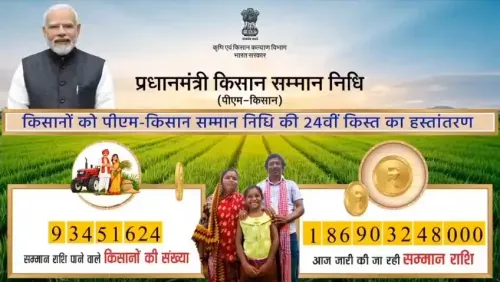
BJP leader Smriti Irani praised the release of the 24th instalment of PM-KISAN Samman Nidhi on 30 October 2026 .
More than 9.34 crore farmer families received direct bank transfers under the scheme.
PM-KISAN provides ₹6,000 per year in three instalments of ₹2,000 each to eligible landholding farmers.
The scheme was launched in February 2019 by PM Narendra Modi as a Direct Benefit Transfer programme.
Irani used the term 'Annadata' (giver of food) to describe Indian farmers, consistent with the government's official framing.
The next focus point is any revision to the annual ₹6,000 ceiling in the upcoming Union Budget.
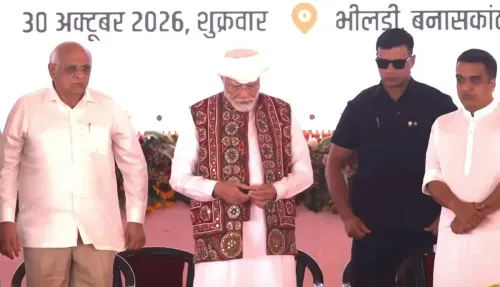
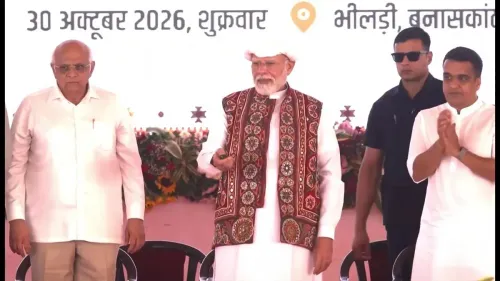
More than 9.34 crore farmer families across India woke up to a direct cash transfer on Friday, 30 October 2026 — the 24th instalment of the PM-KISAN Samman Nidhi scheme quietly landing in bank accounts as it has every four months since 2019. BJP leader and former Union Minister Smriti Irani took to X to mark the moment, framing it as proof of Prime Minister Narendra Modi's commitment to farmer welfare.
In her post, Irani wrote: 'किसान समृद्ध, राष्ट्र समृद्ध!' — 'A prosperous farmer, a prosperous nation!' — before adding that the fund transfer under the 24th instalment would provide 'new strength to economic security and self-confidence in the lives of farmers.' The salutation Annadata — literally 'the giver of food' — invoked a term the Modi government has consistently used to dignify the farming community in public discourse.
What PM-KISAN Delivers — and Who Receives It
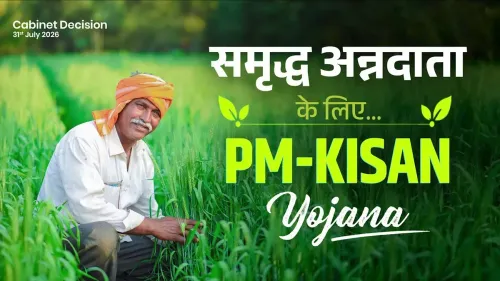
Launched in February 2019, PM-KISAN Samman Nidhi is a central sector scheme that transfers ₹6,000 per year directly into the bank accounts of eligible landholding farmer families — paid in three instalments of ₹2,000 each. The delivery mechanism is Direct Benefit Transfer (DBT), which bypasses intermediaries and credits accounts electronically, a design choice meant to reduce leakage.
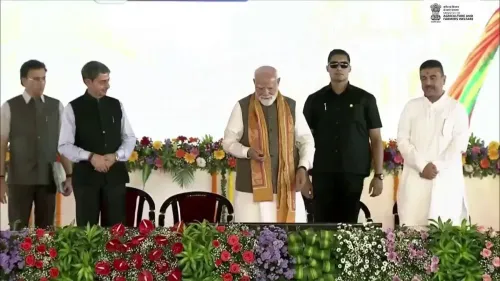
The scheme has become one of the largest direct income-support programmes in the world by beneficiary count. Each new instalment release is typically accompanied by official outreach, with the Prime Minister or senior ministers flagging the transfer date as a marker of the government's rural welfare record.
The 24th Instalment and Its Political Moment
The 24th instalment marks roughly six years of uninterrupted quarterly delivery — a consistent rhythm the government has used to anchor its narrative on farmer income support. For the ruling BJP, the regularity itself is the message: that the transfer pipeline holds, election cycle or not.
Irani's post connects the transfer to three explicit objectives — kisaan parivaron ka aarthik sambal (economic support for farmer families), rural economic strengthening, and dignity for the Annadata. These three pillars broadly mirror the government's stated framing for PM-KISAN since inception: income support, rural multiplier effect, and symbolic respect for cultivators.
Why the Rural Economy Angle Matters
Agriculture directly supports roughly half of India's workforce, and rural consumption patterns have an outsized effect on FMCG and two-wheeler demand cycles — making PM-KISAN transfers a variable watched by both policymakers and private-sector analysts. The scheme's next milestone — and any revision to the ₹6,000 annual ceiling in the upcoming Union Budget — will be closely tracked by farmer unions and state governments alike.
Seven years in, PM-KISAN has outlasted multiple political seasons. The question economists keep returning to is not whether the transfer reaches farmers — DBT data broadly suggests it does — but whether ₹2,000 every four months is enough to materially shift farm household economics in an era of rising input costs. That debate is very much alive heading into budget season.
Point of View
Amplified by a senior BJP leader, fits a deliberate political-communication pattern: converting a routine DBT disbursement into a high-visibility welfare event that reinforces the party's rural base. For the BJP, consistency of delivery is itself the brand — each instalment a proof point against opposition charges of agrarian neglect. Yet the ₹6,000 annual cap, unchanged since 2019, increasingly looks thin against rising fertiliser and fuel costs, and farm unions have long pressed for a revision. Whether the next Budget finally raises that ceiling — or holds the line — will say more about the government's rural priorities than any number of instalment announcements.
NationPress
30 Oct 2026
Frequently Asked Questions
What is PM-KISAN Samman Nidhi and how much money do farmers get?
PM-KISAN Samman Nidhi is a central government scheme that gives eligible landholding farmer families ₹6,000 per year, paid in three instalments of ₹2,000 each directly into their bank accounts via Direct Benefit Transfer. It was launched in February 2019.
When was the PM-KISAN 24th instalment released?
The 24th instalment of PM-KISAN Samman Nidhi was released on 30 October 2026, benefiting over 9.34 crore farmer families across India, according to BJP leader Smriti Irani's post on X.
How many farmers benefit from PM-KISAN scheme?
According to Smriti Irani's post marking the 24th instalment, more than 9.34 crore (93.4 million) farmer families received the transfer in the latest round of PM-KISAN Samman Nidhi.
What does 'Annadata' mean in the context of Indian farming?
'Annadata' is a Sanskrit term meaning 'giver of food' — a respectful title the Modi government has consistently used to refer to Indian farmers in official communications and welfare programme outreach.
Will the PM-KISAN annual amount of ₹6,000 be increased?
The ₹6,000 annual ceiling has remained unchanged since PM-KISAN launched in 2019. Farm unions and economists have called for a revision, and any change is expected to be announced in the upcoming Union Budget.