CM Samrat Choudhary cites Modi on Banaskantha's potato success

Synopsis
Bihar CM Samrat Choudhary shared PM Modi's remark praising Banaskantha farmers for turning potatoes into gold through cooperatives and value addition, signalling the Gujarat model as a potential blueprint for Bihar's own agricultural transformation.
Key Takeaways
Bihar Chief Minister Samrat Choudhary shared PM Narendra Modi's quote on October 30, 2026 praising Banaskantha farmers.
Modi's quote says Banaskantha farmers already turn 'potatoes into gold' — no one needs to sell them the dream.
Banaskantha in northern Gujarat is one of India's leading potato-producing and value-addition districts.
During Modi's Gujarat CM tenure (2001-2014) , the state backed cold-chain and cooperative infrastructure in the region.
The post by a Bihar CM is seen as signalling interest in replicating Gujarat's farm cooperative model in Bihar.
BJP leadership routinely cites the Banaskantha example as a cross-state governance model for agricultural income growth.
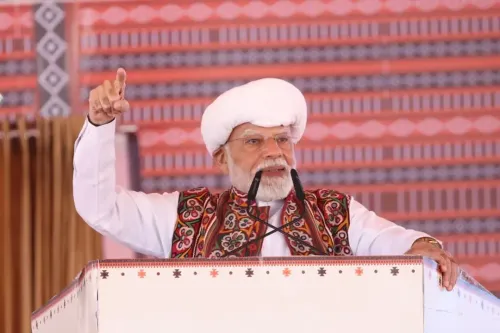
In Banaskantha, Gujarat, potato farmers do not need to be sold a dream — they are already living it. Bihar Chief Minister Samrat Choudhary on Friday, October 30, 2026, shared a striking remark by Prime Minister Narendra Modi that captures what the district has quietly achieved: turning an ordinary crop into a gold standard of agricultural value addition.
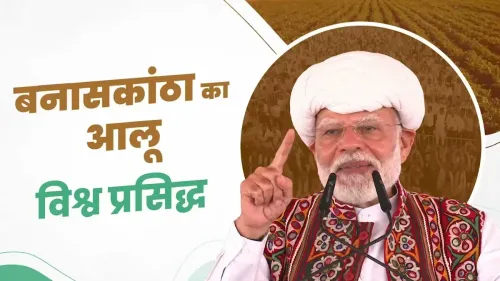
The post quotes PM Modi in Hindi: 'Banaskantha waalon ko koi aalu se sona banane ka sapna nahi dikha sakta, kyunki ve toh pehle se hi aisa kar rahe hain!' — 'Nobody can sell Banaskantha's people the dream of turning potatoes into gold, because they are already doing exactly that.' The line is part of BJP's long-running narrative around Gujarat's agricultural transformation as a replicable governance model.
Banaskantha: India's potato-belt that outgrew the cliché
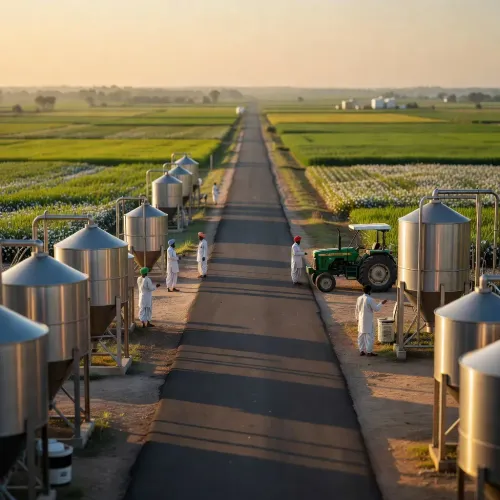
Banaskantha, a district in northern Gujarat, has evolved into one of India's most prominent potato-producing and processing regions. Far beyond raw-crop output, farmers here developed cold-chain infrastructure, farmer cooperatives, and market linkages that significantly raised on-farm realisation — the kind of structural shift that policy planners typically struggle to engineer from above.
When Narendra Modi served as Gujarat's Chief Minister between 2001 and 2014, his government actively promoted agricultural diversification in the region, backing cold-chain investments and cooperative models in both the potato and dairy sectors. That foundation, analysts note, is what turned a conventional farm belt into a value-addition story that the BJP still cites nationally.
A Bihar CM amplifying a Gujarat blueprint
CM Samrat Choudhary's decision to amplify this message from Patna is more than a repost. Bihar is itself a major potato-producing state, and cross-pollinating the Gujarat cooperative model with Bihar's agricultural ecosystem has been a recurring conversation within the party's governance circle. By surfacing Modi's praise for Banaskantha, Choudhary signals where Bihar's own farm-value-addition ambitions could be pointed next.
Within the BJP's internal storytelling, Gujarat's farm successes — particularly in districts like Banaskantha — are held up as proof that government facilitation of cooperatives and cold-chains can transform rural incomes without waiting for industrial-scale foreign investment. The Bihar chief minister's post slots neatly into that cross-state conversation.
The real question now: will the Banaskantha model get a formal Bihar address, or remain an inspiring headline? Given Choudhary's track record of translating party messaging into state-level policy signals, potato farmers in Bihar may soon find out.
Point of View
A formula the BJP wants replicated in BIMARU-belt states. For Choudhary, foregrounding this story ahead of any agriculture-policy announcement in Bihar builds both ideological alignment with the Centre and a forward-facing reform narrative at home. The move is low-cost but high-signal: it plants the idea of a Gujarat-style farm transformation in Bihar's political discourse without committing to a specific scheme.
NationPress
30 Oct 2026
Frequently Asked Questions
Why is Banaskantha famous for potato farming?
Banaskantha in northern Gujarat is one of India's largest potato-producing districts and is known for farmer cooperatives, cold-chain infrastructure, and strong market linkages that have significantly raised farmer incomes beyond raw-crop sales.
What did PM Modi say about Banaskantha farmers?
PM Modi remarked that nobody can sell Banaskantha's people the dream of turning potatoes into gold because they are already doing it — a recognition of the district's successful agricultural value-addition ecosystem.
Why did Bihar CM Samrat Choudhary share this quote?
Choudhary shared the quote to highlight the Gujarat cooperative model as an agricultural success story, widely seen as a signal of his interest in similar value-chain initiatives for Bihar's own potato-growing regions.
What is the Gujarat agricultural cooperative model?
During Narendra Modi's tenure as Gujarat CM from 2001 to 2014, the state government promoted farmer cooperatives, cold-chain infrastructure, and market linkages in potato and dairy sectors — a model that significantly raised rural incomes in districts like Banaskantha.
Can Bihar replicate Banaskantha's potato success?
Bihar is a major potato producer and BJP leadership has repeatedly cited the Banaskantha cooperative model as replicable; any concrete move would require state investment in cold-chain infrastructure and farmer cooperative networks similar to Gujarat's.