CM Samrat Choudhary Hails India's Record Farm Output

Synopsis
Bihar Chief Minister Samrat Choudhary has highlighted India's record agricultural output — 154 million tonnes of rice, 120.66 million tonnes of wheat, and over 55 million tonnes of maize — attributing the milestone to PM Modi's farmer-centric policies and the hard work of Indian farmers.
Key Takeaways
Bihar CM Samrat Choudhary posted on June 6, 2026 , highlighting India's record agricultural production figures.
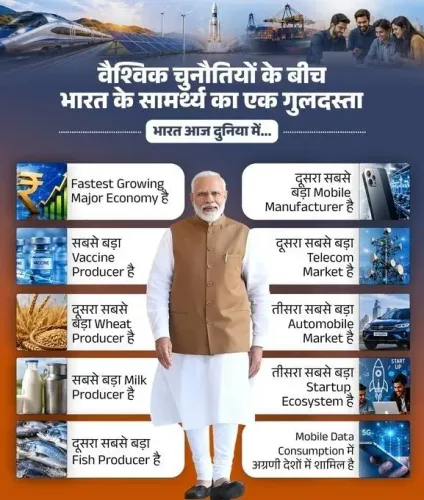
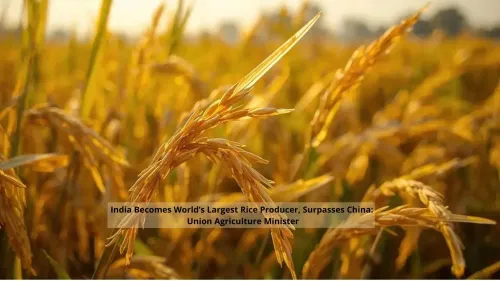
India reportedly produced 154 million tonnes of rice , 120.66 million tonnes of wheat , and over 55 million tonnes of maize .
Choudhary credited PM Narendra Modi's farmer-centric policies alongside the hard work of Indian farmers for the milestone.
The post emphasises India's drive to make agriculture modern, self-reliant, and technology-driven .
The messaging aligns with the Centre's broader push for rural prosperity and positioning India as a global agricultural power.
Official production estimates from the Ministry of Agriculture are awaited to corroborate the figures cited.
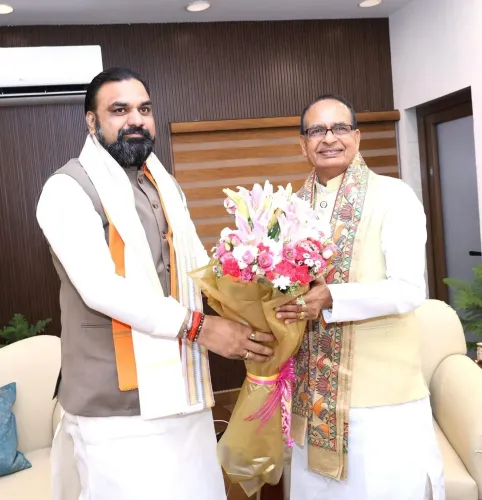
Bihar Chief Minister Samrat Choudhary on Saturday, June 6, 2026, praised India's agricultural sector for reaching record production levels, crediting the hard work of the country's farmers and the Centre's farmer-centric policies under Prime Minister Narendra Modi.
Context
In his post on X, CM Choudhary declared India has reached 'कृषि उत्पादन के नए शिखर' ('new peaks of agricultural production'). He cited figures of 154 million tonnes of rice, 120.66 million tonnes of wheat, and more than 55 million tonnes of maize as evidence of the country setting new production records. The post attributes this achievement to the combined effort of Indian farmers and the Union government's policy framework.
Choudhary wrote that India is 'rapidly moving towards making the agricultural sector modern, self-reliant, and technology-rich,' adding that under PM Modi's leadership, 'the farmer is being empowered, villages are becoming prosperous, and India is building a new identity as an agricultural power on the world stage.'
Policy Backdrop
India's push for higher foodgrain output has deep roots. The Green Revolution of the 1960s transformed the country's wheat and rice production through high-yielding seed varieties and expanded irrigation, laying the foundation for long-term food security. Subsequent decades saw successive governments build on that base with input subsidies, agricultural research, and market reforms.
More recently, the Pradhan Mantri Fasal Bima Yojana, launched in 2016, extended crop insurance coverage to millions of farmers as a risk-mitigation measure. The current policy emphasis has broadened to include digital tools, mechanisation, and export orientation — themes that align closely with the messaging in CM Choudhary's post.
Stakeholders and Impact
India's farming community — estimated at hundreds of millions of households — stands as the primary stakeholder in any shift in agricultural production or policy. Record output in staple crops such as rice, wheat, and maize has direct implications for food prices, rural incomes, and the country's food security calculus. Bihar, which CM Choudhary leads, is among India's most agriculturally significant states, with a large share of its population dependent on farming.
Higher production figures, if sustained, also strengthen India's position as an agricultural exporter, contributing to foreign exchange earnings and bolstering the farm sector's share of GDP. The focus on technology and modernisation signals a policy intent to move beyond volume alone toward productivity and sustainability.
What's Next
The Ministry of Agriculture is expected to release official advance estimates for the current agricultural season, which will either confirm or contextualise the production figures cited in political messaging. Parliamentary discussions on farm sector budget allocations and the rollout of digital agriculture initiatives are also on the near-term horizon.
As India positions itself as a global agricultural power, the alignment between state-level political voices like CM Choudhary and the Centre's narrative signals a coordinated push ahead of what could be a significant policy or electoral cycle for rural India.
Point of View
With its vast agrarian base and history of farm-sector grievances, makes Choudhary a strategically important voice for this messaging. The broader pattern — production milestones framed as policy victories — reflects a long-standing effort to translate administrative outputs into electoral capital among farmer communities.
NationPress
22 Oct 2026
Frequently Asked Questions
What did Bihar CM Samrat Choudhary say about India's agricultural production?
CM Samrat Choudhary stated that India has reached new peaks in agricultural production, citing figures of 154 million tonnes of rice, 120.66 million tonnes of wheat, and over 55 million tonnes of maize, attributing this to PM Modi's farmer-centric policies.
What are India's claimed record foodgrain production figures in 2026?
According to CM Choudhary's post, India produced 154 million tonnes of rice, 120.66 million tonnes of wheat, and more than 55 million tonnes of maize, which he described as new national records.
Which central schemes support Indian farmers under PM Modi?
Key schemes include the Pradhan Mantri Fasal Bima Yojana for crop insurance (launched 2016), along with input subsidies, digital agriculture initiatives, and mechanisation support under the broader farmer-centric policy framework.
Why is Bihar significant in India's agricultural landscape?
Bihar is one of India's most agriculturally dependent states, with a large share of its population engaged in farming, making it a key constituency for any national agricultural policy or messaging.
What is the Green Revolution and how does it relate to India's current farm output?
The Green Revolution, which began in the 1960s, transformed India's wheat and rice production through high-yielding varieties and irrigation expansion. It laid the foundation for the food security gains that successive governments, including the current one, have built upon.