CM Samrat Choudhary Hails India's 7.7% GDP Growth
Synopsis
Bihar Chief Minister Samrat Choudhary has lauded India's 7.7% GDP growth for FY 2025-26 and 7.8% in Q4, attributing the performance to PM Modi's reforms and the Atmanirbhar Bharat and Viksit Bharat frameworks, calling it a milestone for a self-reliant and developed India.
Key Takeaways
Bihar CM Samrat Choudhary publicly praised India's GDP growth figures on June 5, 2026 .
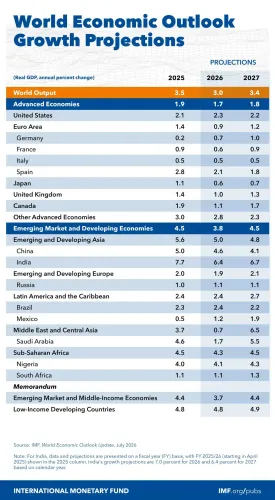
India recorded a 7.7% GDP growth rate for FY 2025-26 and 7.8% growth in Q4 , as cited in the post.
Choudhary credited PM Narendra Modi's leadership, decisive policies, and sustained economic reforms for the performance.
The growth was framed as a milestone toward the Viksit Bharat (Developed India by 2047) and Atmanirbhar Bharat goals.
Choudhary highlighted the contribution of 140 crore Indians and India's resilience amid global economic challenges.
Upcoming Economic Survey and Union Budget releases will provide further clarity on India's fiscal direction.
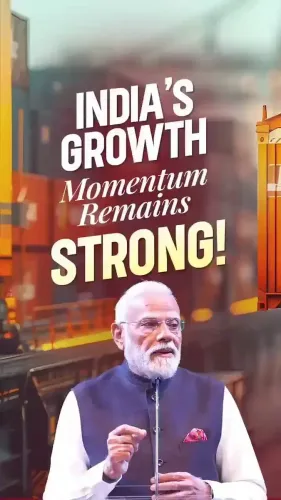
Bihar Chief Minister Samrat Choudhary on Friday, June 5, 2026, praised India's latest GDP growth figures, attributing the country's economic momentum to the leadership and reforms of Prime Minister Narendra Modi. Choudhary cited a 7.7% GDP growth rate for FY 2025-26 and a 7.8% expansion in the fourth quarter (Q4), calling the numbers a testament to India's strong economic foundation.
Context
Posting in Hindi on X, CM Choudhary stated: 'भारत की अर्थव्यवस्था निरंतर नई ऊंचाइयों को छू रही है' ('India's economy is continuously touching new heights'). He credited PM Modi's 'visionary leadership, decisive policies, and sustained economic reforms' for driving what he described as a new energy and confidence in India's global economic standing. The post also invoked the hard work of 140 crore Indians as a foundational force behind the milestone.
Policy Backdrop
The figures referenced by CM Choudhary come against the backdrop of a decade-long push by the Modi government toward structural economic reform. The Goods and Services Tax (GST), rolled out in 2017, unified India's indirect tax structure, while the Make in India programme, launched in 2014, has sought to attract foreign investment and build domestic manufacturing capacity. The Atmanirbhar Bharat initiative, launched in 2020, further accelerated efforts to reduce import dependence and promote self-reliance across key sectors.
Choudhary explicitly framed the growth data as a milestone toward the government's Viksit Bharat vision — a roadmap for India to become a fully developed nation by 2047. He described the achievement as 'not merely an economic statistic, but an important milestone in realising the resolve of a self-reliant, developed, and prosperous India.'
Stakeholders and Impact
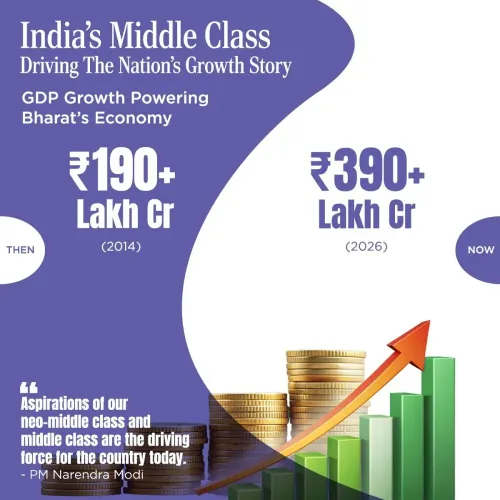
For Indian businesses and the broader workforce, sustained GDP growth at this pace signals continued expansion in investment, employment, and consumer demand. Senior BJP leaders across states have consistently amplified central government economic messaging, positioning growth data as validation of the ruling party's governance model ahead of electoral cycles. Bihar, one of India's most populous states, has particular stakes in national economic momentum given its large labour-exporting population and ongoing infrastructure development needs.
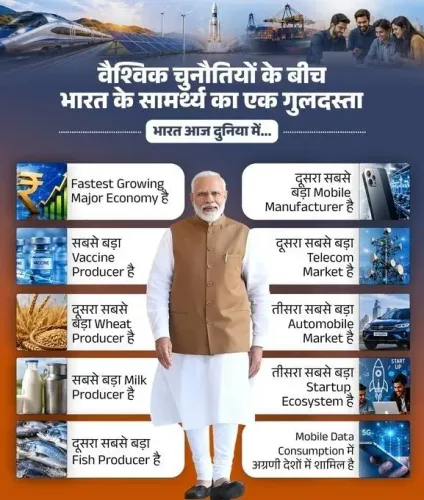
Global context also shapes the significance of these numbers. India has maintained its position among the world's fastest-growing major economies even as geopolitical tensions, supply-chain disruptions, and uneven post-pandemic recoveries have weighed on growth elsewhere. Choudhary noted that India is 'maintaining its continuous pace of development even amid global challenges.'
What's Next
The release of the next Economic Survey and Union Budget will provide updated projections and signal the government's fiscal priorities for the period ahead. Subsequent quarterly GDP data releases will be closely watched to determine whether the growth trajectory reported for FY 2025-26 is sustained or faces headwinds from global or domestic pressures. Political leaders across the spectrum are expected to respond to the figures as the data enters the broader public and policy debate.
Point of View
Particularly ahead of electoral cycles in large states like Bihar. By anchoring the GDP figures to the Viksit Bharat and Atmanirbhar Bharat frameworks, the messaging ties routine statistical releases to a long-horizon national narrative — a deliberate political communication strategy. The emphasis on 140 crore Indians as co-authors of growth is also notable, broadening the credit beyond the government while retaining PM Modi as the central driver. Whether the cited figures hold up to independent scrutiny will determine how durable this narrative proves.
NationPress
22 Sept 2026
Frequently Asked Questions
What is India's GDP growth rate for FY 2025-26?
According to Bihar CM Samrat Choudhary's post on June 5, 2026, India's GDP growth rate for FY 2025-26 is cited as 7.7%, with Q4 growth at 7.8%.
What is Viksit Bharat?
Viksit Bharat is the Indian government's vision for transforming India into a fully developed nation by 2047, frequently cited in official economic and policy communications.
What is Atmanirbhar Bharat?
Atmanirbhar Bharat, meaning 'Self-Reliant India', is an initiative launched in 2020 to promote domestic manufacturing and reduce India's dependence on imports across key sectors.
Why is Bihar CM Samrat Choudhary commenting on India's GDP?
As a senior BJP leader and Chief Minister of Bihar, Choudhary regularly amplifies the central government's economic achievements, linking national growth data to PM Modi's policy agenda.
Is India the fastest-growing major economy in 2026?
India has consistently been positioned as one of the world's fastest-growing major economies in recent years, a claim reiterated by CM Choudhary in his June 2026 post citing 7.7% annual GDP growth.