CM Yogi's Office Shares Ramcharitmanas Verse on Lord Ram's Return
Synopsis
The Chief Minister's Office of Uttar Pradesh shared a Ramcharitmanas couplet by 16th-century poet Tulsidas on 7 November 2026, evoking Lord Ram's triumphant return with Sita and Lakshman as gods sang praises and all sorrow dissolved like nectar quenching thirst.
Key Takeaways
The CMO Uttar Pradesh posted a Ramcharitmanas verse on 7 November 2026 .
The couplet is by Tulsidas , the 16th-century Awadhi poet who composed the epic between 1574 and 1577 .
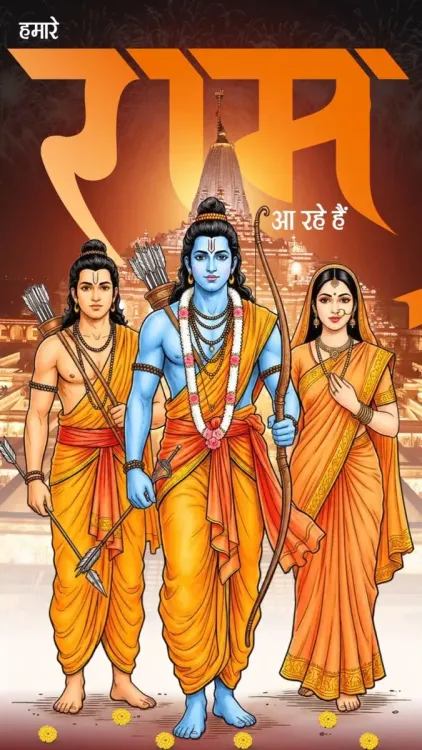
The verse depicts Lord Ram's return after defeating Ravana, with Sita and Lakshman, as celestial beings sing his praises.
The second line uses the simile of a thirsting soul receiving nectar to describe how sorrow vanishes on hearing the news.
The post continues a consistent pattern of Ramayana-linked cultural messaging from the UP administration.
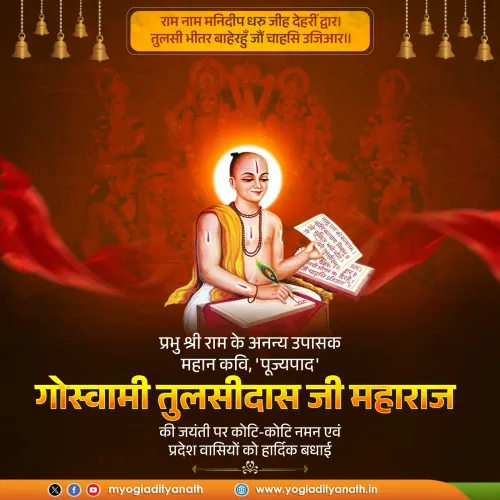
A couplet from the Ramcharitmanas — sung by celestial beings as Lord Ram returns to Ayodhya — opened Saturday morning from the Chief Minister's Office of Uttar Pradesh on 7 November 2026, anchoring the state's cultural messaging in one of Hindi devotional literature's most resonant moments.
The verse, composed by the 16th-century Awadhi poet Tulsidas, reads: 'Ripu ran jeeti sujas sur gavat. Sita sahit anuj prabhu avat.' — 'Having conquered the enemy in battle, the gods sing praises; the Lord returns with Sita and his younger brother.' The second line deepens the joy: 'Sunat bachan bisare sab dukha. Trishavant jimi pai piyusha.' — 'Hearing these words, all sorrow vanishes — like a thirsting soul who finds nectar.'
The verse and its place in the Ramcharitmanas
The Ramcharitmanas, composed between approximately 1574 and 1577, is the devotional cornerstone of religious life across northern India, particularly in Uttar Pradesh. These lines appear at the culmination of Ram's victory over Ravana — the precise moment when grief turns to jubilation, and the gods themselves become the chorus. Tulsidas's genius lay in that simile: sorrow does not merely fade, it disappears the way a drought ends when nectar arrives. The image is both cosmic and deeply personal.Uttar Pradesh's steady thread of Ramayana messaging
The CMO Uttar Pradesh has periodically woven Ramcharitmanas verses and Ayodhya-linked themes into its official communications, reflecting the current administration's consistent effort to position the state as the custodian of Ram's legacy. These posts are part of a broader pattern — not isolated moments — that ties UP's cultural identity to its devotional heritage, especially as Ayodhya continues to hold national and global prominence as a pilgrimage and heritage destination. For crores of devotees across the Hindi heartland, a verse like this shared on a Saturday morning carries the rhythm of a weekly prayer — familiar, grounding, quietly powerful. That familiarity is precisely the point. In Tulsidas's words, the Lord has returned, the gods are singing, and all sorrow is gone — the verse does not need an occasion. It is its own occasion.Point of View
Particularly since the consecration of the Ayodhya temple elevated the city's national profile. These posts serve a dual function: devotional outreach to a deeply religious voter base and a soft assertion of UP's claim as the spiritual heartland of India. The choice of this specific verse — Ram returning victorious — carries symbolic weight that transcends the purely literary. Whether read as governance communication or cultural stewardship, the pattern signals that the administration views religious heritage as a live pillar of its public identity, not a ceremonial footnote.
NationPress
7 Nov 2026
Frequently Asked Questions
What is the Ramcharitmanas verse posted by CMO UP on 7 November 2026?
The verse is from the Ramcharitmanas by Tulsidas: 'Ripu ran jeeti sujas sur gavat, Sita sahit anuj prabhu avat' — meaning the gods sing praises as Lord Ram returns victorious with Sita and Lakshman, and all sorrow vanishes like thirst quenched by nectar.
Who wrote the Ramcharitmanas?
The Ramcharitmanas was written by Tulsidas , a 16th-century Awadhi poet, composed approximately between 1574 and 1577 . It is a devotional retelling of the Ramayana and is central to religious life in northern India.
Why does the UP government post Ramcharitmanas verses?
The Chief Minister's Office of Uttar Pradesh regularly shares Ramayana verses and Ayodhya-linked content as part of a consistent cultural messaging strategy that highlights the state's religious heritage and its connection to the Ram narrative.
What does the verse 'Trishavant jimi pai piyusha' mean?
The phrase means 'like a thirsting person who receives nectar' — Tulsidas uses this simile to describe how the joy of hearing about Ram's return makes all sorrow disappear instantly and completely.
What is the significance of Ayodhya to Uttar Pradesh's cultural identity?
Ayodhya , believed to be the birthplace of Lord Ram and the setting of the Ramayana, sits in Uttar Pradesh and is one of India's most important Hindu pilgrimage cities. The current state administration has consistently emphasised Ayodhya's heritage in its official communications.