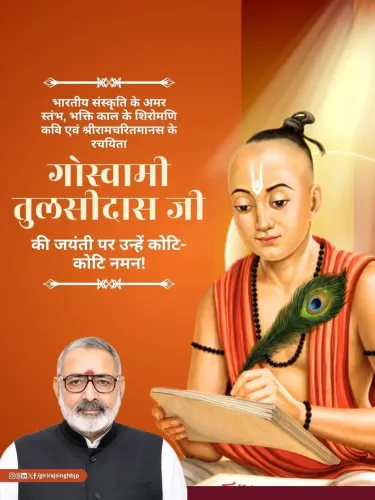
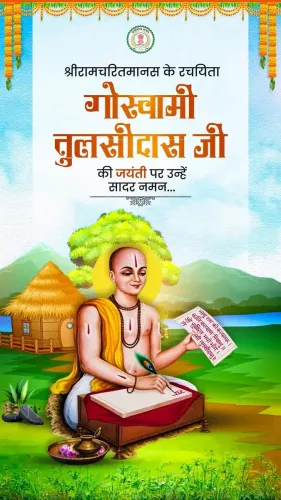
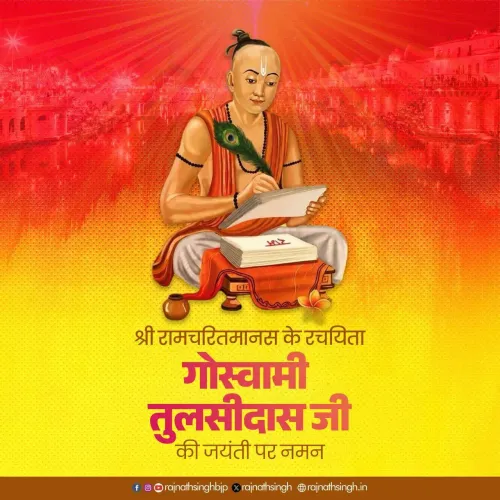
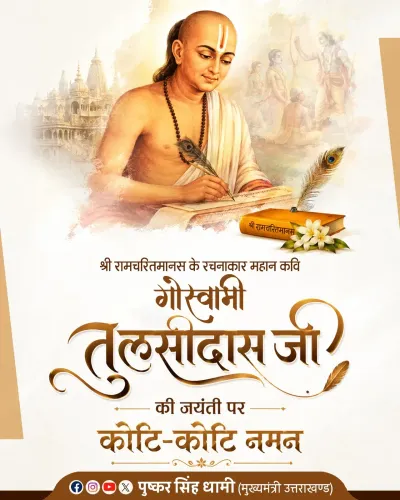
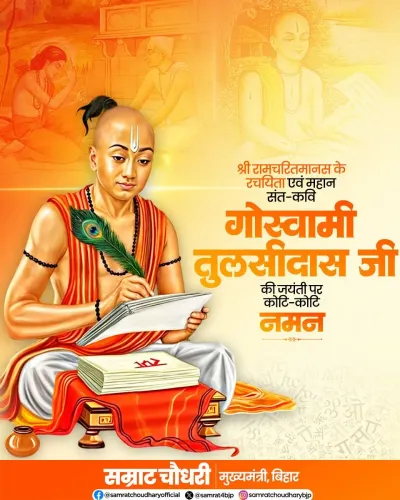
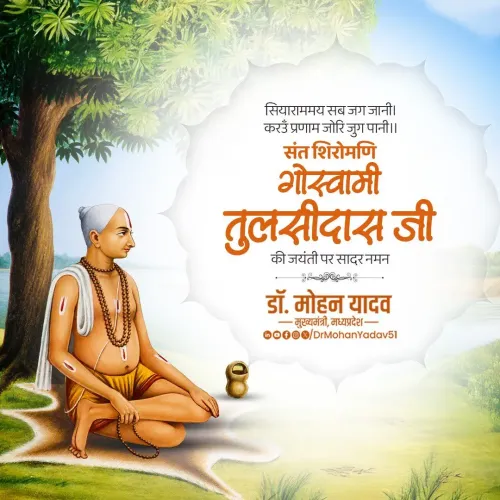
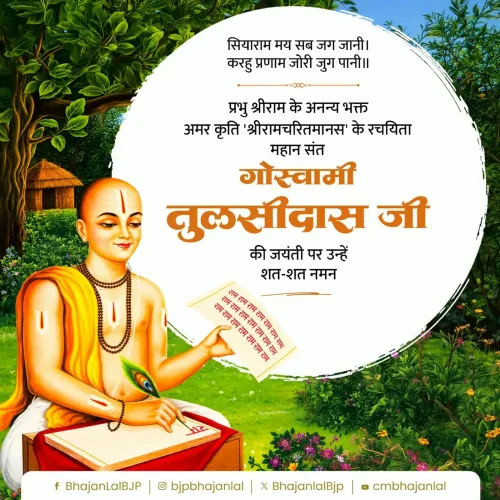
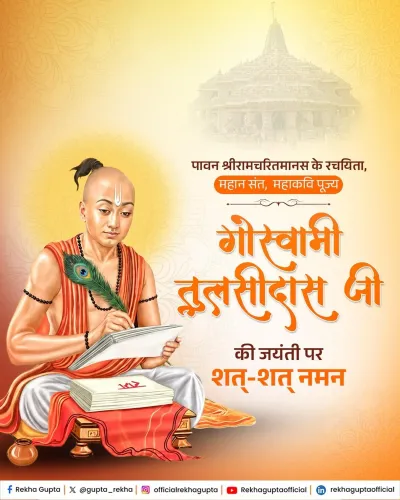
CM Bhupendra Patel pays tribute to Goswami Tulsidas on Jayanti
Synopsis
Gujarat Chief Minister Bhupendra Patel on 19 August 2026 paid tribute to 16th-century saint-poet Goswami Tulsidas on his Jayanti, honouring the composer of the Shri Ramcharitmanas and Hanuman Chalisa for carrying Ram's ideals into every Indian home.
Key Takeaways
Gujarat CM Bhupendra Patel posted a tribute to Goswami Tulsidas on his Jayanti on 19 August 2026 .
Tulsidas composed the Shri Ramcharitmanas in Awadhi in the 16th century , making the Ramayana accessible beyond Sanskrit scholars.
He also authored the Hanuman Chalisa , one of the most widely recited devotional hymns in India.
CM Patel credited Tulsidas with spreading the values of propriety and righteous conduct 'to every home.' The tribute follows a broader pattern of Indian political leaders honouring bhakti saint-poets on their jayantis.
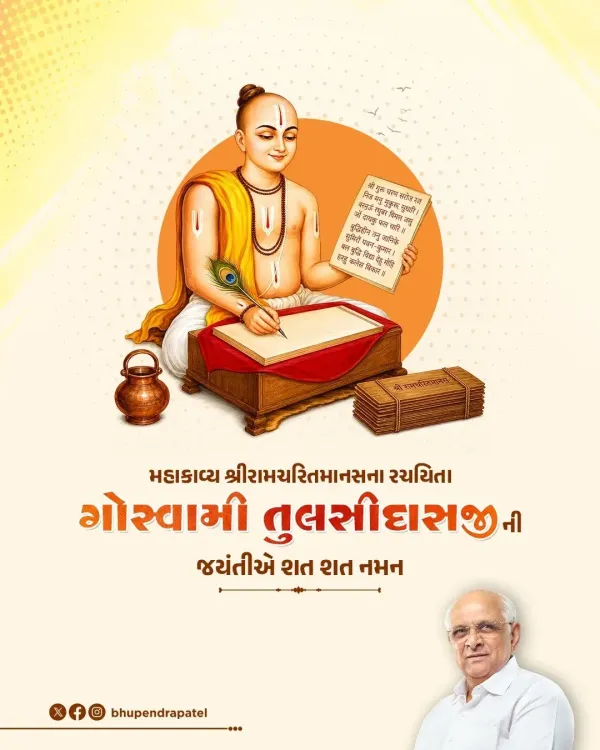
Centuries after he set the story of Lord Rama into Awadhi verse, Goswami Tulsidas continues to draw reverence from across India's public life. On Wednesday, 19 August 2026, Gujarat Chief Minister Bhupendra Patel offered his homage to the saint-poet on Tulsidas Jayanti, saluting the timeless legacy of the Shri Ramcharitmanas and the Hanuman Chalisa.
In his post, CM Patel wrote — translated from Gujarati — 'Crores of salutations on the Jayanti of the great saint of Bharatbhoomi, Goswami Tulsidas ji, composer of the immortal epic Shri Ramcharitmanas. Through incomparable and devotion-filled works such as the Shri Ramcharitmanas and the Hanuman Chalisa, he carried the ideal life story of Lord Shri Ram, the values of propriety and righteous conduct, to every home. His simple, devotional and spiritual compositions will forever keep Indian culture and public consciousness illuminated.'
The saint who brought Ram's story into every home
Goswami Tulsidas, the 16th-century saint-poet, composed the Shri Ramcharitmanas in Awadhi — a vernacular language of the Gangetic plains — at a time when the Ramayana tradition was largely preserved in Sanskrit, accessible only to a learned few. By rendering the epic in the language of ordinary people, Tulsidas democratised devotion. The text spread across regions and communities, embedding the ideals of Ram Rajya — righteous governance, filial duty, and moral courage — into everyday vocabulary and domestic ritual.
The Hanuman Chalisa, his forty-verse hymn to Lord Hanuman, remains among the most widely recited devotional compositions in India today, memorised by millions across generations and geographies. Together, these works cemented Tulsidas's place not merely as a poet but as an architect of popular Hindu religious imagination.
Bhakti poets and the grammar of Indian public tribute
Tributes on the jayantis of medieval bhakti saints have become a settled feature of Indian political communication. From Kabir to Mirabai, Tukaram to Tulsidas, anniversaries of saint-poets offer leaders a moment to invoke a shared cultural inheritance that cuts across caste and regional lines. CM Patel's tribute follows this well-worn pattern — a gesture that is simultaneously devotional and civic, reminding constituents of the deep roots of the literary and spiritual tradition that shapes Gujarat's, and India's, cultural self-understanding.
No policy announcement or legislative measure accompanies the tribute. The message stands as a mark of cultural continuity — proof that a 16th-century poet still commands a place in the first paragraph of a 21st-century chief minister's morning.
Point of View
These jayanti tributes have bipartisan precedent, making it difficult to read them as exclusively partisan. What the gesture does signal clearly is that vernacular devotional literature remains a live currency in Indian political communication, bridging the sacred and the electoral with practiced ease.
NationPress
3 Oct 2026
Frequently Asked Questions
Who was Goswami Tulsidas?
Goswami Tulsidas was a 16th-century Hindu saint-poet best known for composing the Shri Ramcharitmanas in Awadhi, a vernacular language, making the story of Lord Rama widely accessible, and the Hanuman Chalisa , a forty-verse devotional hymn still recited by millions today.
What is Tulsidas Jayanti?
Tulsidas Jayanti is the annual observance of the birth anniversary of Goswami Tulsidas. It is celebrated by Hindu devotees and cultural organisations across India, typically marked by prayers, readings from the Ramcharitmanas, and public tributes.
What did Gujarat CM Bhupendra Patel say about Tulsidas?
CM Bhupendra Patel offered 'crores of salutations' to Tulsidas, praising him for carrying Lord Ram's ideals, values of propriety, and righteous conduct to every home through works like the Shri Ramcharitmanas and Hanuman Chalisa .
What is the Shri Ramcharitmanas?
The Shri Ramcharitmanas is a 16th-century epic poem by Goswami Tulsidas that retells the story of Lord Rama in Awadhi. It is one of the most influential texts in the Hindu devotional tradition and remains widely read and recited across India.
Why do Indian politicians pay tribute to bhakti saints?
Tributes on bhakti saint jayantis allow political leaders to connect with a shared cultural and spiritual heritage that resonates across caste, region, and community lines. These gestures underscore the continued relevance of vernacular devotional literature in Indian public life.