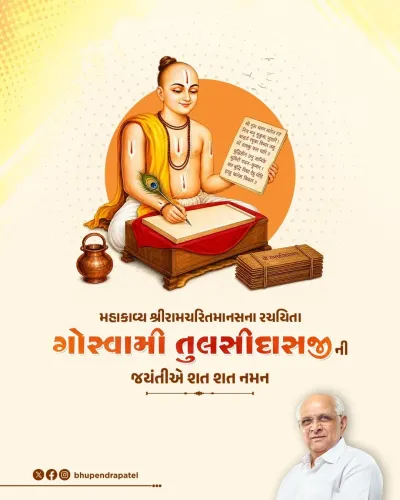
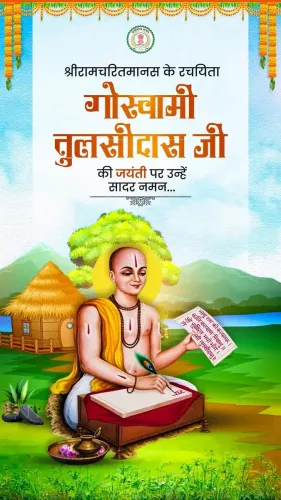
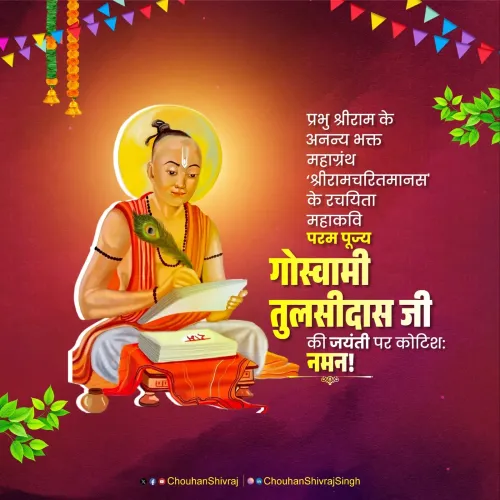
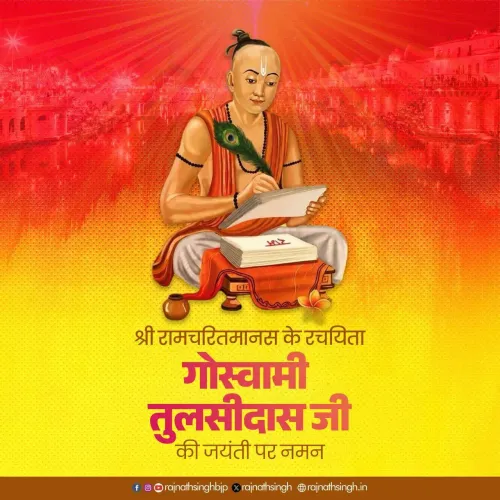
Giriraj Singh pays tribute to Tulsidas on his Jayanti
Synopsis
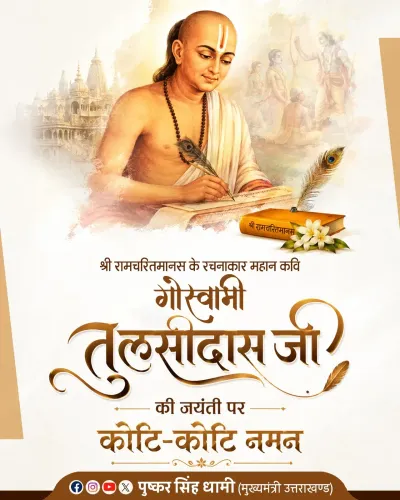
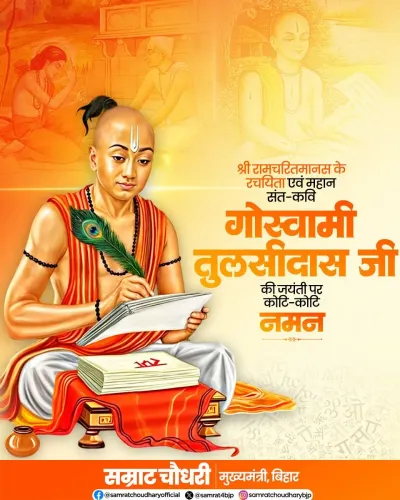
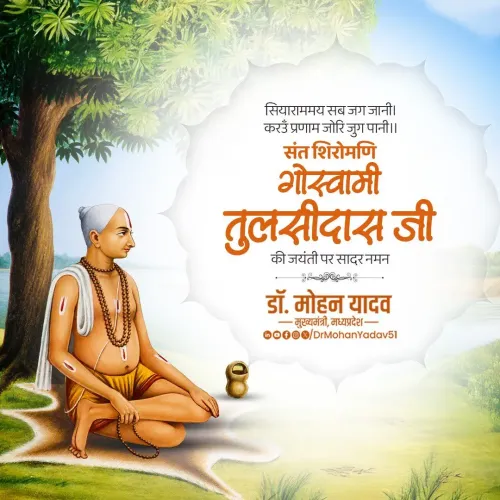
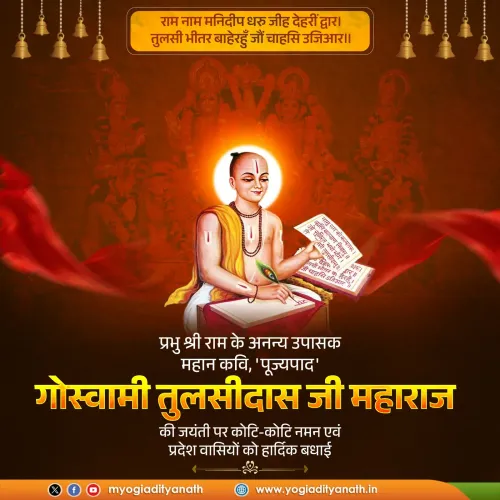
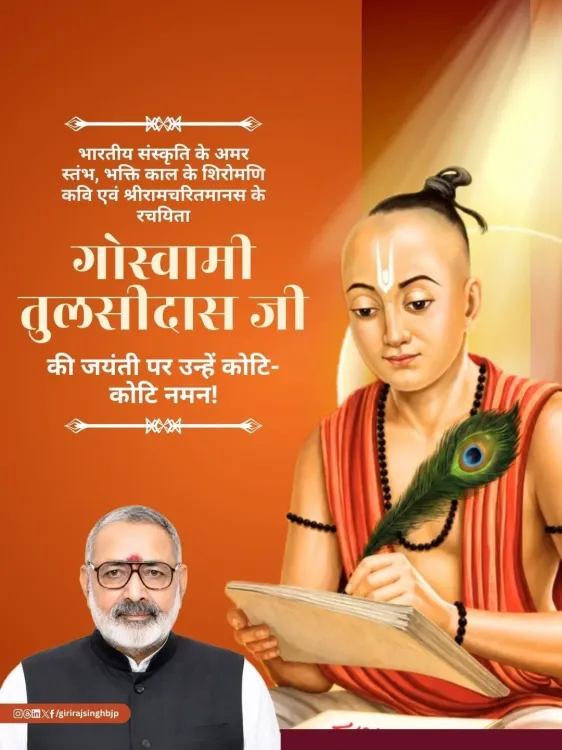
On Tulsidas Jayanti, Union Textiles Minister Giriraj Singh paid homage to the 16th-century Bhakti poet Goswami Tulsidas, composer of the Ramcharitmanas, calling him an immortal pillar of Indian culture and saying his Ram-devotional writings would guide humanity across ages.
Key Takeaways
Giriraj Singh marked Tulsidas Jayanti on 19 August 2026 with a Hindi tribute on X.
He described Goswami Tulsidas as 'an immortal pillar of Indian culture' and the crown jewel of Bhakti-era poetry .
Tulsidas composed the Ramcharitmanas in Awadhi in the 16th century , making the Ramayana accessible in vernacular Hindi.
Singh said Tulsidas's compositions would 'guide humanity across ages.' The tribute aligns with a consistent BJP pattern of publicly honouring Bhakti-era figures tied to the Ram-devotional tradition.
An immortal voice from the 16th century still shapes how hundreds of millions of Indians understand devotion, duty, and the divine — and on Wednesday, 19 August 2026, Union Textiles Minister Giriraj Singh joined the nation in honouring that voice. On the occasion of Tulsidas Jayanti, Singh offered his reverence to Goswami Tulsidas, the Bhakti-era poet-saint whose Shriramcharitmanas remains one of the most recited texts in the Hindi-speaking world.
Posting in Hindi, Singh wrote: 'Bharatiya sanskriti ke amar stambh, Bhakti kaal ke shiromani kavi evam mahakavya Shriramcharitmanas ke rachayita Goswami Tulsidas ji ki jayanti par unhe koti-koti naman.' — 'Crores of salutations to Goswami Tulsidas ji, the immortal pillar of Indian culture, the crown jewel of Bhakti-era poets and the composer of the epic Shriramcharitmanas, on his birth anniversary.' He added that Tulsidas's sacred compositions, steeped in devotion to Lord Shri Ram, would guide humanity across ages.
Who was Goswami Tulsidas — and why does he still matter?
Goswami Tulsidas was a 16th-century poet-saint from Uttar Pradesh who composed the Ramcharitmanas in Awadhi, a vernacular dialect of Hindi — not Sanskrit, the language of scholars. That choice was radical. By retelling the Ramayana in the language ordinary people spoke, Tulsidas democratised one of Hinduism's foundational narratives. The text became a living scripture: recited at weddings, read aloud in temples, performed in Ramleela stagings every autumn across North India. His influence stretches far beyond literature. Phrases from the Ramcharitmanas are woven into everyday Hindi speech. The text's moral architecture — Ram as the ideal king, Hanuman as the ideal devotee, Sita as the ideal of steadfast dignity — continues to frame public discourse on virtue and leadership in ways that are immediately legible to millions.BJP's consistent alignment with Bhakti-era heritage
Singh's tribute fits a well-established pattern. BJP leaders regularly mark the anniversaries of Bhakti-era figures, framing classical devotional literature as living pillars of Indian civilisational identity. Tulsidas Jayanti, Kabir Jayanti, Mirabai Jayanti — each occasion becomes a moment to publicly anchor the party's cultural politics in pre-modern devotional traditions, particularly those centred on the Ram-bhakti lineage. For a senior leader like Giriraj Singh — a Lok Sabha MP from Begusarai, Bihar — the homage also resonates locally. Bihar has deep roots in the Bhakti movement, and reverence for Tulsidas cuts across caste and community lines in the Gangetic heartland. The Ramcharitmanas does not age. Five centuries on, it is still the first book in millions of Indian homes — and Tulsidas Jayanti is still the day a nation pauses to remember why.Point of View
Reinforcing a narrative that frames Ram-centric devotional literature as the bedrock of Indian civilisation. For a Lok Sabha MP from Bihar's Begusarai, invoking Tulsidas also carries regional resonance in a Gangetic belt where the Ramcharitmanas is genuinely embedded in daily life. The post adds another data point to the party's long-term project of reclaiming pre-modern cultural figures as ideological touchstones — not merely as historical commemoration, but as active identity politics.
NationPress
3 Oct 2026
Frequently Asked Questions
When is Tulsidas Jayanti celebrated?
Tulsidas Jayanti is celebrated on the birth anniversary of the poet-saint Goswami Tulsidas, which falls on the Saptami tithi of the Shukla Paksha in the month of Shravan according to the Hindu calendar, typically in July or August.
Who was Goswami Tulsidas?
Goswami Tulsidas was a 16th-century Bhakti poet-saint from Uttar Pradesh, best known for composing the Ramcharitmanas — a retelling of the Ramayana in the Awadhi dialect of Hindi — which remains one of the most widely read devotional texts in North India.
What is the Ramcharitmanas?
The Ramcharitmanas is an epic devotional poem composed by Tulsidas in Awadhi, narrating the life and virtues of Lord Ram. Written in the 16th century, it brought the Ramayana's teachings to ordinary people in their vernacular language and is central to North Indian Hindu devotional practice.
Why do BJP leaders pay tribute to Tulsidas?
BJP leaders regularly mark Tulsidas Jayanti as part of a broader pattern of honouring Bhakti-era figures, particularly those linked to the Ram-devotional tradition. These tributes align with the party's cultural emphasis on classical Hindi literature and Hindu devotional heritage as pillars of Indian identity.
What did Giriraj Singh say about Tulsidas?
Union Textiles Minister Giriraj Singh called Tulsidas an 'immortal pillar of Indian culture' and the 'crown jewel of Bhakti-era poets,' and said his compositions, steeped in devotion to Lord Ram, would guide humanity across ages.